


Paying for a coffee in Beijing can be a surprisingly complicated experience for foreign tourists. In a country where 80% of daily transactions are made via smartphone, international visitors often find that their bank cards are declined in local restaurants, at street markets, in transport hubs, at tourist attractions, and even in hotels.
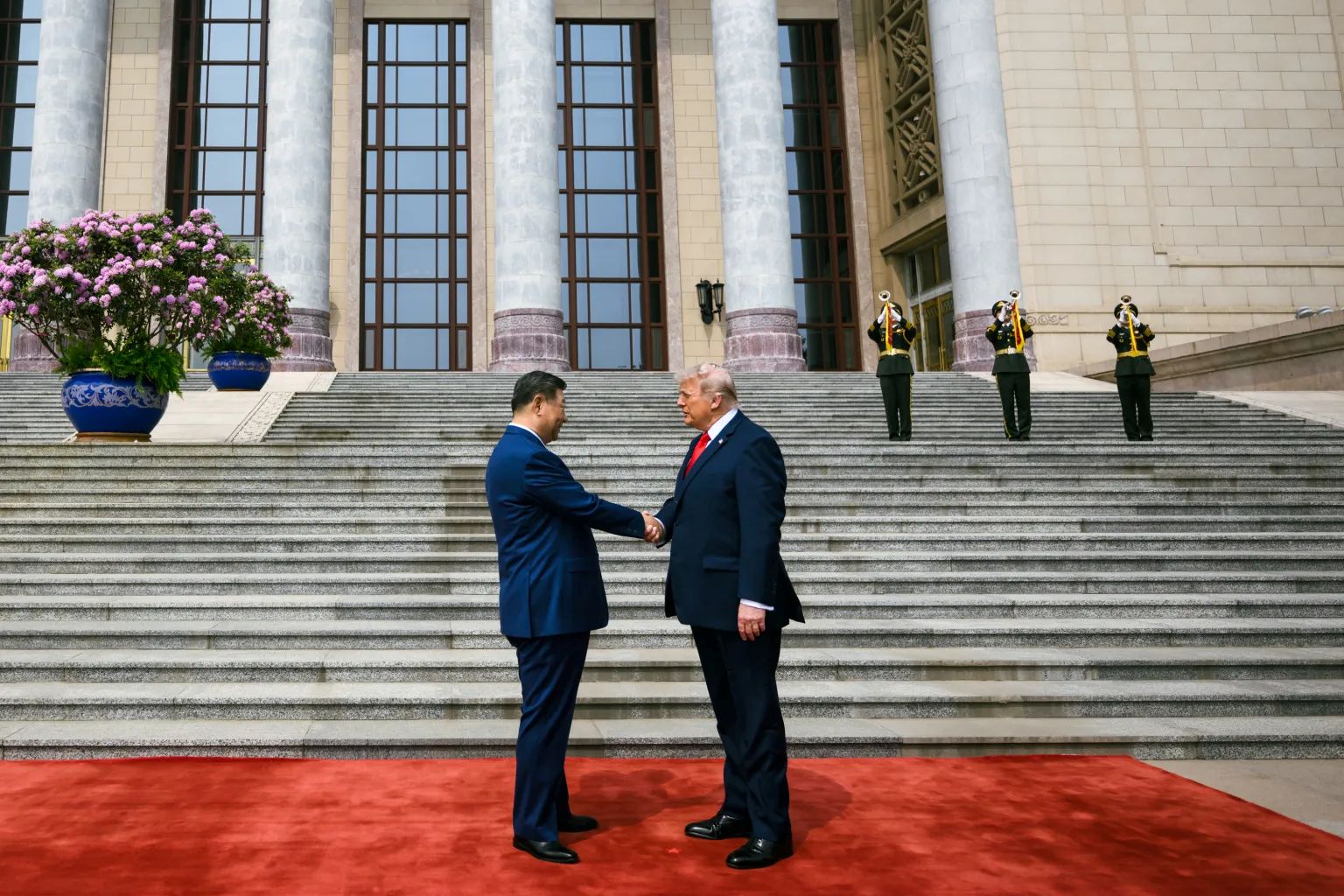
This issue appears to have been raised at the highest diplomatic level during Donald Trump’s state visit to China last week, when the US President reportedly urged the Chinese President, Xi Jinping, to grant Visa Inc. wider access to China’s tightly controlled payment market.
“I said, ‘What about letting Visa?’” Trump said in an interview with Fox News. “We had the head of Visa there today, by the way. Visa is a big deal. I said, what about using Visa in China? For some reason, they were blackballed, and maybe that will come off.”
Trump’s visit was heavily focused on cementing a trade détente between the world’s two largest economies, following a period of sharp escalation over tariffs and China’s restrictions on rare earth exports.
The US delegation included the CEOs of several major American corporations, including Boeing’s Kelly Ortberg and Visa’s Ryan McInerney. Trump’s push on Visa goes far beyond financial diplomacy and would directly enhance the experience of millions of travellers.
Trump on what he requested from XI: I said what about using Visa in China? For some reason, they were blackballed. Maybe that will come off. pic.twitter.com/YUDPFz35FM
— Acyn (@Acyn) May 15, 2026
Despite China’s efforts to boost inbound tourism by expanding its visa-free entry schemes, payment systems remain one of the biggest obstacles for foreign visitors trying to navigate the country’s predominantly cashless economy. Following its 2024 visa-free expansion, China welcomed around 65 million foreign visitors, which is more than double the figure for 2023, though still below the roughly 97.7 million arrivals recorded in 2019.
According to the 2026 study Exploring Foreign Tourists’ Payment Experiences in China by researchers at the University of Innsbruck, payment difficulties immediately impact on transport, accommodation, bookings, shopping and general travel satisfaction.
China’s cashless ecosystem, which is dominated by WeChat Pay and AliPay, was designed with domestic users in mind and requires them to have a local phone number and bank account for verification purposes. While foreign cards work reliably at luxury hotels and international chains, they are far less accepted at smaller restaurants, street markets, and regional tourist destinations. Visa cards were among the least consistently accepted.
Some of the tourists interviewed for the study reported carrying large amounts of cash as a backup option, while others described failed hotel bookings, rejected transactions, and even cancelled travel plans due to an inability to process payments.
This issue has long been a source of friction between Washington and Beijing.
In 2015, China opened its bank-card clearing market to foreign companies, ending the monopoly of state-backed China UnionPay. Mastercard and American Express later secured approvals through partnerships with Chinese firms. However, Visa remained excluded from domestic yuan-clearing operations. This dispute dates back to a 2012 WTO ruling which found that China was discriminating against foreign payment providers.
Since then, China has introduced measures to ease barriers for international visitors, raising mobile payment spending limits for foreigners and requiring tourist sites to accept cash and international cards. Nevertheless, the Innsbruck study found that many travellers were still encountering the same obstacles, highlighting the persistent gap between policy announcements and real-world experience.
Beijing has upgraded more than 20,000 sets of facilities at subway stations to support contactless payments for foreign Mastercard and Visa card holders. Starting Friday, passengers can use cards issued overseas to take rides on the city's rail transit network. pic.twitter.com/EETqfCn0UE
— China Daily (@ChinaDaily) September 13, 2024
This debate mirrors efforts elsewhere to simplify cross-border payments in the other direction. In February this year, the European Travel Commission (ETC) and Mastercard launched a co-branded travel card with Chinese banking partners to facilitate transactions for Chinese tourists visiting Europe.
As China seeks to position itself as a more accessible destination, ensuring that payment systems are interoperable may prove to be just as important as visa policy itself.