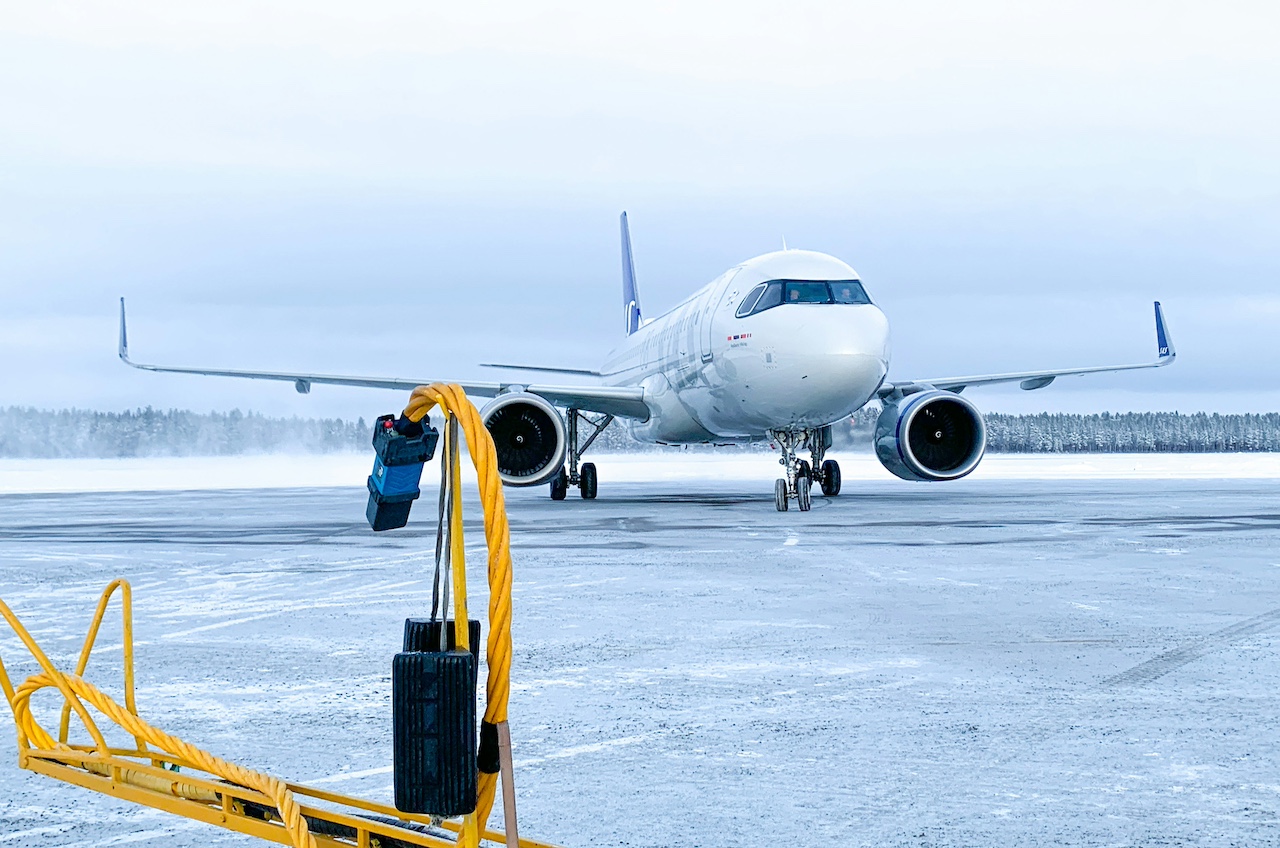



A deadly cold snap sweeping across Europe has triggered fresh travel chaos, with hundreds of flights cancelled, rail services disrupted, and dangerous conditions reported on roads from the Atlantic coast to the Balkans. Authorities across several countries have urged travellers to avoid non-essential journeys as snow, ice, and freezing temperatures continue to grip the continent.
Western Europe braced for further snowfall and black ice on Wednesday as storm Goretti, the first named storm of the year, advanced across the region. The worsening conditions added to the days of disruption for commuters and holiday travellers already struggling to reach their destinations.
In France, heavy snow fell across the Paris region as daylight broke, forcing the suspension of bus services on one of the busiest retail days of the year as New Year sales began. While most metro and suburban rail services continued to operate, transport officials warned of difficult conditions and encouraged remote working where possible.
The national weather service Météo France placed 38 of the country’s 96 mainland departments on alert for snow and black ice, describing the cold snap as being of rare intensity for the season. Between three and seven centimetres of snow had already accumulated in several areas, with more forecast in the coming hours.
Europe's 'main hub' Schiphol folding under snow again…. KLM cancelling hundreds daily, 2400+ gone, de-icing crisis needing Germany rescues.
— Fahad Naim (@Fahadnaimb) January 7, 2026
Over-reliant on few airports? Should push more regionals/directs imo. pic.twitter.com/jB2o1WkQSx
Airports under pressure across Europe
Air travel has been among the hardest hit. At Amsterdam Schiphol Airport, more than 800 flights were cancelled on Wednesday alone, marking the sixth consecutive day of disruption at one of Europe’s busiest hubs. Tens of thousands of passengers have seen their journeys delayed or cancelled as aircraft struggled to operate safely in persistent winter conditions.
Dutch airline KLM warned that supplies of de-icing fluid were under pressure after days of freezing temperatures across Europe, complicating efforts to keep aircraft operational. Airports across the continent are facing similar challenges as stock replenishment becomes more difficult during prolonged cold spells.
Snow day from space! ❄️@CopernicusEU Sentinel-2 captured this view of Amsterdam blanketed in snow on 6 January.
— ESA Earth Observation (@ESA_EO) January 7, 2026
The winter storm brought hazardous roads, travel disruptions, and numerous train and flight cancellations across the region. pic.twitter.com/NypGk4fhCB
In France, the civil aviation authority ordered airlines to cancel 40% of flights at Paris’s main international hub, Charles de Gaulle Airport, and 25% of flights at Orly. Several regional airports in the north and west of the country were temporarily closed as snowfall intensified.
Flights at Paris Charles de Gaulle Airport Affected by Adverse Weather Conditions
— AirwayBuzz (@AirwayBuzz) January 7, 2026
At Paris Charles de Gaulle Airport in the French capital, significant operational disruptions have been occurring since the morning hours due to adverse weather conditions.
France’s Civil Aviation… pic.twitter.com/Eov0NxOEuz
In Brussels, some flights were cancelled, and many others were delayed, largely due to the time required to de-ice runways and aircraft wings. Airport authorities warned that further disruption remained possible if conditions failed to improve.
❄️ #WinterWeather – More #snow expected on 7 January. We are doing our best to minimise the impact, but delays due to aircraft de-icing & runway clearance are likely. More info via https://t.co/0FcxF5LhL8 pic.twitter.com/gAFghZwZVf
— Brussels Airport (@BrusselsAirport) January 6, 2026
Rail disruption crosses borders
Rail networks across northern Europe also struggled to cope. In the Netherlands, frozen points and a software glitch paralysed large parts of the rail system early on Wednesday, with only limited services resuming later in the day. Passengers were advised to travel only if absolutely necessary.
Cross-border rail connections were particularly affected. Trains from Belgium were unable to enter the Netherlands, with services stopping at Essen, the final station on the Belgian side of the border. This disruption affected EuroCity services between Brussels and Rotterdam, high-speed connections to Amsterdam, and local cross-border routes.
Belgian rail operator SNCB/NMBS said domestic services were operating largely as normal, although passengers were advised to check journey planners before travelling. Routes to the Netherlands via Maastricht continued to run.
Further afield, Eurostar warned of severe delays and last-minute cancellations on services linking London with Paris, Brussels, and Amsterdam, citing adverse weather across its network.
@sfg215 Was so magical yet so funny ✨⛷️ #fyp #nederlandsetiktok #snow ♬ The Beautiful Blue Danube (Excerpt) – The Philharmonia Orchestra
Deadly winter conditions
The extreme weather has had fatal consequences. In France, authorities reported at least five deaths linked to road accidents caused by icy conditions. In Bosnia, a woman died in Sarajevo after a tree weighed down by heavy, wet snow collapsed.
In Germany, temperatures dropped well below −10°C in parts of the south and east, with much of the country covered in snow. In Britain, the Met Office said winter weather hazards were likely to continue throughout the week, after temperatures fell to −12.5°C in parts of eastern England, the coldest night of the winter so far.
Across the Western Balkans, heavy snow and rain closed roads, disrupted power and water supplies, and caused rivers to swell. Emergency measures were introduced in parts of Serbia as drivers travelled towards ski resorts ahead of Orthodox Christmas celebrations.
Authorities urge caution
Governments and transport operators across Europe reiterated calls for caution. In the Netherlands, officials advised people to work from home where possible. In France, trucks and school buses were banned from roads in around a third of administrative departments, most of them in the northern half of the country.
Retailers also warned of knock-on effects. Carrefour chief executive Alexandre Bompard said the truck ban could disrupt supply chains, particularly deliveries of fresh produce.
With further snow and freezing rain forecast in the coming days, authorities warned that travel disruption was likely to continue, underlining the growing strain that extreme winter weather places on Europe’s transport networks.