


For years, the travel industry assumed the tourist of the future would simply be more digital. That prediction was right, but incomplete. By 2026, roughly 65% of global travel bookings are expected to take place online, compared with an estimated 45% in 2018. By 2030, that share could comfortably exceed 70%. But the bigger transformation is psychological rather than technological. Tomorrow’s traveller will search more platforms, compare prices more aggressively and expect technology to do much of the work, while becoming increasingly suspicious of algorithms, hidden charges and corporate sustainability claims. The tourist of 2030 will not be difficult to reach. The challenge will be convincing them to trust what they find.
Artificial intelligence illustrates the contradiction. Travellers are increasingly comfortable allowing AI to recommend destinations, compare hotels, monitor prices and build itineraries. Yet Expedia’s 2026 research found that 66% of consumers would not trust an AI assistant to make a purchase or reservation on their behalf, while only 8% were comfortable giving it full booking authority. That suggests the immediate future of travel is not the autonomous robot travel agent once imagined. It is something subtler: an intelligent assistant permanently sitting beside the traveller, reducing 40 hotels to five, watching fares around the clock, comparing loyalty points with cash prices and rebuilding an itinerary when something goes wrong. AI may increasingly influence the decision. Humans, for now, still want the final click.
But technology is only half the disruption. The economics of travel are changing just as quickly. Inflation and cost-of-living pressures have not eliminated the desire to travel; they have made travellers more calculating about how they do it. Consumers increasingly adjust the length of a trip, the distance travelled, the hotel category and the number of paid activities before abandoning the holiday altogether. That makes flexibility part of the price itself. Free cancellation, transparent total costs, currency conversion, price alerts and simple modification policies will increasingly compete with the headline room rate. The winning travel company of 2030 may therefore not be the one advertising the cheapest price, but the one offering the lowest perceived risk.
There is one area, however, where consumers remain remarkably willing to spend: experiences. Between 2023 and 2025, McKinsey estimates the global experience market grew by 2.6%, compared with just 0.8% for discretionary physical goods, while travel experiences expanded by 4.4%. The generational divide makes the direction even clearer: 52% of Gen Z travellers say they are willing to spend extra on experiences, compared with 29% of Baby Boomers. This is quietly rewriting tourism economics. The traveller of 2030 may economise on the flight, compare ten hotels and wait for a better room rate, then willingly spend on gastronomy, wellness, sport, culture or an experience available nowhere else. Tourism is moving from selling things to selling moments worth remembering and, increasingly, worth sharing.
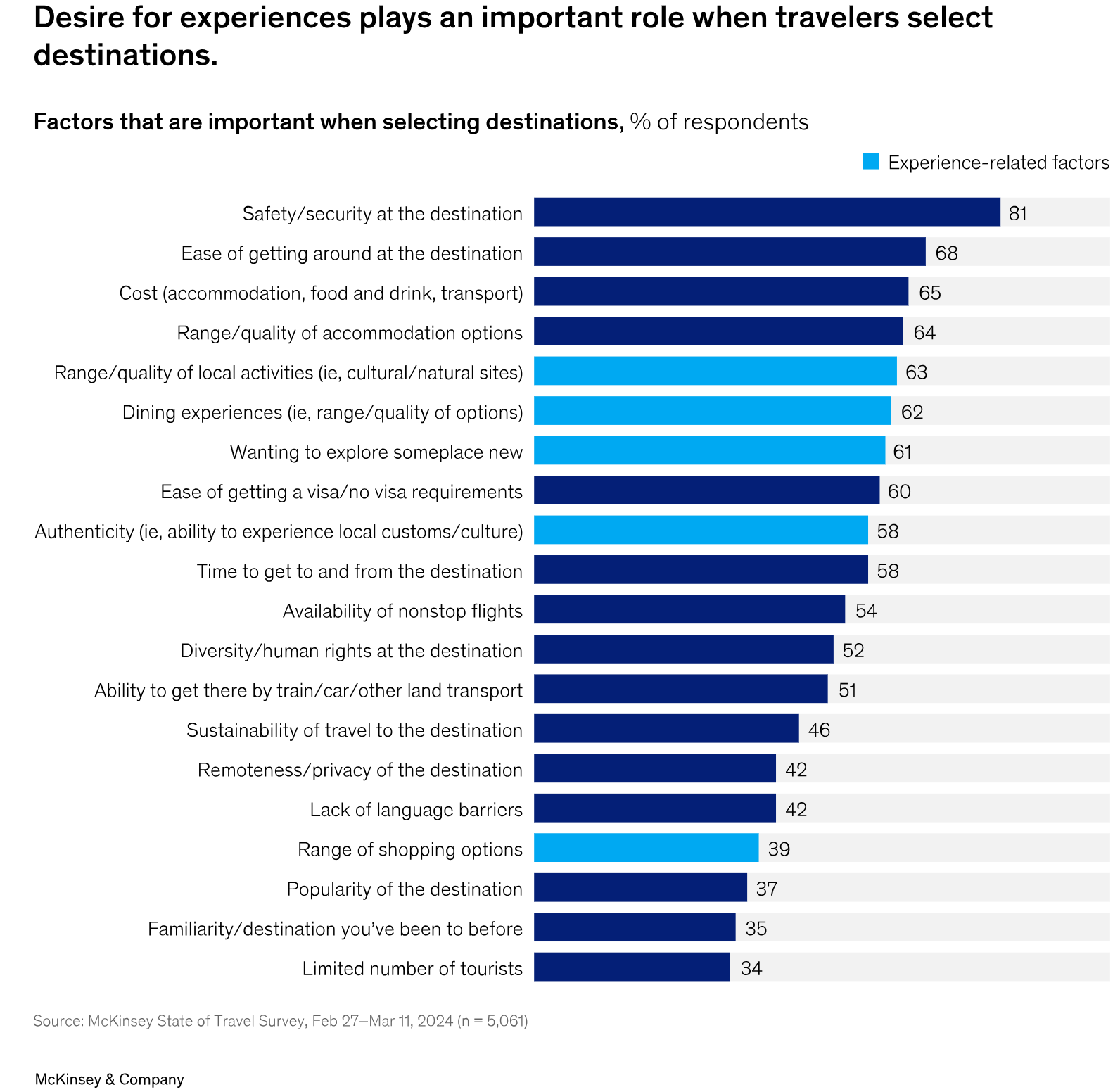
Source: McKinsey State of Travel Survey © McKinsey & Company
That leaves governments, destinations and tourism companies with a different race to win before 2030. More advertising will not be enough. They will need simpler booking, transparent pricing, credible sustainability claims, climate-resilient destinations and digital infrastructure that both humans and AI systems can understand. The global traveller is becoming simultaneously more sophisticated and more sceptical: digitally empowered, environmentally aware, financially cautious and still determined to experience the world.
The great tourism battle of the next decade will therefore not be fought over who can generate the most attention. It will be fought over who can turn attention into trust, and trust into a booking.