
The Responsible Tourism Awards have been running since 2004 and are now widely recognised for the focus on discovering examples of good practice. We look for evidence-based, replicable, innovatory examples of initiatives which #maketourismbetter. Our judging criteria are focused on identifying change makers. We seek to inspire more businesses and destinations to #maketourismbetter.
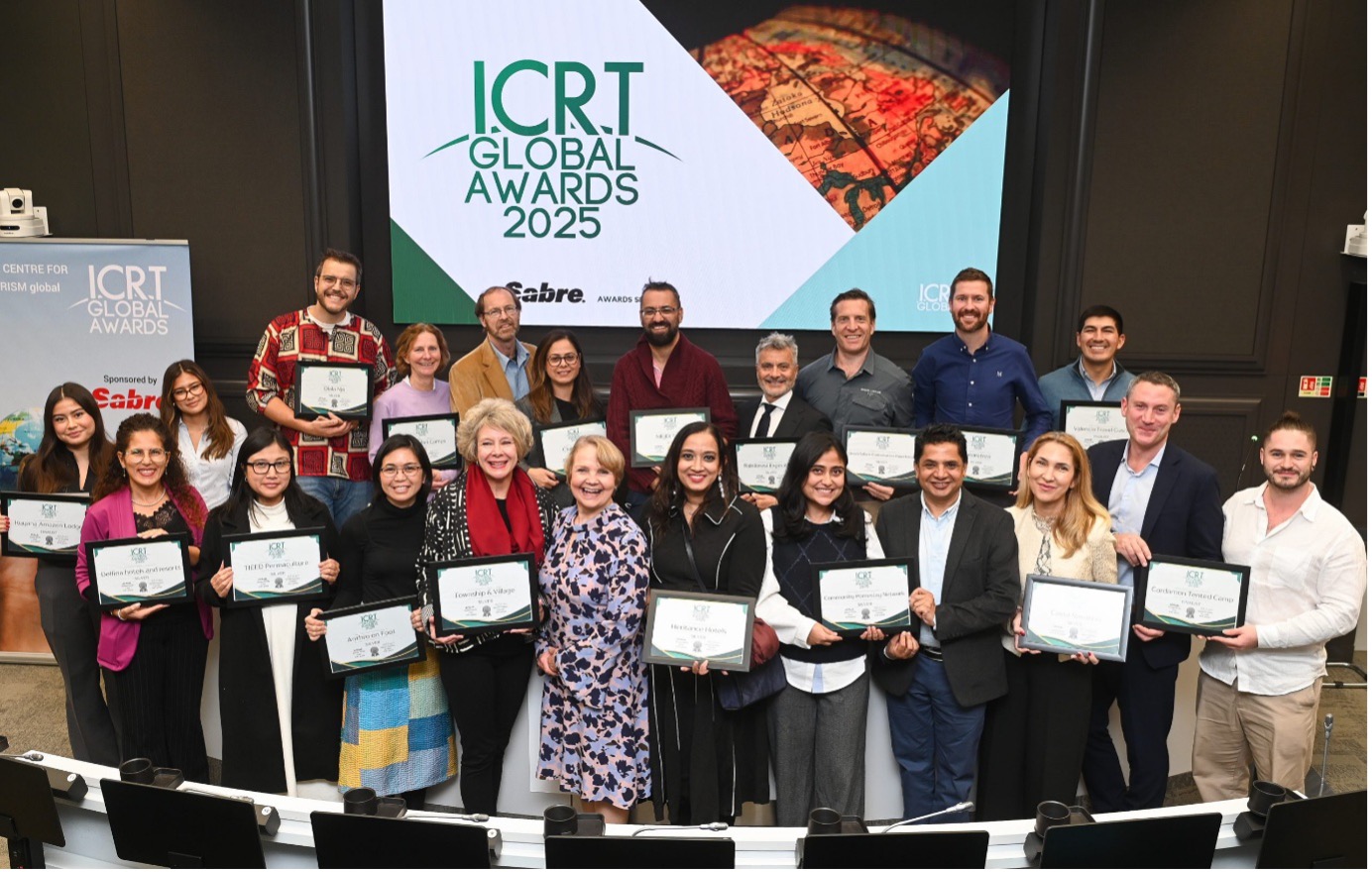
Our Awards are free to enter. The Gold winners in each region automatically go forward into the Global Awards announced in November each year. The 2025 Gold award Winners and those who won Global Awards are here.
- Are you a changemaker who will inspire and challenge others to take more responsibility for managing tourism, to make it more sustainable, minimise negative impacts, and maximise the positive? If so, then we want to hear from you.
- Do you know of businesses or destinations that should be recognised for the changes they have made? If you do, please encourage them to apply.
There are six regional ICRT Responsible Tourism Awards you can enter – Africa, Southeast Asia, Latin America, Indian Subcontinent, Worldwide, and a European regional award sponsored by easyJet holidays. The timings for each of the regional awards can be found here, along with the entry forms
In 2026, there are six Responsible Tourism Award categories
1. Local Economic Benefit
As one of the world’s leading consumption sectors, tourism provides many economic benefits, including employment and business opportunities. Far too often, the money does not recirculate in the local economy or benefit local people or the environment. Tourism businesses can grow the local economy by spending on local goods and services and procuring services and products locally.
2. Diversity, equity, and inclusion
There are two dimensions to the DEI agenda in travel and tourism. There are issues affecting both hosts and guests. The 2022 Responsible Tourism Charter includes for hosts providing “inclusive employment for the differently abled and people of diverse ethnicities, gender, and sexual orientation” and for guests providing “more enjoyable experiences for all” by providing “culturally sensitive experiences engendering respect between tourists and hosts.”
This year, we are focusing on the host community and the host experience. We recognise that the experience of the host community will also affect the visitor experience, but focusing on the host community one year and the guest the next ensures we consider both sides of the encounters experienced through tourism.
3. Nature positive
Wildlife and the natural environment are important drivers for travel. The travel and tourism sector depends on nature’s beauty to provide its goods and services, yet nature tourism can negatively impact the places we visit. The tourism sector has a responsibility to help reverse biodiversity loss and protect nature for future generations by promoting a nature-positive approach to tourism – whether that is “non-consumptive” tourism, such as photographic safaris, or “consumptive” tourism, such as hunting safaris.
4. Championing cultural diversity
Professor Jost Krippendorf, in his seminal book The Holiday Makers, reminded us that “every individual tourist builds up or destroys human values while travelling”. We all make choices about how we travel and the tours and opportunities we offer our clients and guests.
In the words of the 2022 Responsible Tourism Charter, we are looking for: Destinations and businesses providing tourists with the opportunities to make “more meaningful connections with local people and a greater understanding of local history and culture, and social and environmental issues” and/or offering “culturally sensitive experiences engendering respect between tourists and hosts, and building local pride and confidence.”
5. Adapting climate to change
The travel and tourism industry makes a significant contribution to global greenhouse gas emissions, driving climate change, and suffers the consequences: drought, wildfires, and storms, with consequent damage to infrastructure, natural and cultural heritage, and landscapes. Ski resorts are closing, glaciers are retreating, mosquito-borne dengue and West Nile virus are reported in Europe, there is increasing evidence that seasonality is changing as holidaymakers avoid peak temperatures, and cooler destinations are beginning to see higher visitor numbers.
The pace and extent of climate change are now such that, whilst we need to continue to address greenhouse gas emissions, we also need to adapt to the dramatic changes it is causing. This year, we are focusing on adaptation; next year, we shall concentrate again on emissions reduction.
6. Regenerative tourism
Over the last twenty years, regenerative travel and regenerative tourism have emerged and are being widely used in the industry and by academics. Responsible Tourism and regenerative share a common parentage in the recognition that sustainable tourism carries little meaning. Responsible Tourism improves tourism by clarifying which issues are addressed, how they’re tackled, who benefits, and what impact results. Transparency is a core value in these awards.
Regenerative Travel is presented by many as a radical form of Responsible Tourism, restoring, replenishing, renewing, reciprocity, and healing. It is ambitious in seeking to create a better future for a place and its residents. The concept of regeneration has roots in architecture and urban and economic regeneration, and more radically in agriculture and ecosystem regrowth. Regenerative Tourism is ambitious, seeking transformational change; it scales from economic regeneration to radical transformation.
The judges can only choose from those who enter. Every year, we discover examples of businesses and destinations making tourism better – help us discover more.
There is more detail about each of the categories on the Awards website.