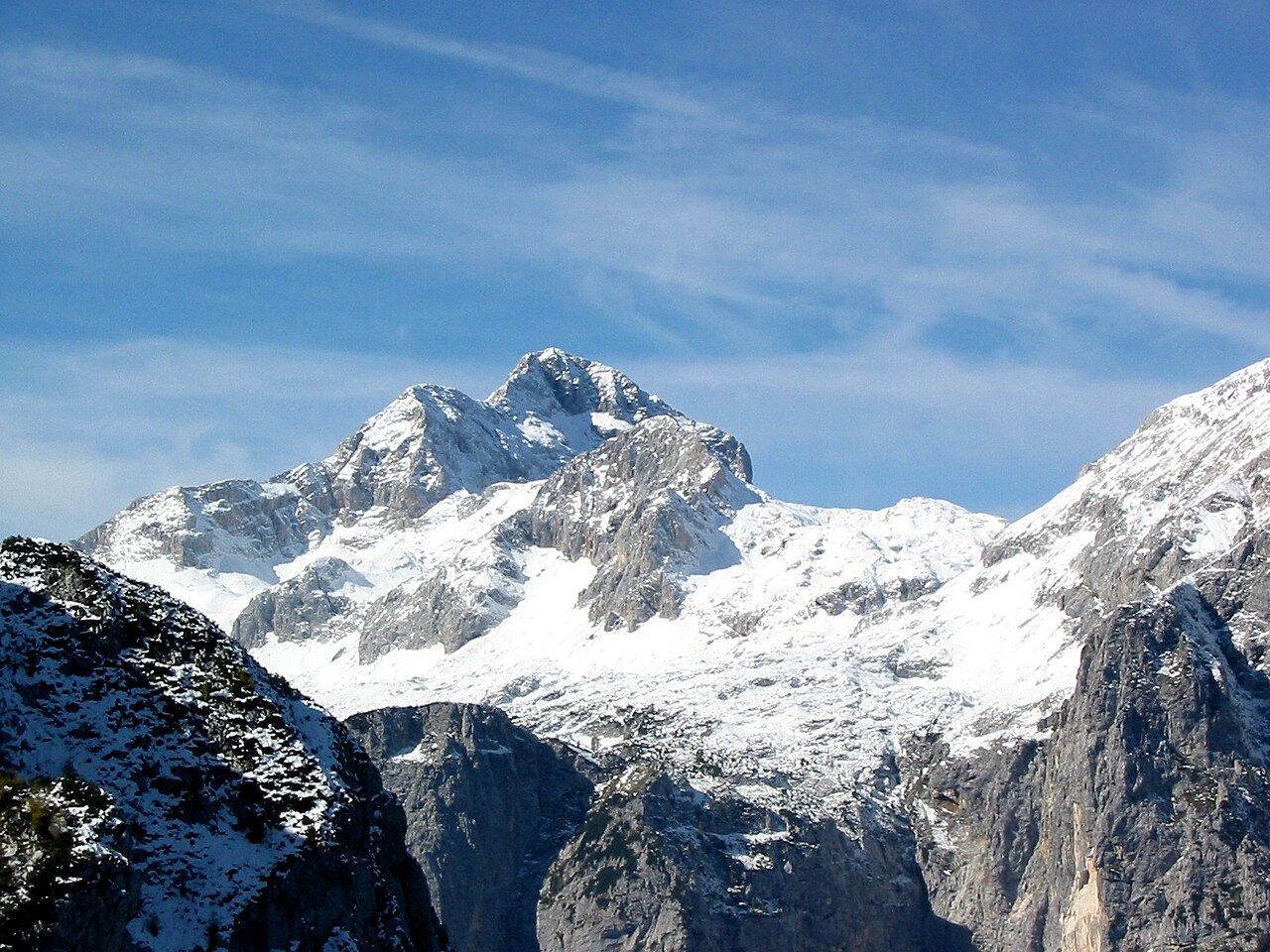



A glacier on a mountain that is the national symbol of Slovenia is about to disappear forever, according to the researcher who has been monitoring its decline for three decades.
The Triglav glacier, on the northeastern face of Mount Triglav, features on the Slovenian 50 cent euro coin and on Slovenian passports as part of the country’s coat of arms, but soon it will no longer be a part of the Slovenian landscape, scientists say, due to the effects of climate change.
The glacier shrank from over 40 hectares in size at the end of the 1800s to around 14 hectares by the mid-20th century, when there was still enough of it left to become a popular, year-round ski area. But experts tracking the glacier since 1946 say no new ice has flowed into it for years.
After low snowfall last winter, the remaining fragments of glacial ice were left exposed to soaring summer temperatures. Now the glacier is dying. Miha Pavšek of the Anton Melik Geographical Institute at the Research Centre of the Slovenian Academy of Sciences and Arts, who has been recording the changes for 30 years, says: “Everything indicates that the very last remnants of ice will literally disappear within these coming days.”
TRIGLAV NATIONAL PARK – one of the oldest and most #beautiful national parks in #Europe is located in northwestern #Slovenia and covers an area of over 800 km2 (4% of the entire Slovenian territory) (Images by Tomo Jesenicnik, Jost Gantar, Jure Oblak, Ales Zdesar) #travel #nature https://t.co/n1ZsRblVSI
— Discover Slovenia (@travel_slovenia) July 27, 2018
Pavšek also raised an alarm about dwindling glaciers across Slovenia’s border in Austria. Their decline, he warns, could dry out the Drava and Mura river basins, with catastrophic long-term effects on the land. “This will impact areas they irrigate, such as the Drava and Ptuj fields and parts of the Mura region,” he said.
The future for Europe’s glaciers looks grim, according to a recent statement by the GLAMOS Swiss glacier monitoring service and the Swiss Academy of Sciences, which said: “Alpine glaciers have no chance of surviving in the long term under such conditions.” Swiss glaciers have shrunk by 20% in just the last five years, data shows.
ONE YEAR of melting at Morteratsch Gl.! 😱 10 meters of ice thickness loss has been measured here at 2200 m asl by https://t.co/BasYsvciuR! 🧊🔥 The massive cliff and the huge ice cave I was contemplating last October are gone… 😢 Webcam @VAW_glaciology https://t.co/SsU3P31UTw
— Melaine Le Roy (@subfossilguy) October 1, 2026
As previously reported by Travel Tomorrow, some ski resorts across the bloc have already closed, while other threatened alpine ski areas are attempting to pivot to spring and summer hiking activities to keep their visitor economies alive. But, as Pavšek points out, it is not only Europe’s winter tourist sector that faces losses as global warming continues, but also agriculture and wine-making in some of Europe’s oldest settled regions.
The loss of the Triglav glacier underscores how climate change is reshaping both Slovenia’s landscape and livelihoods across the Alps, threatening water supplies, agriculture, and tourism while forcing mountain communities to adapt to a future with less snow and ice.