


A new study has found that an estimated 50,000 people died in European cities over the summer as a direct consequence of the numerous heatwaves that struck the continent.
The study, Heat-related urban mortality attributable to human-induced climate change in Europe in summer 2026, conducted by researchers from Imperial College London and the London School of Hygiene & Tropical Medicine, found that two in three of these deaths were attributable to human-induced climate change.
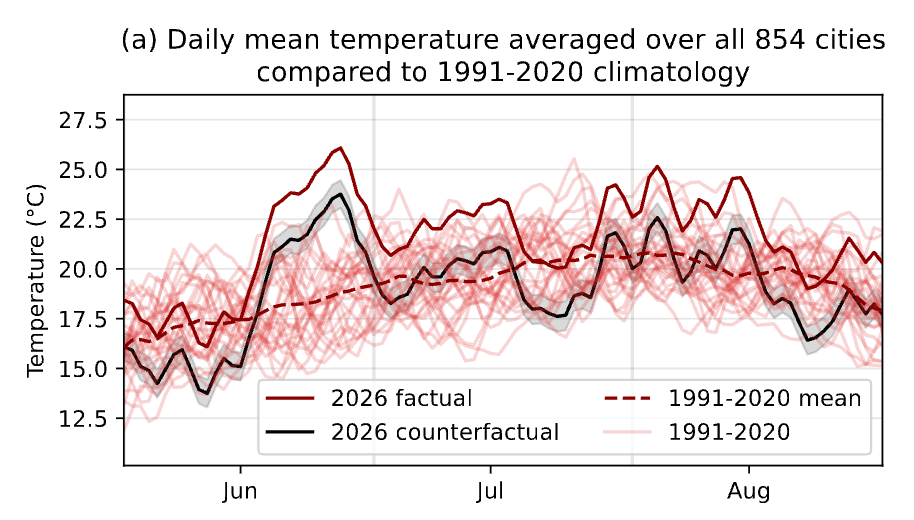
The research covered 854 urban areas across 30 countries – including the EU, the UK, Norway and Switzerland – which are home to almost 173 million people, roughly 40% of their combined population, between June and August.
Combined with the findings of an earlier study covering the period from 2000 to 2025, these results suggest that this summer was by far the deadliest for heat-related mortality this century.
Lead author Clair Barnes, a climate researcher at Imperial College London, described the summer as the “worst on record for heat-related mortality across Europe”.
“These numbers are a stark reminder that our hotter, more extreme summers are having an increasingly severe impact on public health. Behind these statistics are real people whose lives were lost and real families who grieve for them,” she added.
Malcolm Mistry, a climate and health scientist at the London School of Hygiene & Tropical Medicine and co-author of the study, described the estimated death toll as “staggering”, but added that the proportion attributable to human-induced climate change was even more alarming.
The researchers combined temperature records with historical data on the relationship between heat and mortality. They then compared actual temperatures with those expected in a world that was unaffected by human-induced global warming.
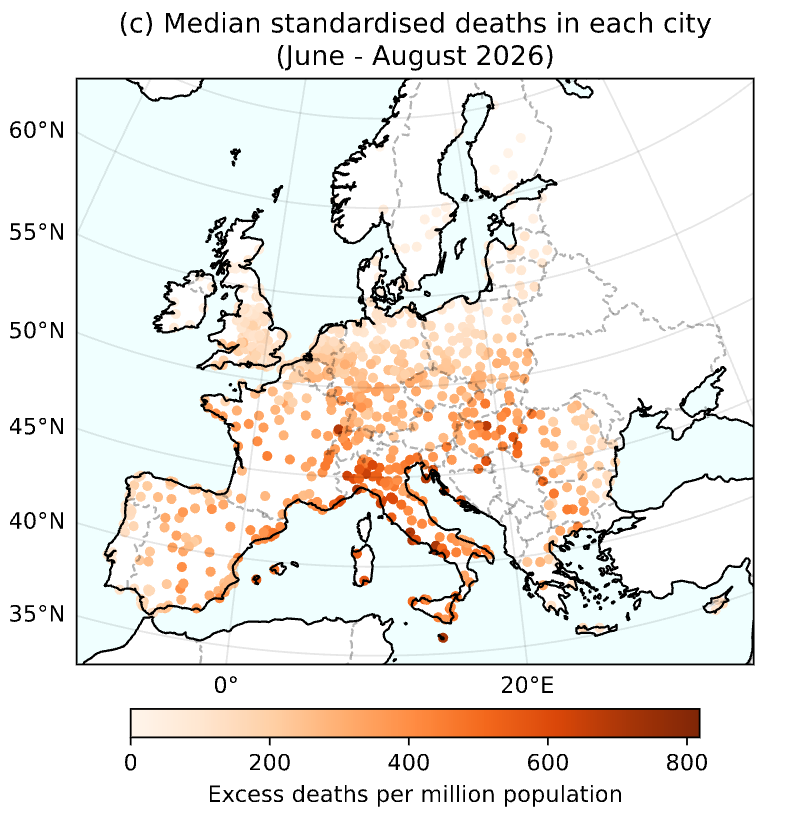
They estimated 50,391 excess heat-related deaths occurred between June and August, of which 32,619 (65%) were attributable to climate change.
This was significantly higher than the previous record of 29,480 in 2022. The number of deaths attributable to climate change alone in 2026 exceeded the total estimated heat-related deaths in any previous summer this century.
Almost one-third of these deaths occurred between 17 June and 1 July, during an exceptionally intense heatwave.
The elderly were the group most affected, with people aged 85 and over accounting for roughly half of the estimated deaths, according to study co-author Garyfallos Konstantinoudis.
Nevertheless, more than 6,000 deaths were estimated among people under 65, including 833 aged between 20 and 44.
The highest mortality rates were recorded in Malta, Italy and Hungary, while the greatest absolute death tolls were in Italy, France, Spain, Germany and the UK.
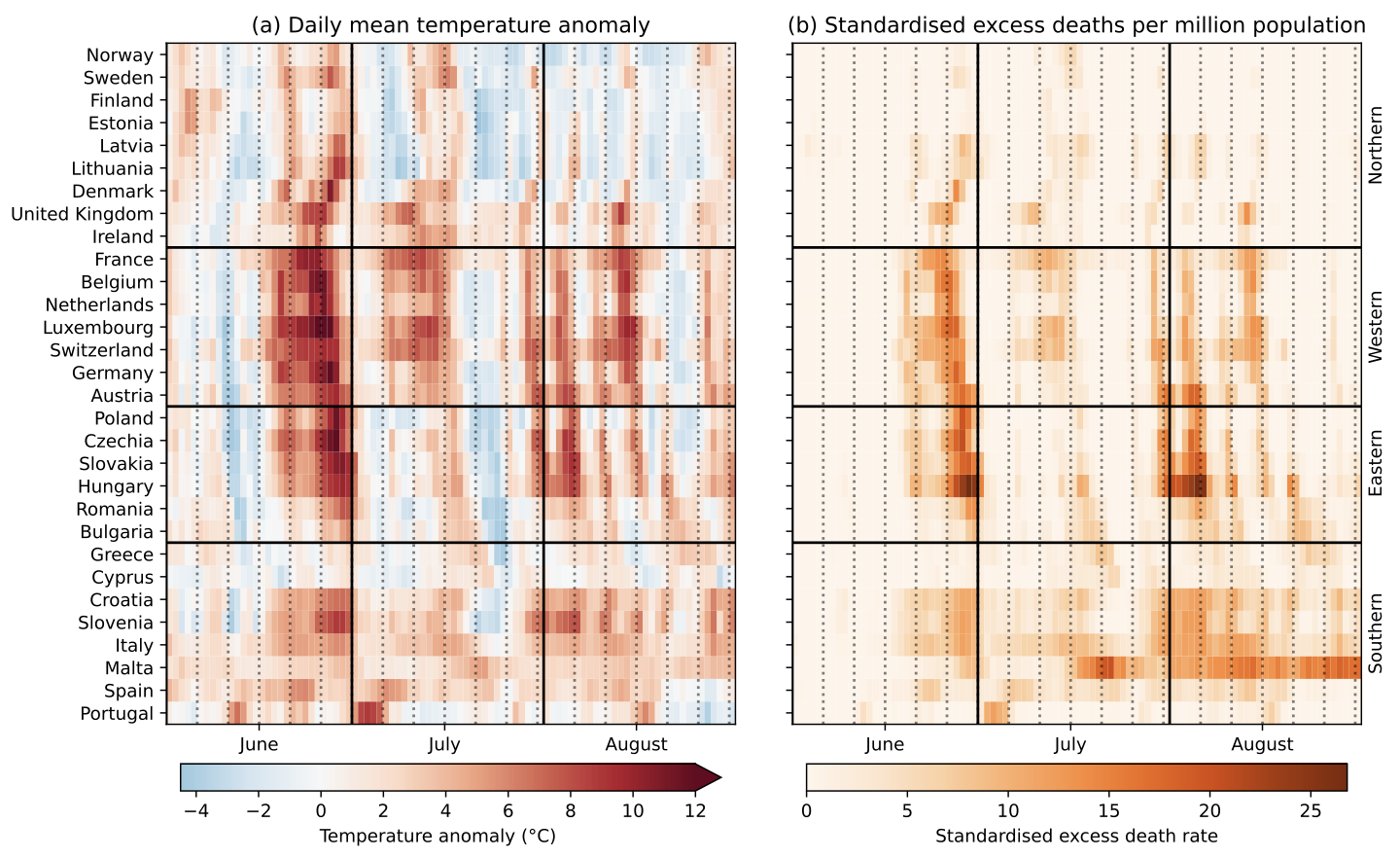
As heat is rarely mentioned on death certificates, families are often unaware of its role in the death of a relative already suffering from another condition.
Speaking to The Guardian, Mario Guarino, an emergency doctor in Naples, reported a 15% increase in emergency visits during the hottest weeks. He pointed not only to the heat, but also to poverty and loneliness, as factors which leave elderly people particularly vulnerable.
David García-García, a researcher at Madrid’s Carlos III Health Institute who was not involved in the study, cautioned, however, that, although the research presented a “valuable contribution”, the figures were estimates based on “observed temperatures and epidemiological models”, rather than actual death records from summer 2026.
The overall European death toll could, however, still be higher, as the authors of the Imperial College study pointed out that their analysis covered only urban areas.