

Europe has a tourism advantage most competitors would struggle to replicate: a single journey can connect several countries, cultures and economies.
For travellers who need a visa, that journey begins at a consulate. How well that first encounter works deserves a place in Europe’s competitiveness debate.
A more predictable entry process could help Europe attract repeat visitors, strengthen business travel and spread tourism’s economic benefits.
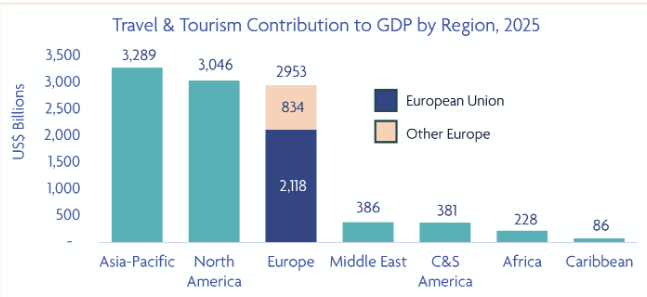
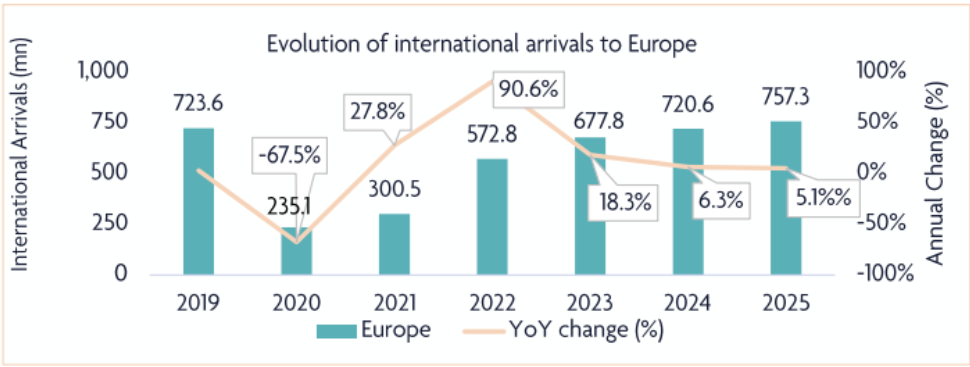
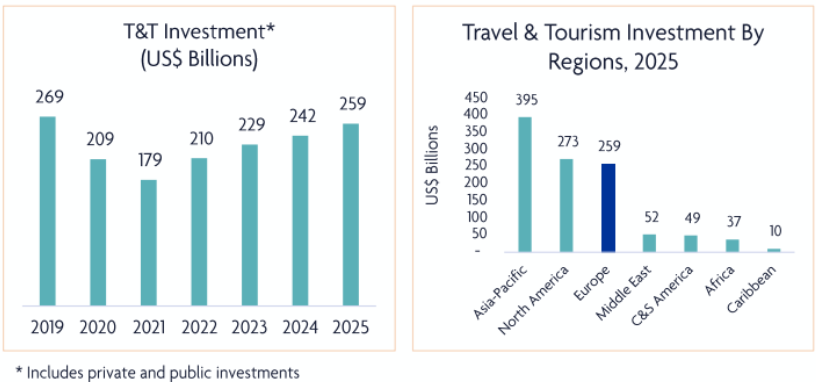
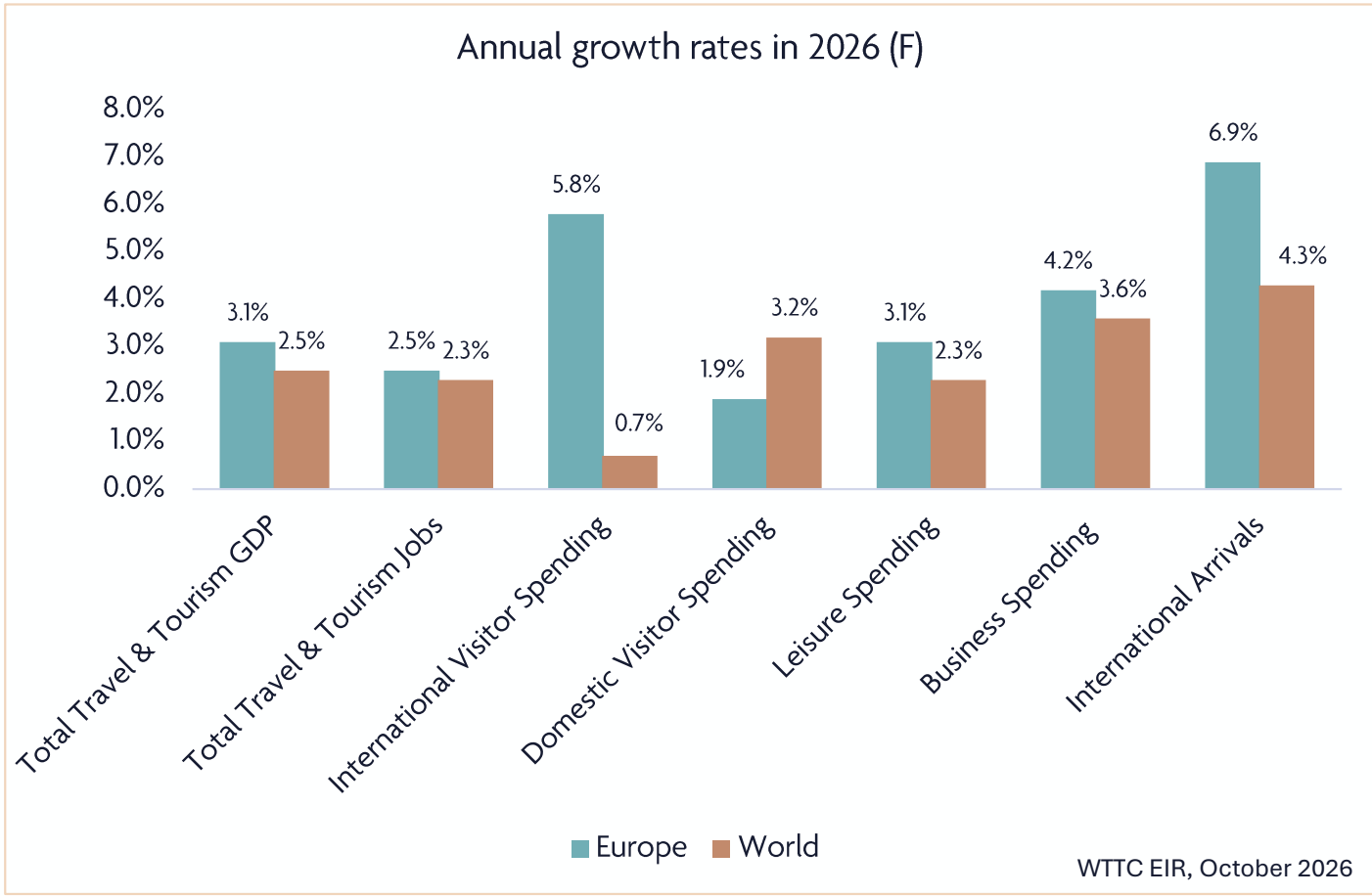
The continent starts from a position of strength. According to the World Travel & Tourism Council’s October report, Europe welcomed 757.3 million international overnight arrivals in 2025, accounting for 49.1% of the global total. International visitors spent $835 billion across the region. These figures cover Europe as a whole, including countries outside the European Union.
The policy opportunity is to make legitimate travel more predictable, while maintaining the checks on which public confidence in Schengen depends.
European Commission figures show that EU and Schengen-associated consulates received more than 12 million short-stay visa applications in 2025, up 4.3% from 2024. Almost 10.3 million visas were issued. Demand is recovering, although applications remain below the 17 million recorded in 2019.
That gap needs careful interpretation. Changes in geopolitics, air connectivity, household finances and travel preferences all affect applications. Visa statistics alone cannot establish how many travellers chose another destination because of administrative difficulties.
They do, however, justify a closer look at whether Europe’s entry procedures support its economic ambitions.
The Commission’s 2026 visa strategy already recognises the connection. It identifies more predictable travel, digital applications and multiple-entry visas with longer validity as tools that can support tourism and business without compromising security. The economic stakes are substantial: the strategy puts international tourist spending in the EU at €515 billion in 2024.
Brussels therefore has a policy foundation. The next task is to translate it into an experience travellers and businesses can plan around.
Consider repeat visitors.
In 2025, 5.3 million Schengen visas permitted multiple entries, representing 51.7% of visas issued, according to the Commission. For an eligible traveller with a record of complying with visa conditions, a visa with longer validity can make a second or third visit easier to organise.
That matters to a conference organiser inviting returning delegates, a company arranging meetings across several European markets, or a family considering another holiday.
Member states should make consistent use of the flexibility available for reliable applicants, subject to individual assessment and applicable rules. A lawful travel history should help authorities process a returning visitor efficiently.
Predictability also requires better measurement.
The Commission describes the normal processing period for a Schengen visa as 15 days, with extensions to up to 45 days where further examination is required. Applicants may also need an appointment before lodging their application.
For the traveller, the relevant period begins when they first try to secure that appointment. Governments should therefore measure the full application journey: appointment availability, submission, processing and passport return.
Publishing comparable service data would help identify where additional staff, better scheduling or technical support could make a difference. It would also allow improvements to be judged against evidence.
Digitalisation offers another opportunity, provided it simplifies the underlying process.
An online application should reduce unnecessary duplication, give applicants clear information and make progress easier to track. Consulates need sufficient capacity to assess the applications that arrive through it. A digital interface cannot compensate for an administrative bottleneck behind the screen.
The broader commercial case is market diversification.
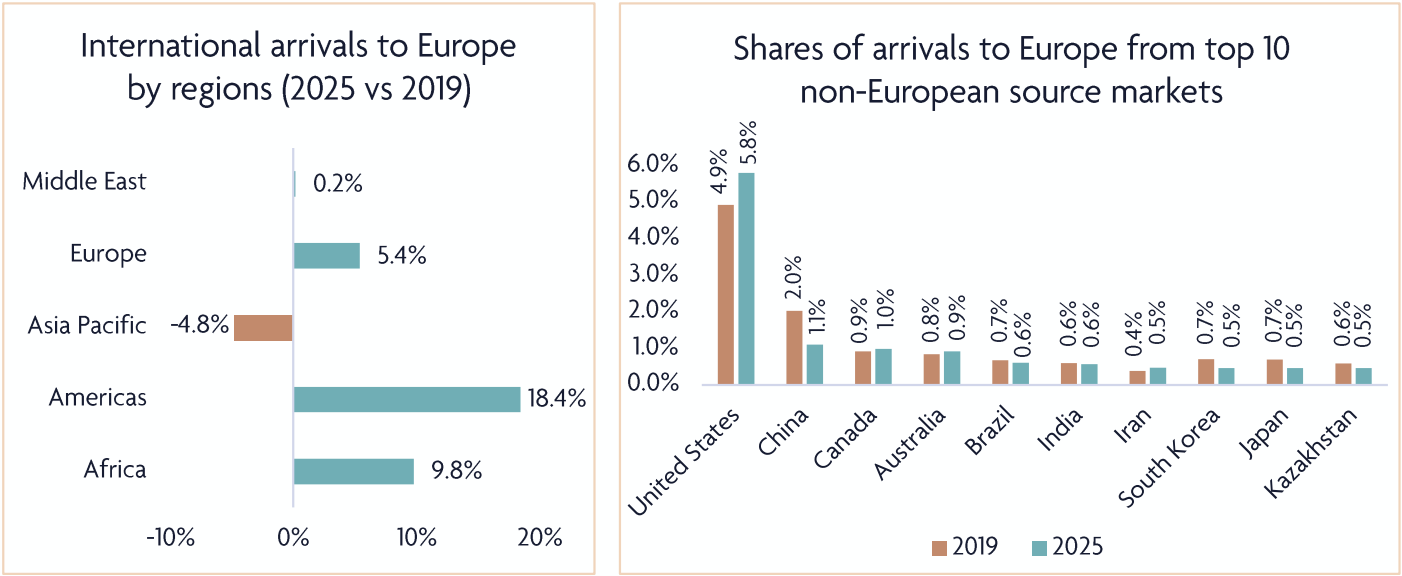
WTTC reports that 74.3% of international arrivals to Europe in 2025 originated within Europe. That demonstrates the strength of regional travel, while leaving scope to develop demand from further afield.
Tourism authorities should coordinate campaigns in markets where travellers require visas with consular planning. Before investing in a major promotion, governments should understand whether application capacity can accommodate the interest they hope to generate.
Airlines, destinations and conference organisers can contribute demand forecasts. Decisions on individual applications must remain with the competent authorities.
There is an equally important question about where additional spending goes.
Easier travel does not, by itself, resolve overcrowding, housing pressures or seasonal congestion. Entry policy should sit alongside destination management, transport investment and efforts to develop year-round demand. The objective should be greater economic benefit across more communities, with local capacity guiding growth.
Europe already possesses the appeal. Its opportunity now is to make the administrative journey match the quality of the destination.
A secure, consistent and predictable visa process would strengthen the proposition Europe offers visitors and give its businesses a firmer basis on which to invest.