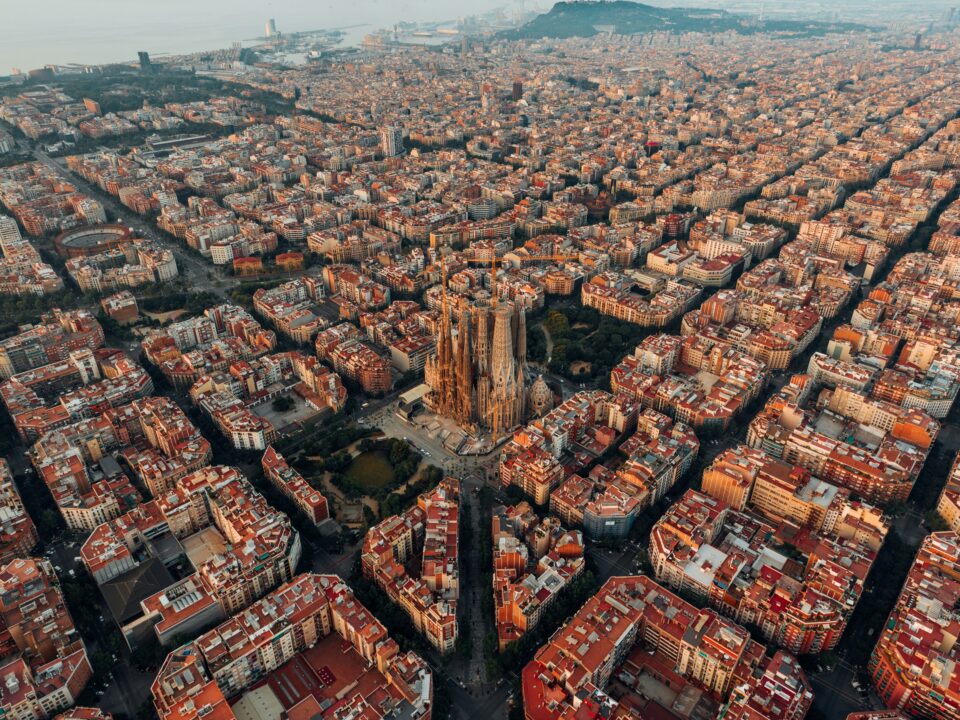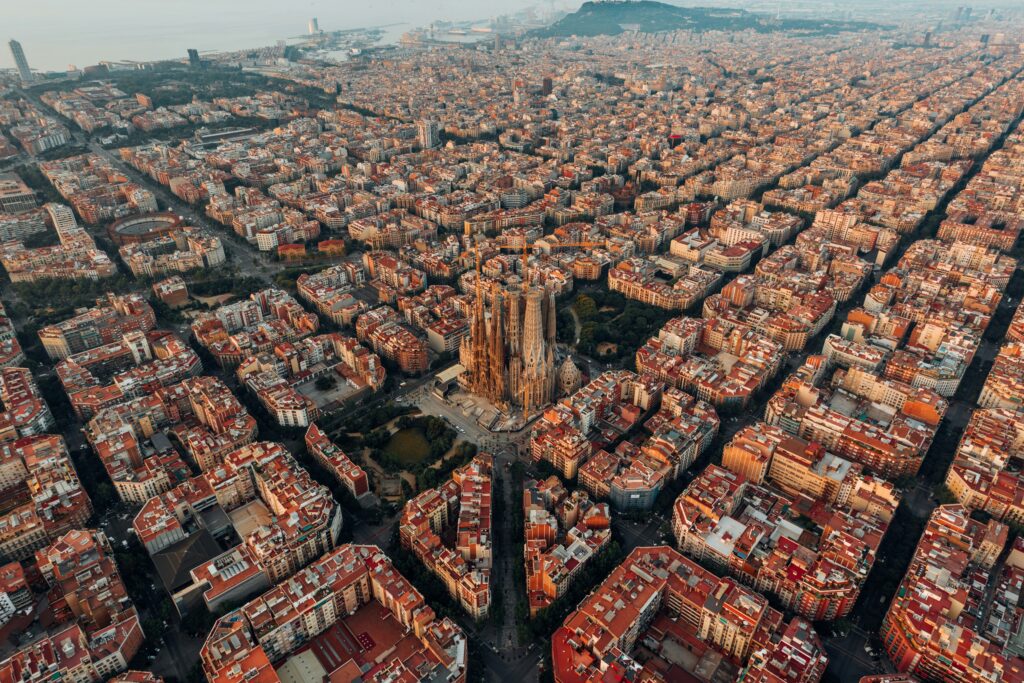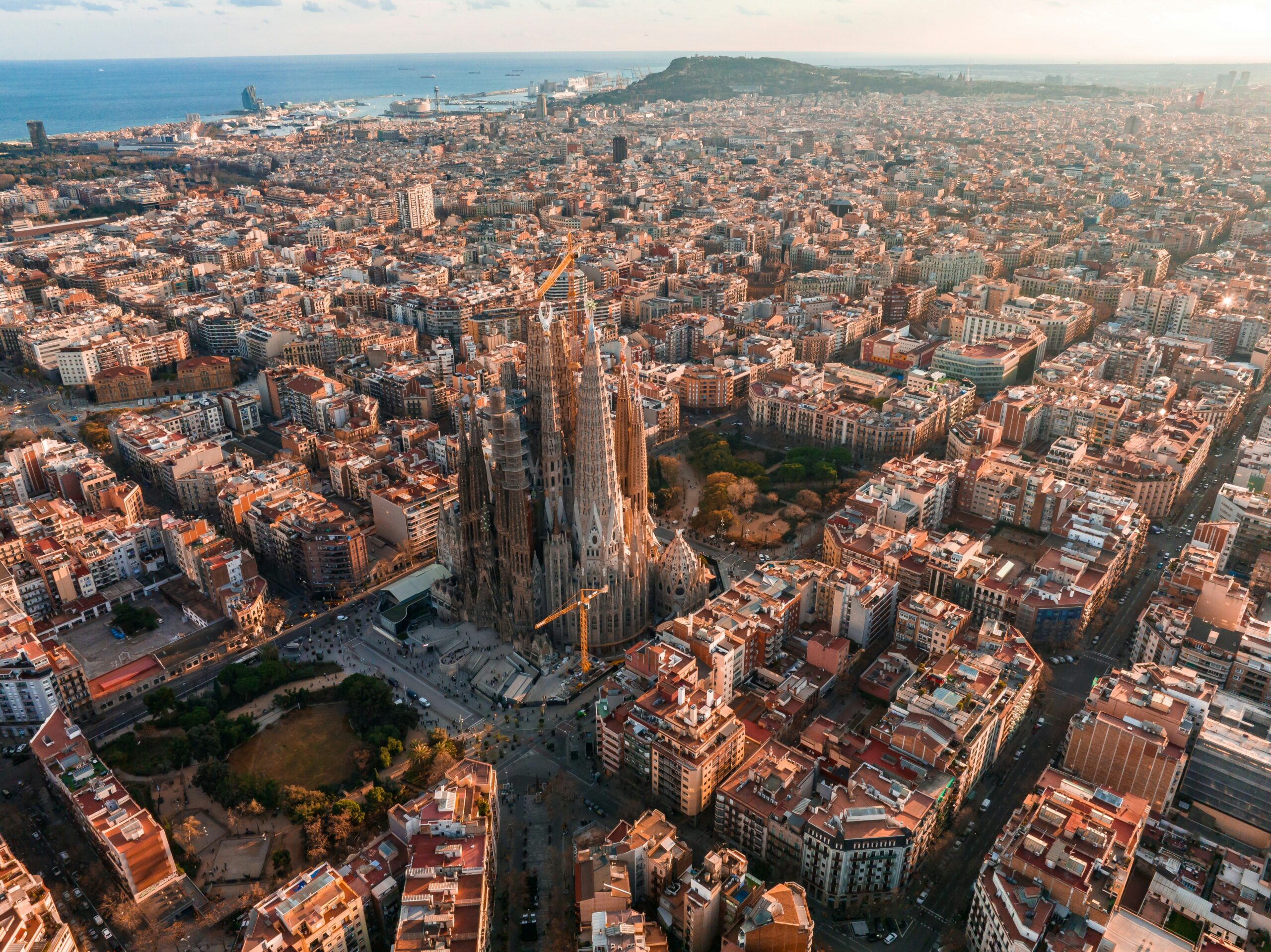


The Sagrada Família has reached a historic new height, both literally and symbolically. The iconic basilica, which has been under construction since 1882, became the world’s tallest church after builders lifted the upper section of its central tower – the Tower of Jesus Christ – bringing the total height to 162.91 metres (534ft 8in). The achievement surpasses Germany’s Ulm Minster, which held the record for more than a century at 161.53 metres.
The milestone was achieved with the addition of the first section of the tower’s crown – a 7.25-metre-tall prefabricated stone element weighing 24 tonnes. The piece forms the lower arm of the 17-metre-tall cross that will eventually sit atop the Tower of Jesus Christ. The installation marks a significant moment for Barcelona and for admirers of Antoni Gaudí, the visionary architect behind the basilica’s distinctive design.
According to the Sagrada Família Foundation, the full height of the tower will reach 172 metres once the remaining spires are installed later this year. Work on interior decoration and façade sculpting is still underway, with full completion expected in about a decade.
The structure now dominates Barcelona’s skyline, visible from nearly every corner of the city, reaffirming the basilica’s status as one of the most ambitious religious projects ever built. Tourism has played a substantial role in funding the project, with last year’s 4.9 million visitors — around 15% from the United States — contributing directly through ticket sales.
Avui hem viscut un dels grans moments en la construcció de la Sagrada Família! 🙌 Ja s'ha col·locat el primer element que forma part de la creu de la torre de Jesucrist: el braç inferior de la creu, de 7,25 metres i un pes de 24 tones.
— La Sagrada Família (@sagradafamilia) October 30, 2025
¡Hoy hemos vivido uno de los grandes… pic.twitter.com/YLfTs3Zpyw
The Sagrada Família is the legacy of architect Antoni Gaudí, who transformed its design into a fusion of Gothic structures, organic forms and rich Catholic symbolism. He devoted the last 15 years of his life exclusively to the project and died in 1926, having seen only one of its towers completed. Since then, generations of architects, artisans and engineers have continued to build according to his surviving plans and models, balancing tradition with modern construction technology.
The Tower of Jesus Christ sits at the centre of Gaudí’s original plan for the basilica, surrounded by four smaller towers dedicated to the Evangelists. Each of these towers features ornate geometric motifs inspired by natural forms, reflecting Gaudí’s lifelong fascination with organic architecture.
For Barcelona, the achievement reinforces the basilica’s status as a global landmark and a living work of art. For Gaudí’s admirers and scholars, it represents a tangible step toward fulfilling the original vision, even as debates persist over some of the later design interventions and urban-planning implications.
The milestone arrives just ahead of the centenary of Gaudí’s death in 2026, for which the city is planning exhibitions and cultural events celebrating his legacy and enduring influence. More than four decades after UNESCO designated the basilica a World Heritage Site, its soaring silhouette remains a defining symbol of Barcelona — now taller than ever.