

The United Kingdom’s Heathrow Airport is now more passenger-friendly after completing a technology rollout that means liquids and laptops can be left in cabin hand luggage at checkpoints.
The new computed tomography (CT) scanners installed at the west London hub allow passengers to take up to two litres of liquid in their carry-on bags, without having to remove them or place them in transparent plastic bags for inspection. Laptops, too, can be left in-situ. It all adds up to what authorities hope will be a much more streamlined airport experience that will not only reduce delays but also reduce single-use plastics.
Going through security at Heathrow? 👀
— Heathrow Airport (@HeathrowAirport) January 23, 2026
Here’s what to expect when travelling through our terminals:
✅ Leave large electricals and liquids in bags.
✅ Empty liquids in metal or double-walled containers.
✅ Remove coats, empty pockets, and place them in the tray with your bag on… pic.twitter.com/AvMNYki2tw
There is, however, the potential that a speedier check-in will not be the case. Findings by consumer champion Which? have revealed that the scanners, brought in as part of a £1-billion (€1.15-billion) airport upgrade, are so sensitive that they provoke more bag searches than were previously conducted.
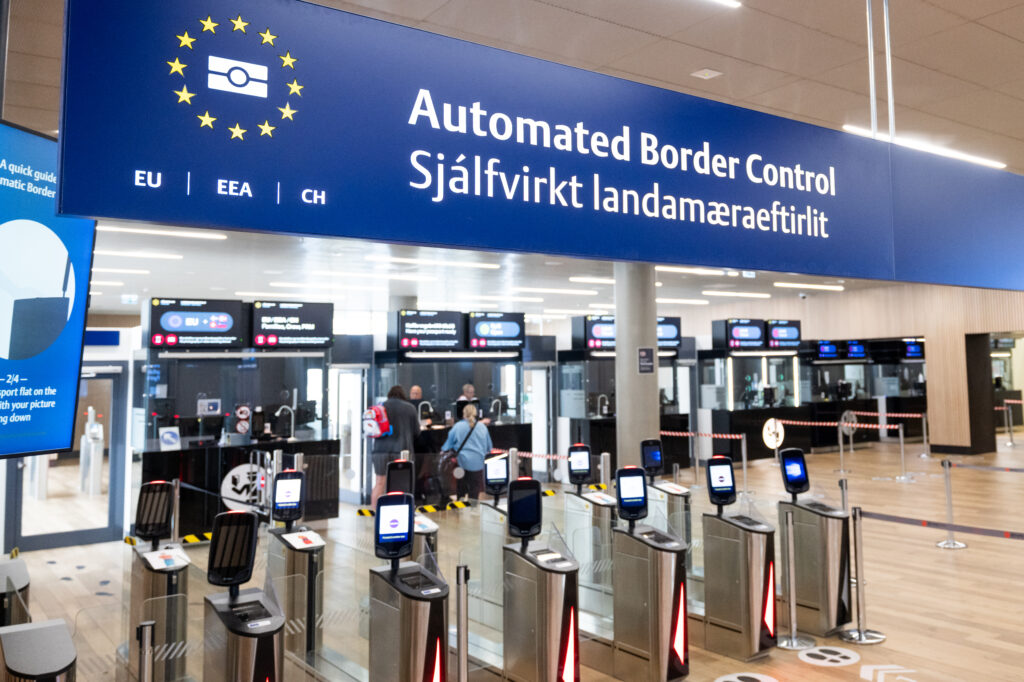
The CT technology creates advanced three-dimensional images of bags as they pass through scanners. Bigger and heavier than their predecessors, the so-called Next Generation Security Checkpoints (NGSC) have required significant infrastructure investment in some airports, including floors being reinforced.
The first UK airport to put CT scanning into practice was London City Airport in April 2023. It is now in place at other UK international and regional hubs, such as Aberdeen, Birmingham, Belfast, Bristol, Edinburgh, Gatwick, Leeds Bradford, Newcastle, Southend, and Teesside, but the new two-litre liquid limit (instead of 100ml) has not yet been implemented everywhere, pending Department for Transport (DfT) approval.
Heathrow has hailed the new tech as a development that would permit the airport to handle “thousands of passengers an hour with significantly greater efficiency, while maintaining high safety and security standards,” yet its authorities have also sounded a note of caution for flyers. They point out that passengers must take responsibility for what they bring on both outbound and inbound flights and that the new two-litre threshold only applies to flights departing Heathrow. There is no guarantee that the airport flyers choose to use for any return flight into the UK will apply the same rule.
The DfT has welcomed the progress at Heathrow, saying via a spokesperson: “Heathrow is the latest UK airport to complete its rollout of next-generation security equipment for passengers, helping ensure security checks remain robust and can be completed smoothly.” Still, it recognises that the lack of consistency within the UK and abroad is a sticking point for passengers planning their journeys and their packing. “Airports are responsible for the installation and operation of security equipment,” the spokesperson added, highlighting that: “Passengers should continue to check security requirements with airports before they travel and come prepared with liquids in containers no larger than 100ml in hand baggage unless advised otherwise.”