



There is mounting concern about the Empowering Consumers for the Green Transition Directive (ECD), which will apply across the EU from September 2026. Certification agencies are using fear of regulatory action on mis-selling, making businesses vulnerable, and leveraging this to sell certification services.
Certification has been remarkably unsuccessful across Europe. Recent research by Xavier Font and colleagues reveals that only 9.3% of European hotels in a sample of 82,301 properties were certified in 2024, according to the Booking.com platform. Certification is highly concentrated among chain-affiliated, large, high-end hotels.
There is a case for certification as a basic assurance for businesses concerned about their supply chains, particularly tour operators. However, businesses in destinations remain highly vulnerable to pressure from source markets demanding certification.
A second issue is that certification does not provide verification for specific claims.
Working with Glynn O’Leary, a professionally trained corporate accountant, ICRT.global has developed a method enabling businesses to report and differentiate themselves in the marketplace based on the local economic benefits they generate through sourcing and payroll. They can also report on their national and local tax contributions. Verification can then be provided by their accountants at a marginal additional cost.
Most accommodation providers already pay for water, electricity, and fuel for vehicles and generators. Data on consumption per bed night could therefore be reported, with accountants independently verifying the claims made by businesses.
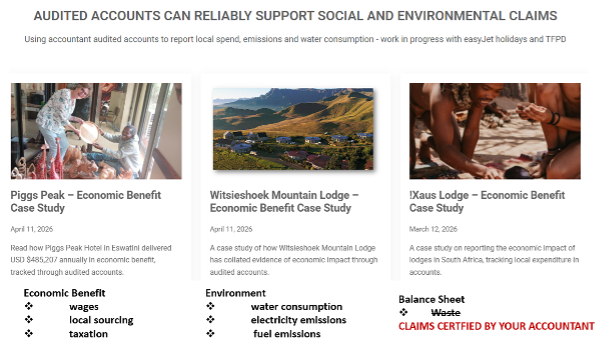
Using accountant-audited accounts to report local spend, emissions, and water consumption is currently a work in progress, with collaborations including easyJet holidays and Transfrontier Parks Destinations.
I will be speaking virtually at the third Eswatini Responsible Tourism Conference on Creating Shared Value. The event will bring together policymakers, tourism operators, academics, and community leaders to explore practical strategies for strengthening responsible tourism and ensuring that tourism development benefits local communities, protects the environment, and celebrates Eswatini’s rich cultural heritage.
Date: Tuesday, 28 April
Location: Piggs Peak Hotel, King Mswati III Highway, Eswatini. Register here to attend either in person or virtually.