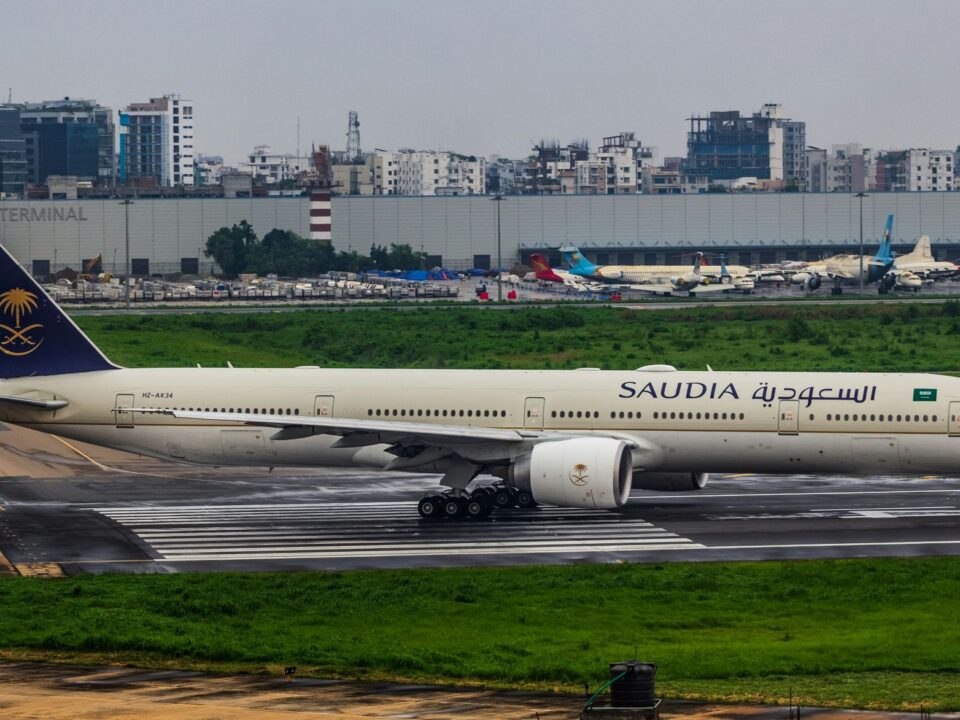
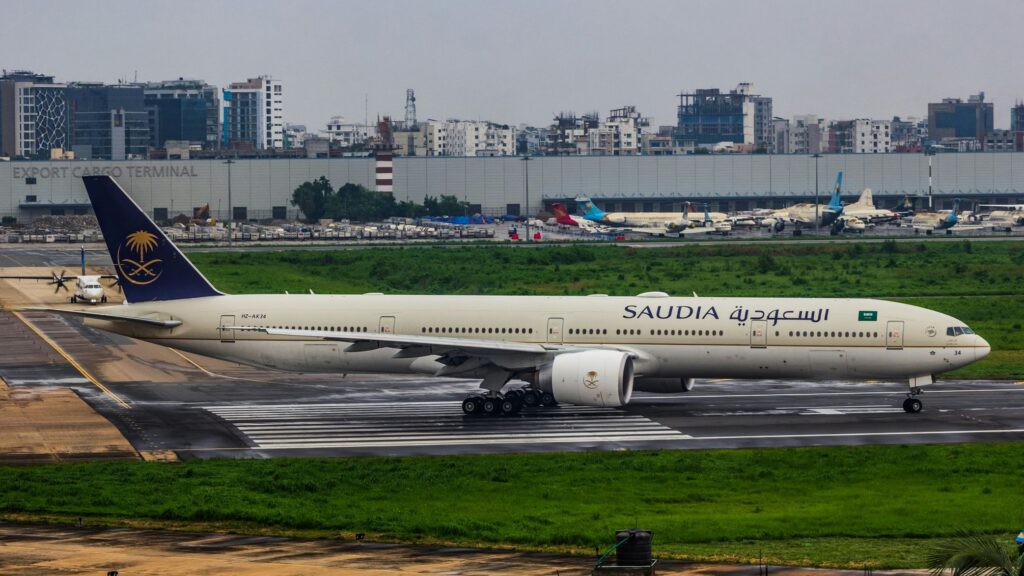
Tensions are rising between United States lawmakers and aviation firms, and Chinese competitors, due to Russian airspace bans on US planes and their commercial impact. The US wants to bring in new rules to level the playing field between its own carriers and Chinese airlines which are still allowed to fly over Russia, and now Chinese airlines are responding.
US carriers, and their European counterparts, have been banned from Russian airspace since 2022 in retaliation for sanctions imposed over the war in Ukraine. Chinese firms are still allowed to fly over Russia, giving them shorter flight times for some routes and allowing them to burn less fuel, which makes their operations cheaper – advantages that can be passed on to customers.
Noting the “competitive imbalances” between Chinese and US airlines that have resulted from the ability (or not) to use Russian airspace, the US Department of Transportation (DOT) said: “Being able to use the most efficient route provides a competitive advantage because it usually results in the shortest flight time duration, thereby offering a more appealing option to travellers.”
On 9 October 2025, DOT proposed preventing Chinese airlines from overflying Russia on their US routes, claiming their ability to do so is “unfair and has resulted in substantial adverse competitive effects on U.S. air carriers.”
🇨🇳Chinese Foreign Ministry spokesperson: #China reacts to #Trump's barring Chinese airlines from flying over #Russia on #US flights pic.twitter.com/1Yde70TVQS
— ShanghaiEye🚀official (@ShanghaiEye) October 11, 2025
But Chinese stakeholders are not taking the proposal lying down. Six airlines, including Air China, China Eastern, and China Southern – the largest airline in China and Asia – have now filed letters with DOT, pointing out the detrimental effect on fuel consumption, flight times, and on customers who risk missing flight connections if the duration of their journeys is increased. The number of passengers affected in both China and the US would be “substantial” Air China and China Southern said, with at least 2,800 passengers scheduled to fly with the latter over November and December’s winter holiday rush, who would need to change their plans.
Meanwhile United Airlines, the largest US carrier by revenue seat miles and fleet size, wants DOT to go further still and include Hong Kong’s flag carrier Cathay Pacific in the ban. United has complained that some of its direct routes are effectively on hold due to the airspace restrictions.
US carriers are not the only ones complaining. European firms like Air France-KLM have highlighted how the airspace ban is affecting their routes and competitiveness. But not everyone agrees that preventing the Chinese from flying over Russia is a workable solution.
Chinese foreign ministry spokesperson Guo Jiakun told a press conference: “Barring Chinese airlines from flying over Russia on flights to and from the US would hinder travel and people-to-people exchanges. Rather than punishing other countries and passengers around the world, perhaps it’s time the U.S. took a hard look at its own policy and the impact on American businesses.”
And even Airlines for America, an industry lobby group, argued that US policy should seek to “maintain parity in the number of passenger flights available to U.S. and Chinese airlines, by ensuring that the level of passenger capacity stays reasonably tied to marketplace demand.” Currently, US and Chinese airlines are almost equal in terms of seat capacity between the two countries.