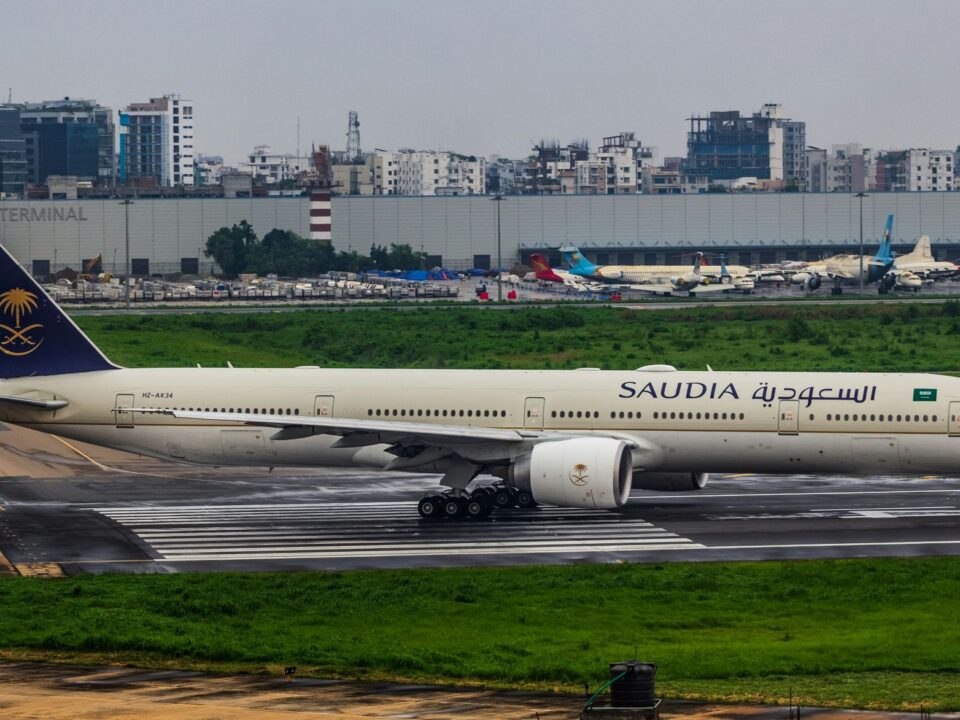
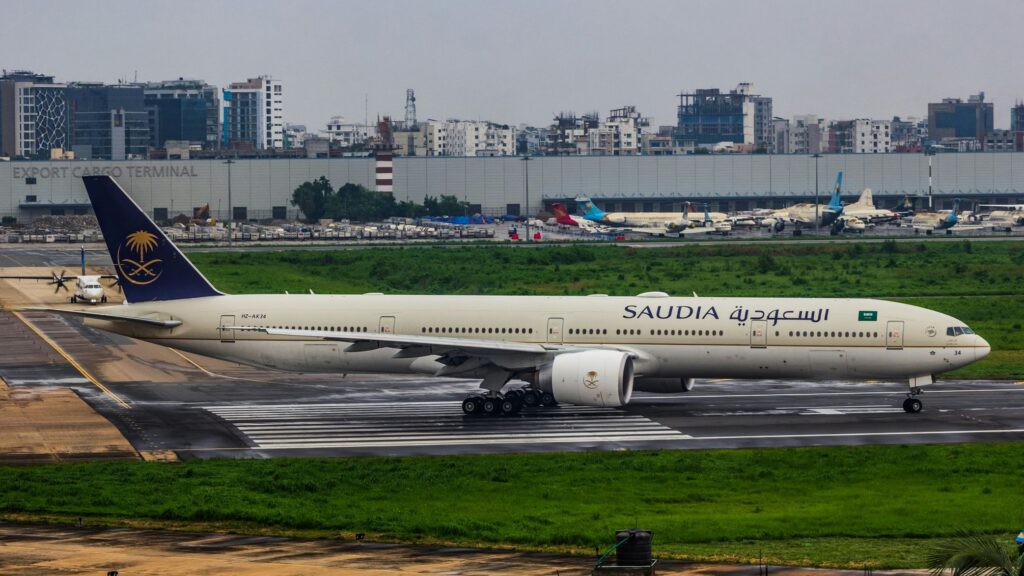
The Trump administration has proposed new restrictions on Chinese passenger airlines, seeking to prohibit them from flying through Russian airspace on routes between the United States and China. The move, it says, would correct an imbalance created after Moscow barred US carriers from its airspace in 2022 in response to American sanctions imposed following Russia’s invasion of Ukraine.
The US Department of Transportation (DOT) said that this situation has had “substantial adverse competitive effects on US air carriers”, as American Airlines has been forced to take significantly longer and more expensive detours, primarily across the Pacific or through the Middle East. This has raised fuel and operating costs, and sometimes required reduced passenger or cargo loads. However, due to China-Russia relations, Chinese airlines were not subject to these restrictions and have used the shorter, more economical routes across Russia to increase their market share compared to non-Chinese carriers providing international services.
The DOT’s proposed order aims to ‘level this competitive disparity’. This would be achieved by updating US-issued foreign air carrier permits, effectively barring Chinese carriers from routing their U.S.–China passenger flights through Russian airspace. This restriction would only apply to commercial passenger flights, leaving cargo operations unaffected.
🇺🇸🇨🇳 BREAKING: The U.S. plans to sanction Chinese airlines flying over Russian airspace to reach the U.S., citing an unfair advantage over American carriers. pic.twitter.com/OdKAE4zztv
— Defence Index (@Defence_Index) October 10, 2025
This could affect flights operated by US airlines such as Air China, China Eastern, Xiamen Airlines and China Southern. According to Flightradar24, Hong Kong-based Cathay Pacific, which flies over Russia on its New York to Hong Kong route, was not named.
This proposal is an escalation in the US–China trade war, following Beijing’s announcement that it is tightening controls on the export of rare earths, materials that are essential to US industries. A Chinese foreign ministry spokesperson criticised the restrictions, saying they were “not conducive to person-to-person exchanges”.
Meanwhile, the move complicates a major commercial deal as Boeing is reportedly in advanced talks to sell up to 500 aircraft to China. This transaction would boost the world’s second-largest aviation market, where orders have stalled since US–China trade tensions began.
🇨🇳🇺🇸 CHINA TIGHTENS GRIP ON RARE EARTHS AFTER U.S. CHIP BAN
— Mario Nawfal (@MarioNawfal) October 11, 2025
China just hit back with export controls on 12 rare earth elements and now wants foreign buyers to get licenses too.
Beijing controls 70% of rare earth mining, 90% of processing, and 93% of permanent magnet production.… https://t.co/7bofzfgpVI pic.twitter.com/0UAz5MdLVM
The DOT said it had given Beijing two days to respond to its proposal, adding that a final order could be in place by November.
US airlines have long criticised China’s continued use of Russian airspace, with some arguing that direct flights from the US East Coast to China are not economically viable without access to the shorter Russian routes.
Currently, US and Chinese airlines operate roughly equal seat capacity between the two countries, though traffic remains at around 30% of pre-pandemic levels, leaving considerable room for growth.
🇨🇳Chinese Foreign Ministry spokesperson: #China reacts to #Trump's barring Chinese airlines from flying over #Russia on #US flights pic.twitter.com/1Yde70TVQS
— ShanghaiEye🚀official (@ShanghaiEye) October 11, 2025
According to Simple Flying, the immediate impact of the proposed order may be moderate since, in 2023, Chinese airlines agreed not to use Russian airspace on new routes, although they continued to use it on older ones. The long-term effect, however, could be more substantial, as Chinese carriers are hoping to restore or expand their full pre-COVID capacity.
Trump and China’s President Xi Jinping are expected to meet in person in South Korea at the end of October.
This proposal follows Russian President Vladimir Putin’s recent admission that Russian forces were responsible for shooting down an Azerbaijan Airlines flight, which crashed in Kazakhstan last Christmas, killing 38 people. Putin claimed that it was an accident and that the intended target had been a Ukrainian drone.