


Every year, obesity and obesity-linked diseases cause 278,000 deaths and the loss of almost 8 million years of healthy life in eight European countries. The cost runs into billions, exceeding, in some countries, the defence or housing budget. An effective strategy could prevent premature deaths every year while saving billions.
A recent study conducted by the Office of Health Economics (OHE) for the pharmaceutical lobby EFPIA across Germany, France, Italy, Spain, Ireland, Greece, Romania and the United Kingdom, concluded that the annual costs of obesity and high body mass index (BMI) represent between 0.7% and 1.4% of national GDP.
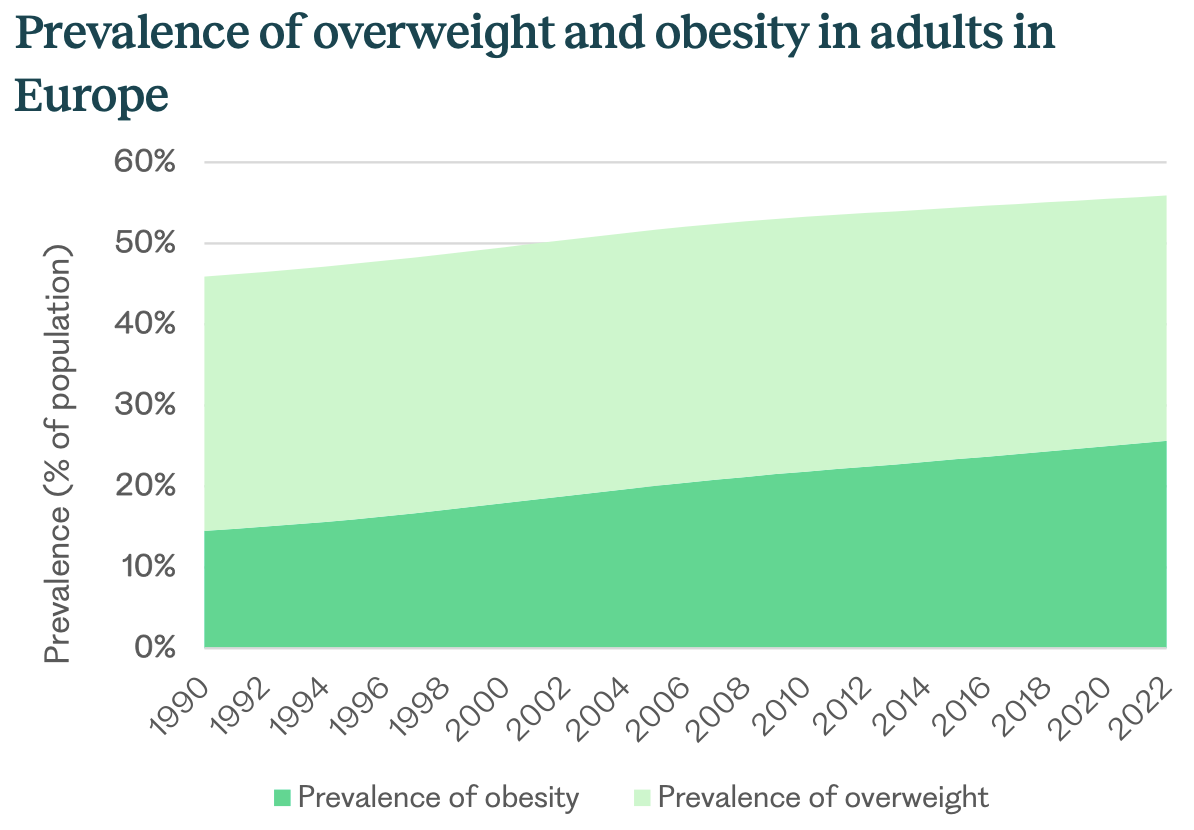
The numbers are alarming, and the fact that they keep climbing is what gives the study its urgency.
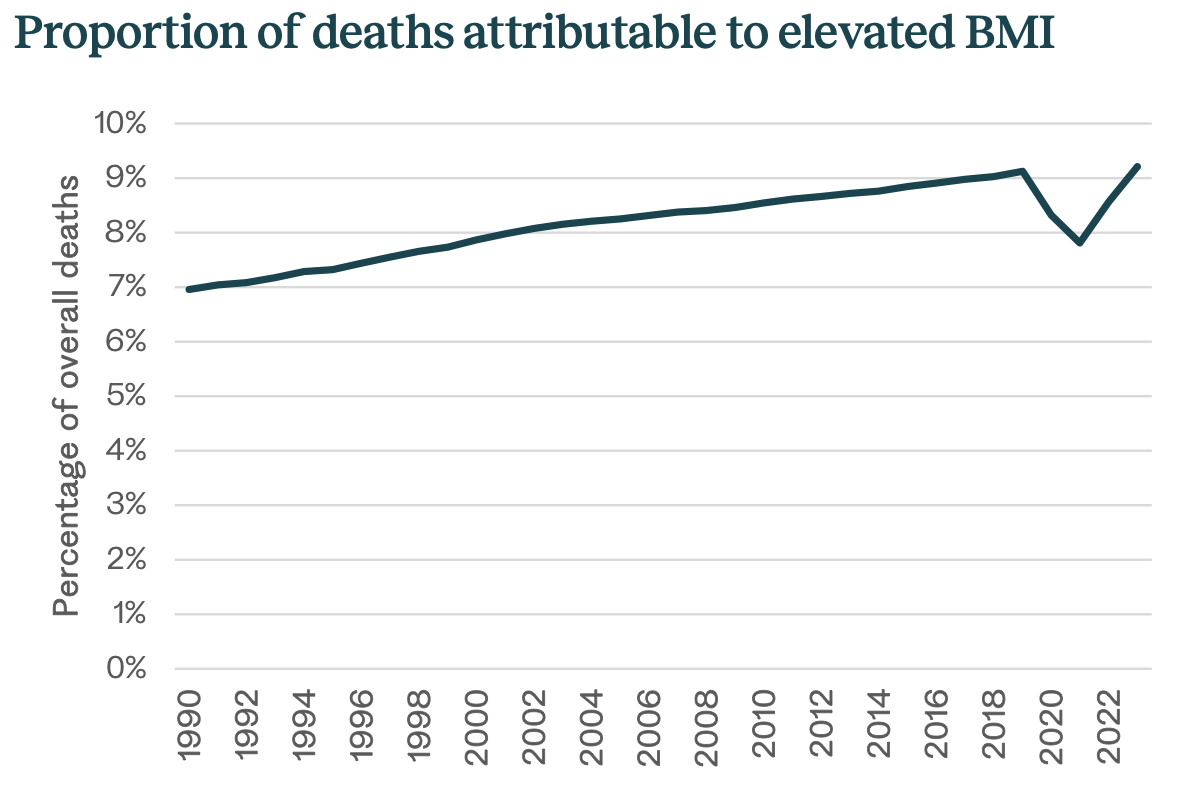
In 2024, 26% of adults in Europe were obese with a BMI of over 30, and a further 30% were overweight. Since 1990, overweight and obesity have risen by 22%, and obesity alone by more than 75%. The share of deaths attributable to elevated BMI has grown by more than 25% over the same period.
According to the World Obesity Federation, by 2035 half the world’s population will be either overweight or obese.
This comes at a very high cost, not only for the people affected but for society and governments as a whole.
Germany bears the heaviest burden at €55.2 billion a year, followed by the UK at €43.2 billion. France faces €23.3 billion, Italy €20.3 billion and Spain €19.6 billion, while Greece, Ireland and Romania each face between €2.5 and €3.4 billion.
The burden exceeds defence spending in Germany (1.3% of GDP against 1.1%), Spain (1.2% against 0.9%), and Ireland (1.1% against 0.4%), and translates into a per capita cost ranging from €131 per Romanian resident to €662 per German resident.
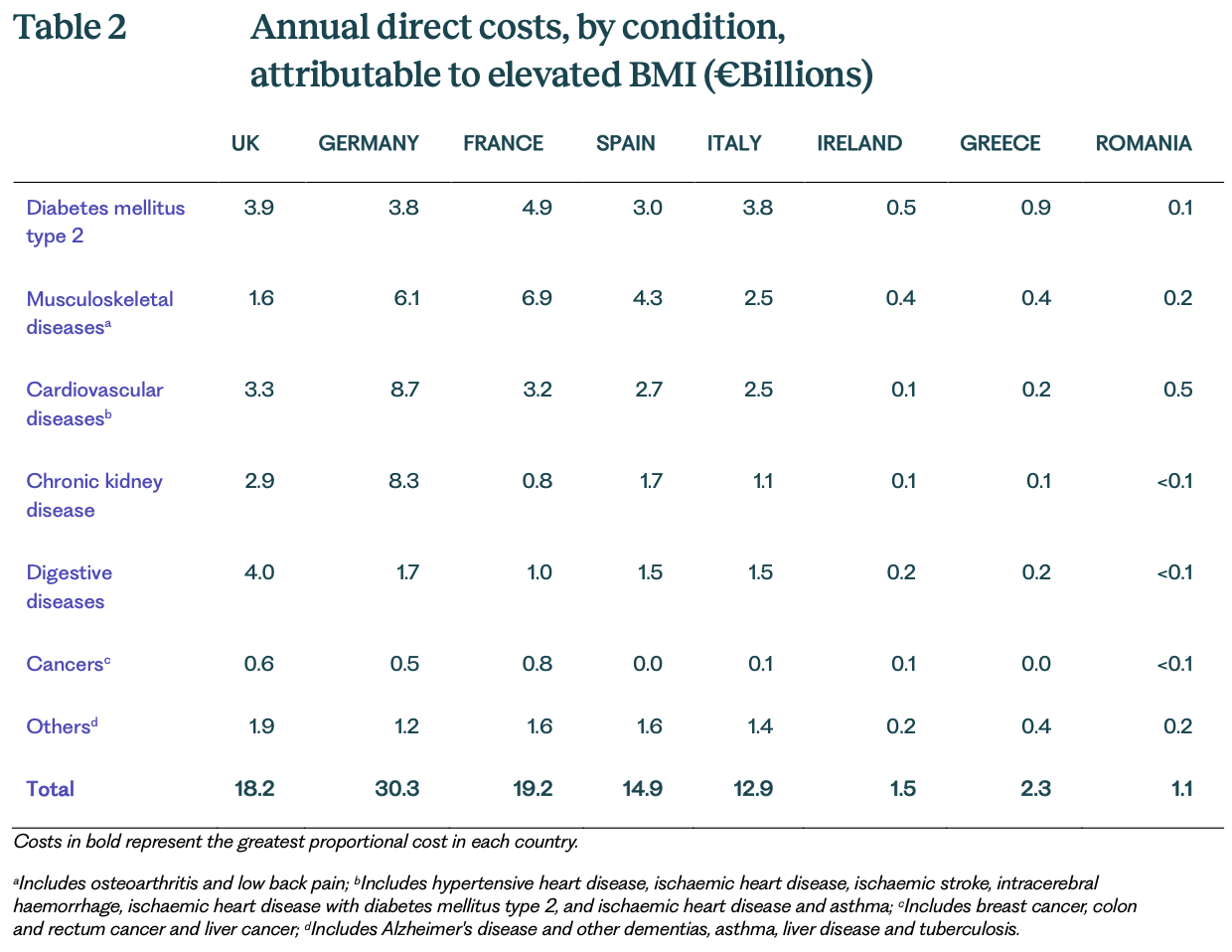
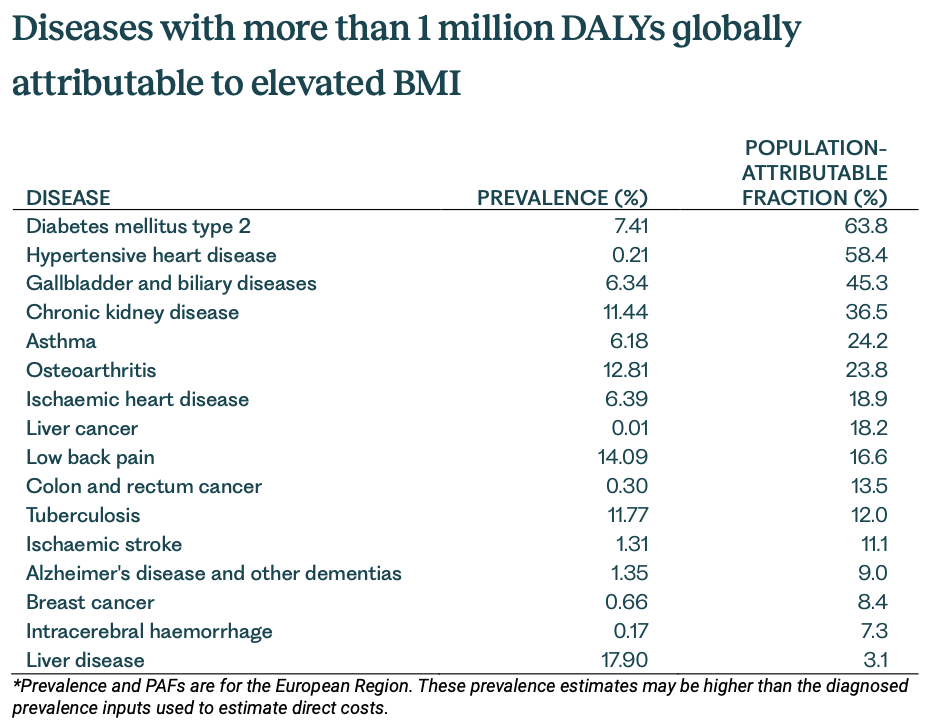
Elevated BMI is linked most strongly to type 2 diabetes, accounting for almost 60% of the disease’s healthy years of life lost, as well as to cardiovascular, kidney and fatty liver disease, cancers, neurological disorders, chronic respiratory diseases and digestive disorders.
These conditions cost the health system some €100.4 billion a year, €30 billion of it in Germany alone.
The costs do not stop at treatment. Indirect costs, including absenteeism, economic inactivity, informal care and premature mortality, account for between 18% (France) and 58% (UK) of the total burden, highlighting, EFPIA says, “the need for a cross-governmental and broader societal response”.
The study also reviews past approaches to the issue, finding that many have not had the desired impact. “An urgent shift in perception, prevention, diagnosis and treatment is required”, said Nathalie Moll, Director General of EFPIA.
Its recommendations are to formally recognise obesity as a disease; address obesity-related stigma; improve access to prevention and treatment; build the evidence for investment; and integrate obesity into the EU Safe Hearts Plan implementation.
Recognition is key, the report argues, as it would help align obesity care with that of other chronic diseases and improve access to treatment.
The recommendations come as GLP-1 weight-loss drugs flood the market, while reimbursement varies considerably between countries. EFPIA argues that access to such treatments should form part of a broader strategy combining prevention, diagnosis and long-term care.
Their long-term effects are still being assessed, but greater public investment in research, prevention and access to treatment might go a long way towards preventing the many conditions linked to obesity.