



I have heard people describe something as sustainable, meaning no more than that they expect to be selling it next year.
The Brundtland Commission defined sustainable development as “development that meets the needs of the present without compromising the ability of future generations to meet their own needs”.
It is easy and convenient to assume that future generations will be able to clean up our oceans and reclaim raw materials from landfill while continuing with business as usual.
Sustainable perfectly fits the definition of a weasel word: “a word or phrase aimed at creating an impression that something specific and meaningful has been said, when in fact only a vague, ambiguous, or irrelevant claim has been communicated”.
Weasels are small, active predators. There “has long been a widespread belief that weasels suck the yolks from birds’ eggs, leaving only the empty shell. This belief is the basis of the term ‘weasel words’, used to describe statements that have had the life sucked out of them.”
Unfortunately, weasel words are no less effective for all that.
The phrase “to weasel out”, meaning “to squeeze one’s way out of something” or “to evade responsibility”, explains why regulators must take action to avoid mis-selling.
Mis-selling has to be regulated because it is effective and undermines those retailers that are taking responsibility, investing and working to produce goods and services that cause less pollution, benefit local communities, are nature-positive and, in a host of ways, are making tourism better.
With clever use of weasel words, the bad guys can, and do, undermine the good guys.
Five years ago, the European Parliament and the Council recognised that: “In order for consumers to be empowered to take better-informed decisions and thus stimulate the demand for, and the supply of, more sustainable goods, they should not be misled about a product’s environmental or social characteristics or circularity aspects, such as durability, reparability or recyclability, through the overall presentation of a product.”
The new EU Empowering Consumers for the Green Transition Directive (EU) 2024/825, commonly referred to as EmpCo, takes effect across the EU this week and significantly increases the legal scrutiny of marketing and branding.
For those who are mis-selling, the risk of being called out and fined has increased. But for those who are taking responsibility and making tourism better, the opportunity to be recognised for their efforts has improved.
Take the opportunity. Make specific claims where you have the evidence to back them.
As I have previously argued in Travel Tomorrow, we need to go beyond the badge and rethink certification in responsible tourism.
Greenhushing is an understandable response to the risk of being accused of mis-selling, but it is a mistake. Those who are actively making tourism better deserve to profit from it and to have their efforts recognised and rewarded.
Certification is expensive, and it does not substantiate the specific claims that carry weight with consumers.
In next year’s Responsible Tourism Awards, which have just opened, we are seeking to recognise businesses and destinations that are “Communicating Responsible Tourism”. We want to share good practice and encourage those taking responsibility to get the credit for it.
The Global Destination Sustainability Movement, the European Travel Commission and NECSTouR have produced an excellent guide to EmpCo, “Proof, Not Promises”, with valuable advice about how to make credible sustainability claims.
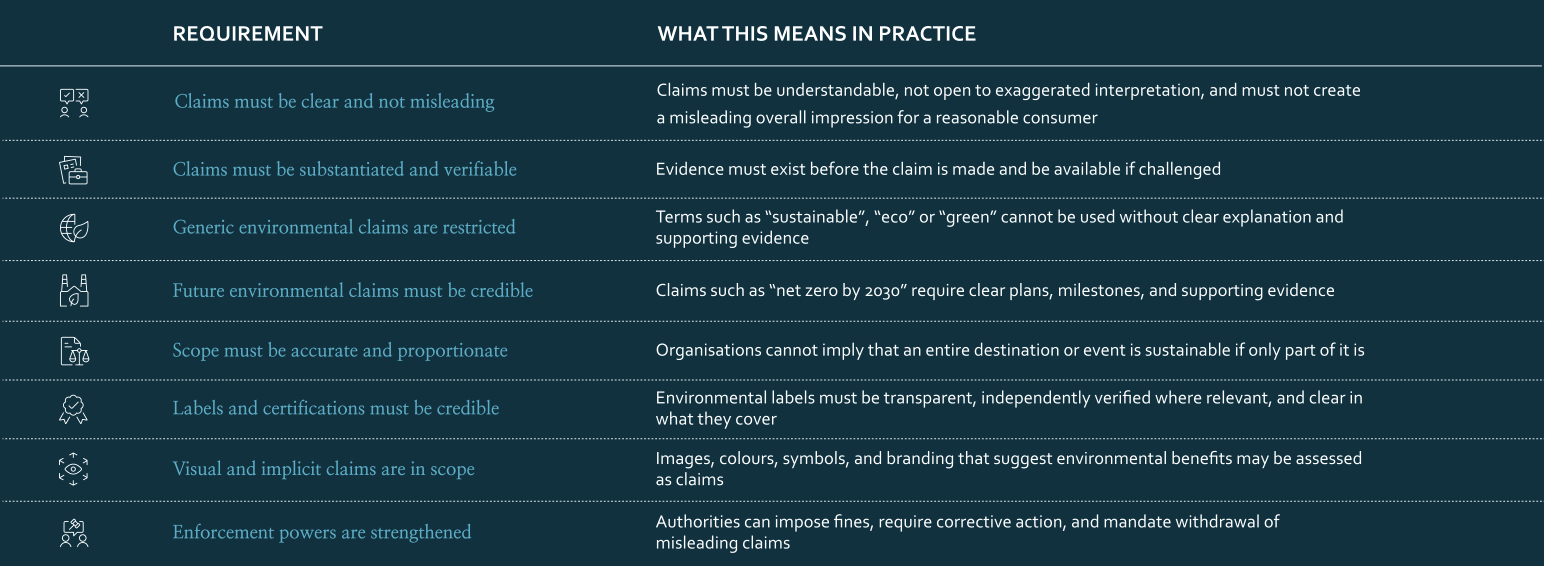
The advice on how to safely claim credit for your efforts in the marketplace is clearly presented.
As they point out, EmpCo redefines how sustainability ambition is “expressed, evidenced, and trusted”.
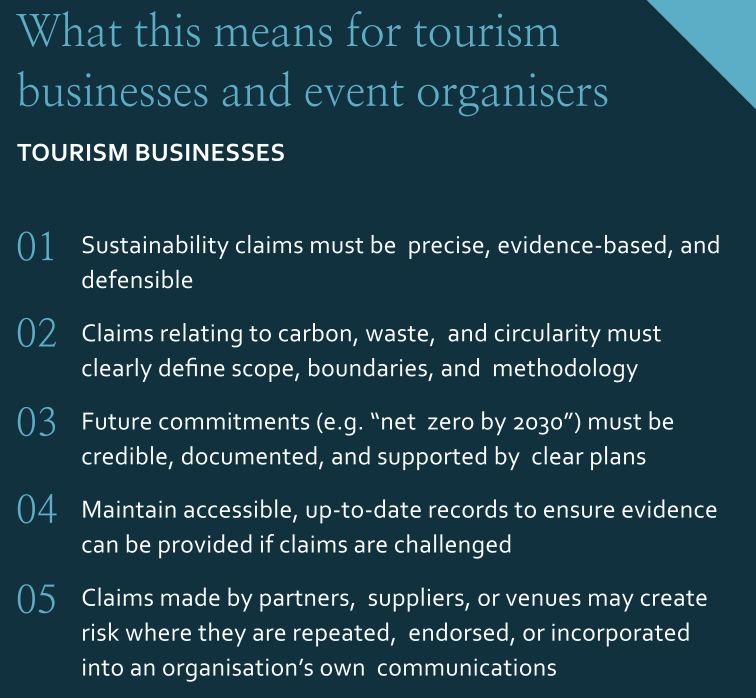
Take the opportunity. Claim the credit you deserve.