

As the number of electronic devices carried by air passengers continues to grow, so does the number of incidents involving battery fires. The latest incident, aboard an American Airlines flight in August, injured four to five passengers, with one reportedly hospitalised for burns.
Between January and September 2026, a record 82 incidents involving lithium batteries aboard, six of which involved laptops, were reported by the US Federal Aviation Administration (FAA).
So, what precautions should travellers take when flying, and how can such unwelcome scenarios be avoided?
The first recommendation is to check the condition of one’s laptop battery before flying. Damaged, defective or recalled batteries, particularly those showing signs of swelling or overheating, should not board the plane at all.
Travellers should also check whether their batteries and devices comply with the airline’s battery restrictions.
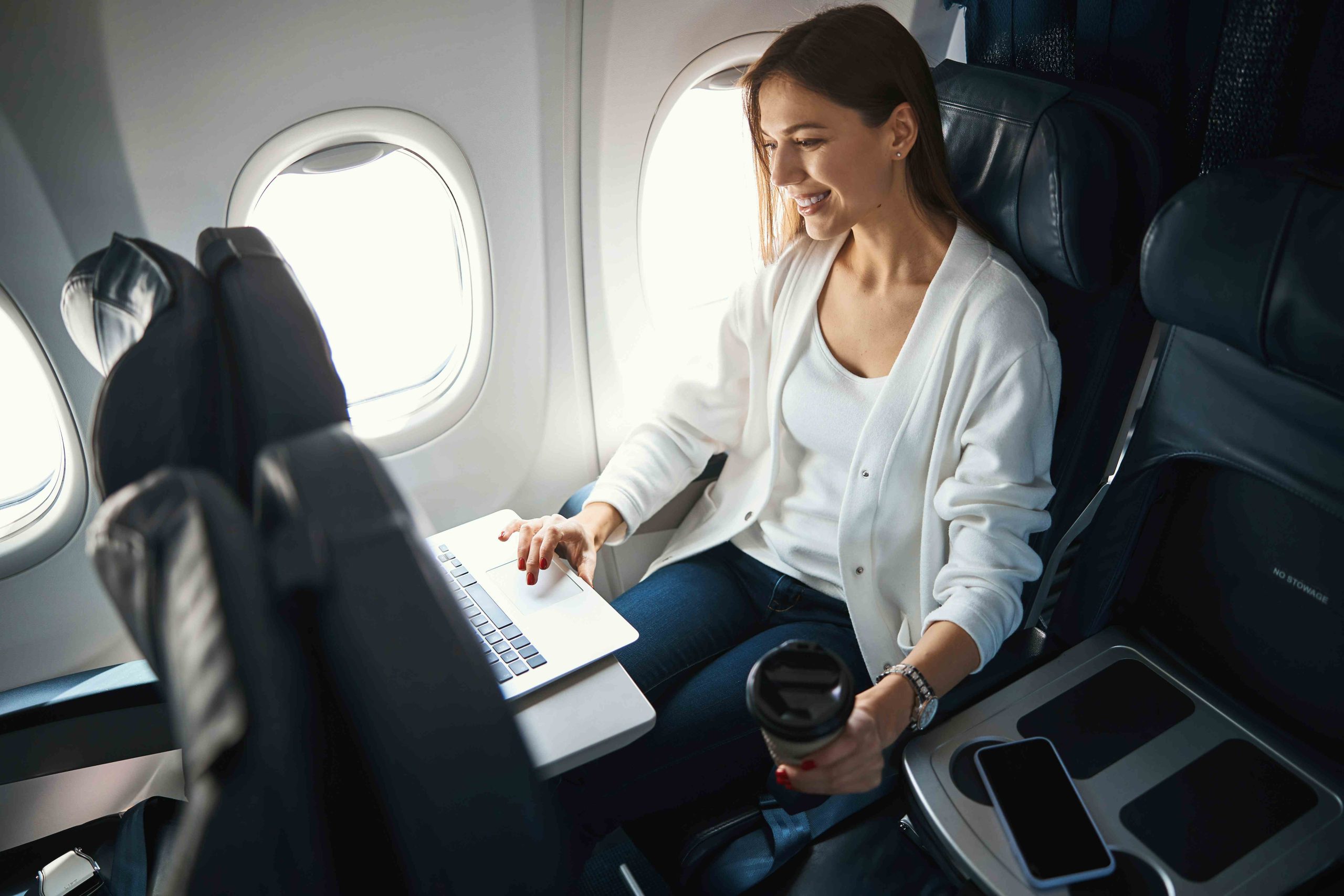
The second recommendation concerns where to keep your devices during a flight; it might feel counter-intuitive, and airlines have different rules on where devices must be stowed.
Travelers are flying with more lithium battery-powered devices than ever before but devices can pose serious risks if packed incorrectly. There are 7 essential rules everyone should follow when flying with lithium batteries. Do you know them? Learn more: https://t.co/7rZ3s5xnsu https://t.co/4vX5dujPuG
— IATA (@IATA) August 11, 2026
Southwest Airlines, for example, requires laptops weighing 0.9 kg or more to be placed under the seat or in an overhead bin during taxiing, take-off and landing, a measure meant not only to protect the devices, but also other passengers from flying objects during turbulence.
Accessibility, however, is of paramount importance when it comes to battery fires.
In October 2025, a United Airlines flight from Washington to Rome was forced to make a U-turn after a passenger’s laptop slipped behind a cabin panel and into an inaccessible part of the aircraft.
The main danger comes from lithium-ion batteries, which can enter “thermal runaway” and potentially catch fire. Here, a quick reaction can make all the difference. Passengers spotting a device “overheating, expanding, smoking, or burning” should not hesitate and should immediately report it to cabin crew.
The rules do not apply to laptops only. They include mobile phones and tablets, watches and calculators, but also electronic products such as toothbrushes, razors, kids’ toys and drones.
Brussels Airlines, for instance, permits up to 15 battery-powered devices per passenger, normally limited to 100 watt-hours (Wh) per device for lithium-ion batteries, or 2 g lithium content (LC) for lithium-metal batteries. Devices between 100 and 160 Wh require prior approval.
The airline recommends carrying them in hand luggage, protected from shocks and unintentional activation, with devices separated by clothing or packaging. Batteries may be removed and connections isolated to prevent short-circuiting.
Additional precautions apply to checked luggage, where a maximum of three devices larger than a smartphone are permitted. All must be switched off completely, with alarms and preset activation functions disabled, and kept away from flammable items.
Finally, it demands that all portable electronic devices be visible and accessible at all times when connected to the power supply system of the aircraft.
Power banks, meanwhile, are subjected to separate regulations and must travel in the cabin.
Finally, putting your laptop in an easily accessible bag with a dedicated, padded compartment might be the safest option when it cannot be kept within reach.
Such bags will not prevent fires, but they avoid having to rummage through an entire bag in an emergency, potentially setting other contents alight. Some fire-resistant pouches have up to three protective layers designed to tamp down flames.
Again, they are not immune to fire, but they can buy precious time.
Ultimately, following airline rules cannot eliminate the risk, but it can help ensure an incident is brought under control as quickly as possible.