


Netflix has released a tell-all documentary about the sinking of the Costa Concordia, a cruise ship that foundered in 2012 off the Italian coast, with the loss of 32 lives, manslaughter charges for the captain and some crew members, and a million-euro corporate liability for the cruise line, Costa Cruises.
Directed by Chiara Messineo (who has form in atmospheric entertainment such as Stanley Tucci’s Searching for Italy, as well as true crime mysteries like Vatican Girl: The Disappearance of Emanuela Orlandi), the new documentary, Shipwrecked: Nightmare at Sea, combines eyewitness accounts from survivors, cell phone captures, unseen footage, and black box recordings, to build a chilling picture of the catastrophic sinking, and the blunders and cover-ups that led to the tragedy.
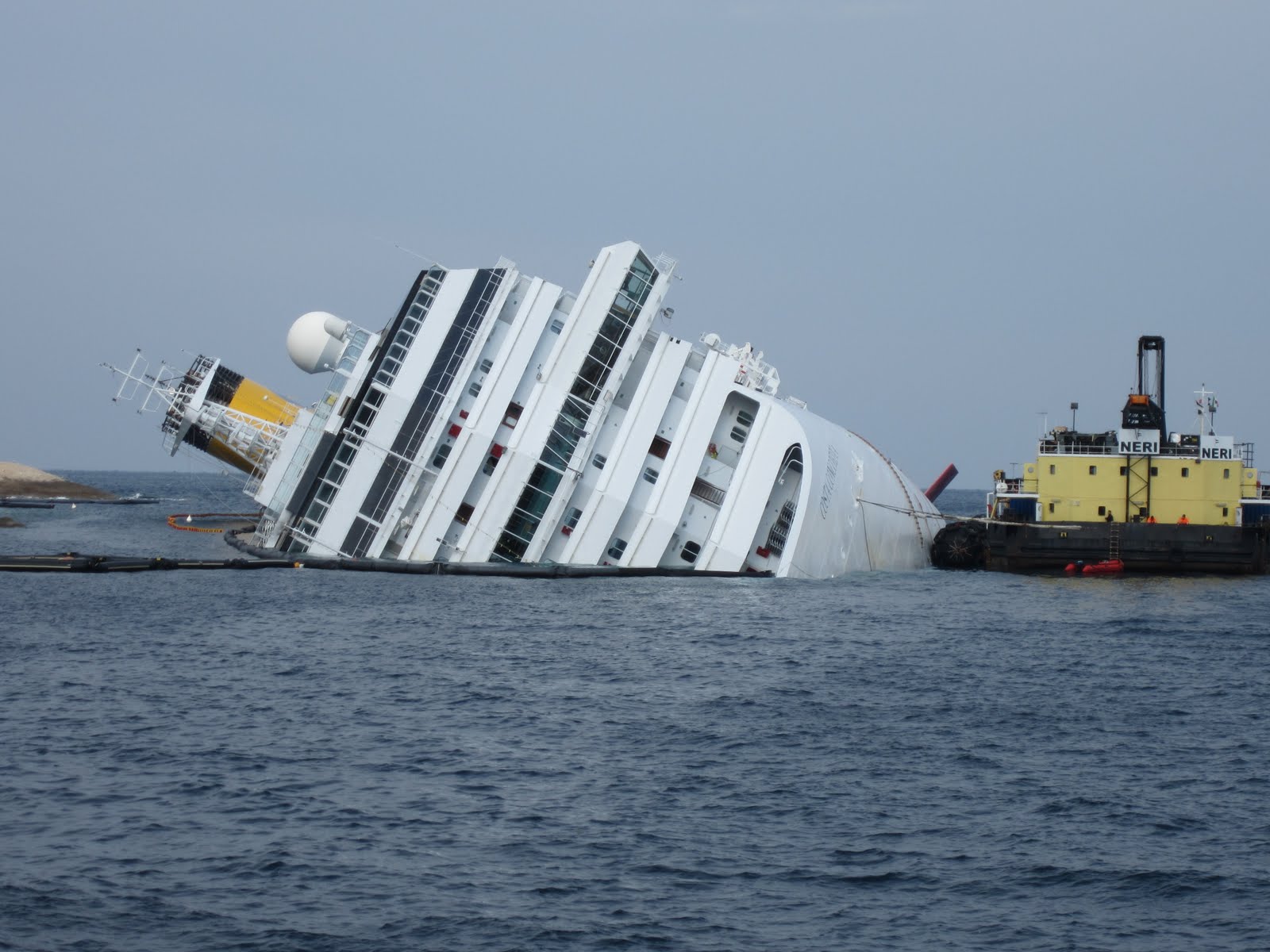
With more than 4,000 souls on board when the luxury ship departed Civitavecchia, Italy, Captain Francesco Schettino chose to treat a crew member to a sail-by salute of Tuscany’s Giglio island, where the staff member’s family lived. But when navigating the shoreline, language barriers and miscommunications on the bridge turned the ship towards a reef that gashed a 53-metre hole in its port side.
What followed was even worse. The captain and crew initially refused the help offered by the Italian Coastguard, saying the situation was only a blackout. It took an hour for the evacuation signal to be given, by which point the ship had taken on water, and the wind grounded it on the starboard side, blocking the release of lifeboats.
While the tragedy has been compared to the sinking of the Titanic, particularly for Messineo’s focus on the social stratification of different classes of passengers on board, one important aspect is memorably different. Eyewitness accounts have described the Titanic’s captain helping women and children escape, and he refused to abandon ship, going down with it. Conversely, the Concordia’s captain, Francesco Schettino, drew public opprobrium for abandoning ship while his passengers were still on board. He later said he had “fallen into a lifeboat.”
How engineers raised the Costa Concordia, which sank in 2012 off Giglio Island, using parbuckling and sponsons in an over $1 billion, two-year operation. pic.twitter.com/X3Gm5d8TNS
— Massimo (@Rainmaker1973) June 20, 2026
Schettino was eventually convicted of manslaughter, causing a maritime accident, and abandoning ship and was sentenced to 16 years of prison time, which he is still serving at Rebibbia Prison in Rome.
Five other cruise ship staff were also convicted of manslaughter, negligence, and shipwreck, but served no prison time. Meanwhile, Costa Cruises, the ship’s parent company, paid a €1 million corporate penalty, plus a range of settlements to passengers, but avoided a criminal trial.
The aftermath in terms of coastal cleanup was also significant. Fears of an oil spill in the protected marine area where the ship had foundered were averted by a complex operation to drain 2,000 tons of fuel from the vessel. Righting and removing the carcass took longer and involved bespoke platforms, cranes, and flotation devices to tow the ship to Genoa, where it was scrapped.
Some good did come from the tragic sinking, with major cruise operators implementing new safety and emergency protocols. In the 14 years since the tragedy, global cruise passenger volume has increased by around 83%, and its direct, indirect, and induced economic contribution has nearly doubled, driven by massive new mega-ships and strong demand from younger generations.