

The International Air Transport Association (IATA) has announced plans to establish a permanent presence in Tashkent, opening a new office in Uzbekistan and preparing to launch a Billing and Settlement Plan (BSP) in the country before the end of 2026.
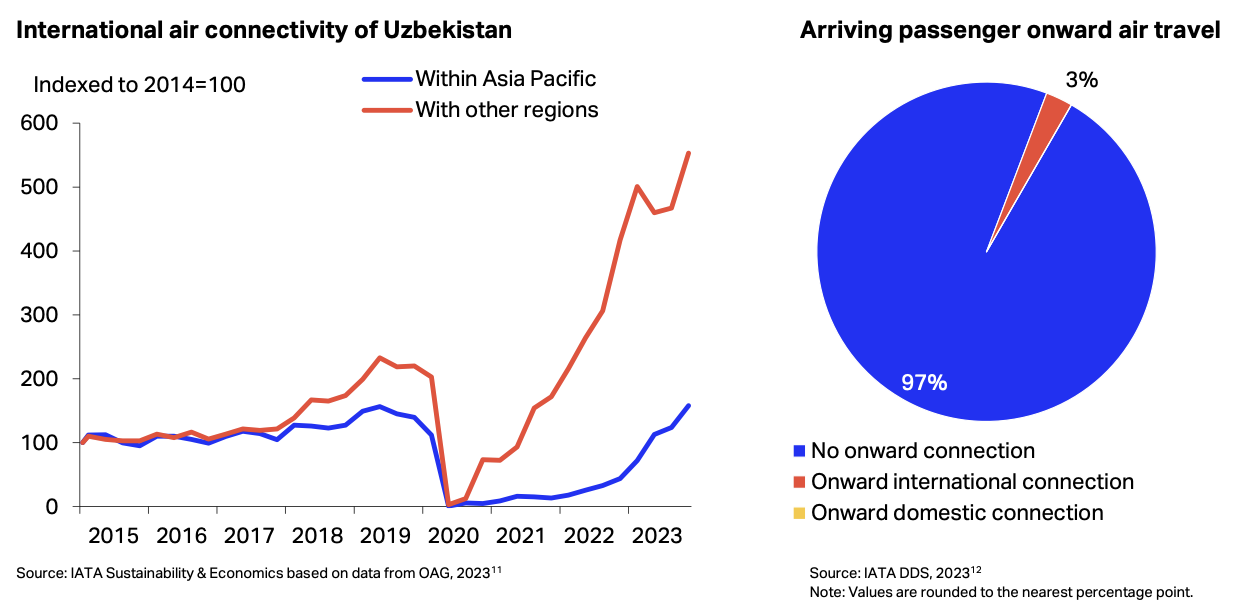
The move marks a significant step for Uzbekistan’s aviation sector as the Central Asian nation seeks to position itself as a key regional gateway linking Asia, Europe, and the Caucasus.
Rafael Schvartzman, IATA’s Regional Vice President for Europe, said Uzbekistan is becoming an increasingly important market for both passenger and cargo traffic.
🎉 We’re opening a new office in Uzbekistan and preparing for the launch of the Billing and Settlement Plan (BSP) in 🇺🇿 by year‑end.
— IATA (@IATA) April 21, 2026
This will help boost safe, efficient air travel while supporting ✈️ ✈️ with cost‑effective global financial processing.https://t.co/x0sbDjivI1 pic.twitter.com/t7VAnuPAkb
“Uzbekistan is a growing market that is taking a leading position in Central Asia for passenger and cargo traffic. The IATA office and BSP in Uzbekistan will provide strategic support to grow air travel through boosting aviation safety and operational efficiency,” he said.
According to IATA, the new office will allow experts to work more closely with airlines, airports, and authorities in implementing international standards in safety and operations.
New BSP to support airline sales and connectivity
The planned BSP launch is expected to improve the financial infrastructure supporting airline ticket sales in Uzbekistan.
IATA’s BSP is a global system used to simplify transactions between accredited travel agents and airlines, managing ticket sales and settlements across hundreds of carriers and thousands of agencies worldwide.
Schvartzman said the system would enable airlines to process transactions more efficiently while improving access to international distribution channels.
“This provides greater opportunity to grow international connectivity,” he noted.
Uzbekistan eyes aviation growth
Uzbekistan has accelerated reforms in tourism and transport in recent years, investing heavily in infrastructure and promoting itself as a modern Silk Road destination.
Earlier this year, authorities announced a target of welcoming 12 million foreign visitors in 2026, as reported by Travel Tomorrow. The country is also aiming for 20 million annual international tourists by 2030.
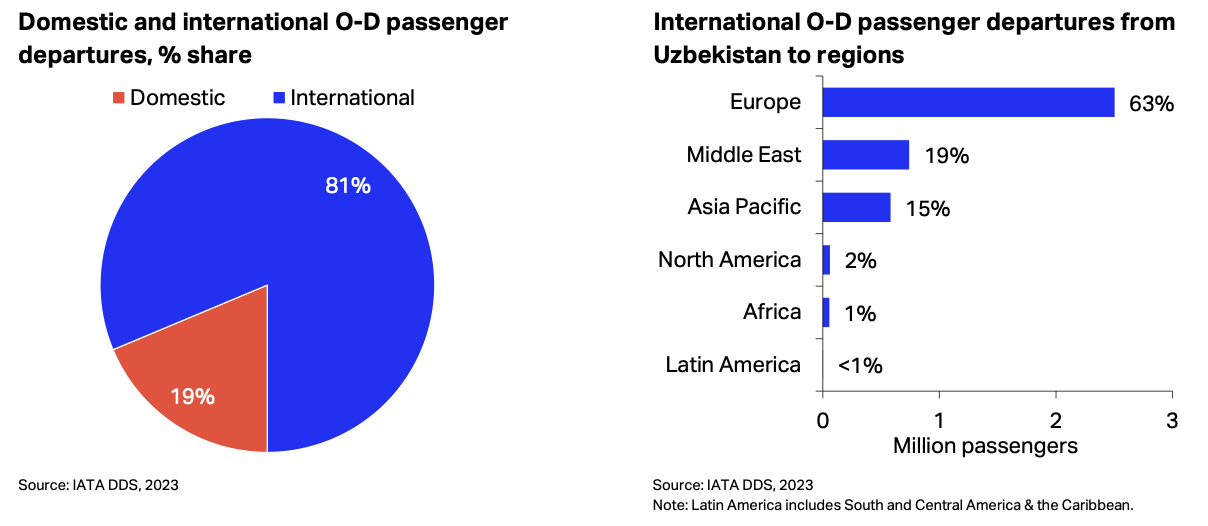
IATA forecasts revenue passenger kilometre growth in Uzbekistan of 3.3% between 2024 and 2050, slightly above the projected global average of 3.1%.
To unlock that potential, IATA highlighted three priorities: alignment with global standards, infrastructure development, and the clean energy transition.
A key recommendation is the adoption of the IATA Operational Safety Audit (IOSA), which the association says would strengthen confidence in Uzbek airlines.
Etihad Restarts Tashkent Flights, 70+ Global Destinations via Abu Dhabi✈️@etihad Airways (EY) will launch regular Tashkent–Abu Dhabi–Tashkent flights starting August 17, 2026, as reported via Uzbekistan’s Ministry of Transport and Trend. The service connects Tashkent (TAS) with… pic.twitter.com/IvZplqjspx
— Aviation A2z (@Aviationa2z) April 22, 2026
Airport expansion under way
Major airport projects are currently under development in Tashkent, Bukhara, and Urgench, aimed at increasing capacity for rising passenger demand and cargo volumes.
IATA said it is important these projects remain cost-effective and are developed in consultation with airlines to avoid excessive charges.
The country’s cargo ambitions are also growing. In 2023, 66,600 tonnes of air freight were transported through Uzbek airports. Expansion at Tashkent Airport, including a dedicated cargo terminal, alongside continued development of Navoi Airport as a cargo hub, is expected to drive further growth.
Economic impact of aviation
IATA estimates aviation currently contributes USD 795.5 million to Uzbekistan’s GDP, equivalent to 0.9% of the national economy, while supporting around 128,000 jobs.
Of that total, 12,400 people are directly employed in aviation, generating USD 96.5 million in direct economic output.
Tourism supported by aviation contributes USD 282.9 million to GDP, while international visitors arriving in Uzbekistan are estimated to spend around USD 2 billion annually across the wider economy.
Sustainable fuel opportunity
IATA also pointed to opportunities for Uzbekistan to develop Sustainable Aviation Fuel production, building on the country’s gas-to-liquids expertise and energy resources.
If aligned with international sustainability standards, such production could support aviation decarbonisation while creating future export opportunities.
With a permanent IATA office now planned in Tashkent, Uzbekistan’s ambitions to become one of Central Asia’s leading aviation and tourism gateways appear to be gaining further momentum.