


As new data reveals American vacationers are making more adventurous holiday choices, the experience of a group of holidaymakers on a Yemeni island in the Indian Ocean could provide a valuable lesson.
Yemen is a place so associated with danger and conflict that it was famously used as a joke destination in the hit TV series Friends. Sitting south of Saudi Arabia in the Middle East, Yemen has now been at war for 10 years and is suffering one of the world’s worst humanitarian crises. Figures from the UN refugee agency UNHCR show around 4.5 million people, 14% of the population, are estimated to be displaced. Over 18.2 million people desperately need humanitarian assistance and protection. Widespread famine looms with almost five million people living in acute food insecurity.
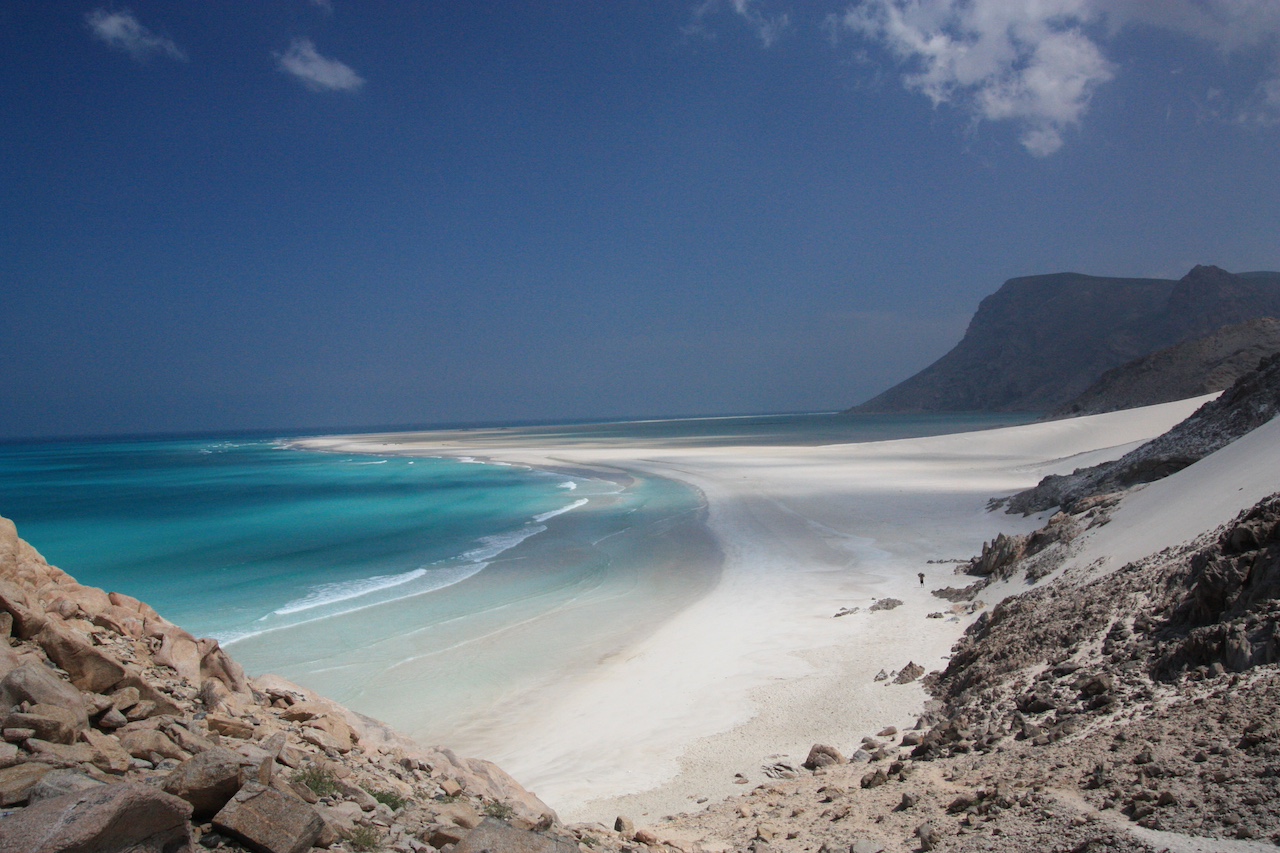
Yet, 321km off the coast, between the Arabian Sea, the Gulf of Aden, and the Guardafui Channel, the Yemeni archipelago of Socotra has become a tourist attraction. Known locally as Saqatri, a list of its attributes, from alabaster beaches to unusual dragon trees, and 700 endemic species of flora and fauna, has made it Instagram-famous, just as the idea of off-the-beaten-track vacations is becoming more popular than ever. Local tour operators emphasise Socotra’s distance from conflict zones and describe it as “completely safe.”
نقدر جهود الخطوط الجوية اليمنية في تنظيم رحلات من سقطرى إلى جدة للرعايا الألمان. كما نتوجه بالشكر الجزيل للخطوط الجوية اليمنية ووزارة الخارجية في الجمهورية اليمنية على تعاونهما في هذا الشأن.
— Thomas F. Schneider (@GermanAmbYem) January 12, 2026
We appreciate the efforts of Yemenia Airways @yemenairway in organizing flights from… pic.twitter.com/l1BJIhUjUN
That’s the story behind the several hundred tourists who have found themselves stuck on Socotra over the New Year due to spiralling regional conflicts. Separatists in Yemen seized two provinces in what is essentially a proxy war between Saudi Arabia and the UAE. A State of Emergency was declared on 30 December, grounding flights.
Sympathy may be in short supply. Depending on which news outlet you read, the tourists are mostly Westerners or mostly “Russians and Poles.” The AFP says they include “Russians, Poles, Americans, Europeans, Australians, and Chinese nationals.” Whatever their nationality, they went to Socotra despite advisories from both the UK’s Foreign and Commonwealth Development Office and the US State Department warning against all travel—a choice that usually invalidates travel insurance. In the absence of consular help in situ, they are now at the mercy of the kindness of the same tour guides who encouraged travel in the first place.
Some of the group, reported by The Telegraph, praised the tour guides and the chance to camp out longer beneath the stars and the dragon trees. Others, speaking to the New York Times, said they arrived at the airport to find armed separatists announcing the terminal’s closure.
January 7, 2026 ✈️
— جزيرة سقطرى 🌱 socotra island (@socotra_nature) January 7, 2026
Today, a direct flight was operated from #Socotra to #Jeddah
This flight is currently designated for the travel of stranded foreign passengers, helping facilitate their return.
We hope to see regular flights resume and more travel options open up soon. 🌍✈️ pic.twitter.com/Joo7G0zepG
Commercial flights are supposed to be resuming “on a limited basis” according to the US State Department, which added: “Yemenia Airways announced flights from Socotra to Jeddah beginning Wednesday, 7 January 2026. Tickets can be booked directly at the Yemenia Airways office in Socotra.” Tour operators confirmed the plan was to get the visitors to Jeddah, from where they could take connecting flights home.
Nonetheless, the “operational status of airports and flight routes may change with little or no notice,” the State Department warns. Tourists still on the ground are advised to “Follow the instructions of local authorities” and “Contact your airline directly for flight change details if your flights are affected.”