

As nationwide protests in Iran enter their third week, international air travel remains severely disrupted. While some regional carriers have cautiously resumed services this morning, the combination of digital blackouts, widespread regime crackdowns, and military activity continues to make the country highly volatile and unpredictable.
Human rights organisations report hundreds of deaths and tens of thousands of detentions, though independent verification remains extremely difficult.
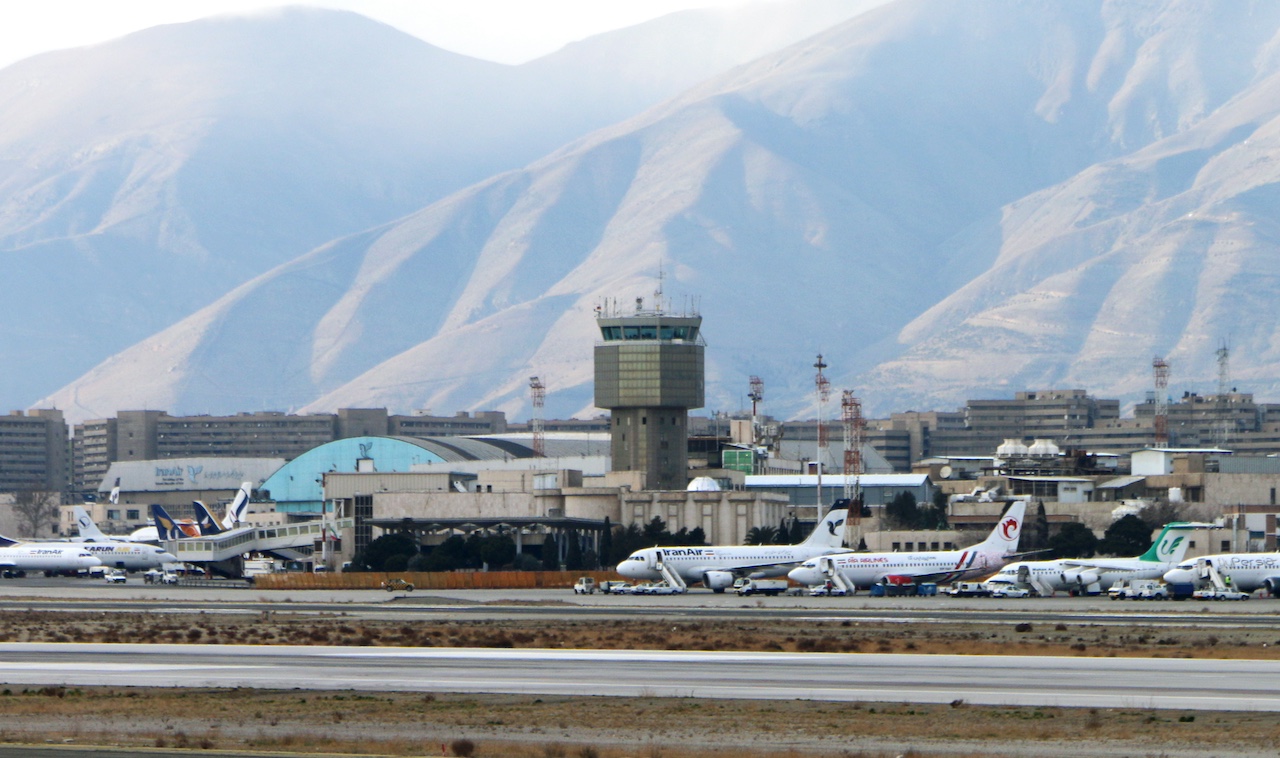
Until 8 January, the situation was largely unaffected, but the weekend saw a near-total halt of international traffic at Tehran’s Imam Khomeini International Airport (IKA), as confirmed by Flightradar24 data.
Iran 🚨
— Martin Kelly (@_MartinKelly_) January 12, 2026
Nationwide unrest in #Iran has spread to more than 190 cities across all 31 provinces, continuing despite a national internet blackout now exceeding 84 hours
Fatality figures remain highly disputed, with estimates ranging from several hundred to several thousand deaths… pic.twitter.com/yNiPcu0MA9
While the primary danger is considered to be on the ground rather than in Iranian airspace itself, the deteriorating security situation has made landing, ground handling, and moving within major cities increasingly risky for flight crews and passengers. Iran’s Civil Aviation Organization has issued airspace warnings near sensitive areas. Recent Notices to Air Missions (NOTAMs) indicate heightened military aircraft and drone activity, prompting several governments to warn airlines of elevated risks.
Since then, international carriers have adopted a cautious, day-by-day approach, frequently extending cancellations by 24 to 48 hours. Multiple governments, including those of the US, the UK, and India, have issued the highest-level “Do Not Travel” advisories.
Images from the #Flight24 website indicate that the skies over western #Iran are almost empty of airplane flights. The reduction of flights in the skies over countries sometimes occurs due to the possibility of military tension. The regime will fall soon the hit is getting near. pic.twitter.com/RzJssVfpKf
— Elle JT #MAGAnificent (@ElyaneJt) January 12, 2026
Flights to and from Iran: Airline Operations and Travel Logistics
Flight operations remain highly fragmented following widespread cancellations over the weekend.
Turkish Airlines, one of the most frequent operators to the country, has officially extended its suspension of all services to Iran until at least 14 January, having cancelled more than 17 flights over the weekend. For the moment, the airline is operating on a day-to-day basis. Turkish low-cost carriers AJet and Pegasus Airlines have also suspended or cancelled multiple routes to Iranian cities. Etihad Airways has officially suspended all flights until 13 January.
Other Gulf carriers, which were among the first to halt operations, were also among the first to partially resume services. Emirates and flydubai reinstated a limited number of flights to Tehran on Monday morning, but they are operating under strict risk management protocols. Notably, Emirates has maintained a “Transit Rule” whereby passengers starting their journey outside the UAE (e.g., in London or New York) are currently prevented from boarding if their final destination is Iran, in order to prevent them from becoming stranded in Dubai.
FlyDubai has a flight into Tehran right now. pic.twitter.com/4ZjZl5NJ5Z
— Peter Vogel (@PeterVogel) January 11, 2026
Similarly, Qatar Airways has resumed a limited Doha–Tehran service, but continues to cancel flights to smaller cities such as Mashhad and Shiraz.
On Sunday, Flightradar24.com showed Aeroflot and Jazeera aircraft in the “departed” section from Tehran.
European carriers remain cautious. Austrian Airlines suspended its Vienna–Tehran service on 9 January, stating that it was monitoring the situation. Lufthansa, which had planned to resume its Tehran route on 16 January, has confirmed that the schedule is now “under active security review.”
Iranian carriers, including Iran Air, Mahan Air, and Qeshm Air, have continued to operate domestic and regional flights, including services to and from Dubai.
🔊PR No.1️⃣3️⃣/2️⃣0️⃣2️⃣6️⃣
— Ministry of Foreign Affairs – Pakistan (@ForeignOfficePk) January 10, 2026
Travel Advisory for Pakistani Nationals Regarding Iran
🔗⬇️ pic.twitter.com/YmH4PwmrCp
“Airlines will almost certainly be rerouting flights out of an abundance of caution,” said Saj Ahmad, chief analyst at StrategicAero Research. “The bigger concern is booking flights to Iran. While flights are operating, passengers need to be aware that services could be cancelled at short notice and that it could become extremely difficult to leave the country if the situation deteriorates further.”
Beyond the flights themselves, travellers should bear in mind that logistics could be severely affected by the “digital blackout.” As the government has restricted internet and mobile networks, digital boarding passes and airline apps have become unreliable; therefore, travellers should have physical, printed copies of all travel documents.
Furthermore, reaching the airport has become an unpredictable challenge due to security roadblocks and protests in major urban centres, meaning that the standard 90-minute commute to Tehran’s Imam Khomeini International Airport can now take several hours.