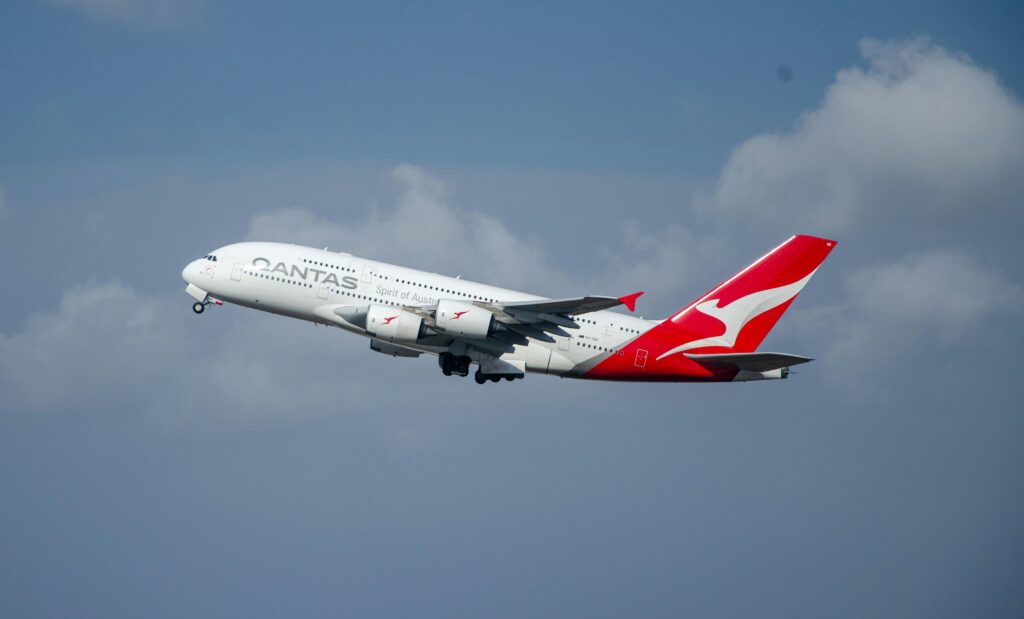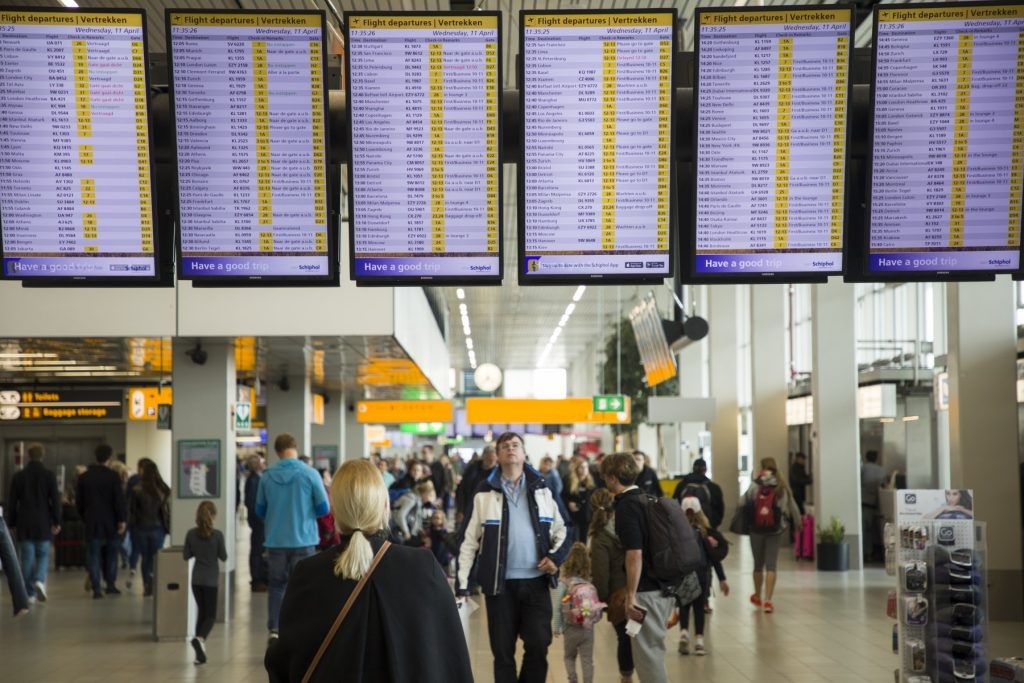



European airport passenger traffic declined in April 2026 for the first time since the aviation sector began its recovery from the COVID-19 pandemic, according to new figures released by ACI EUROPE.
Passenger traffic across Europe’s airport network fell by 0.7% compared to April 2025, marking the first year-on-year decline since April 2021, when air travel started rebounding after pandemic restrictions were lifted.
The airport trade body attributed the slowdown to several factors, including the ongoing conflict in the Middle East, the timing of the Easter holidays and widespread industrial action in Germany.
Geopolitical tensions weigh on non-EU markets
The sharpest declines were recorded outside the EU+ market, where passenger traffic dropped by 7.6%.
Airports in Israel experienced the most dramatic fall, with passenger volumes plunging by 73.4%. Other countries with strong links to the Middle East also recorded significant declines, including Türkiye (-5.1%), Georgia (-16.3%) and Azerbaijan (-12.9%).
In contrast, several smaller markets continued to enjoy robust growth. Airports in North Macedonia recorded a 30.6% increase in passenger traffic, while Albania and Moldova posted gains of 25.3% and 24.6% respectively.
“The war in the Middle East is now further weighing on growth and exposing significant differences in performance across markets,” said Olivier Jankovec, Director General of ACI EUROPE.
Spain and Italy help sustain EU growth
Despite the overall decline, airports within the EU+ market still achieved modest growth of 0.6%, with EU airports alone recording an increase of 1.4%.
Spain remained one of Europe’s strongest-performing aviation markets, with passenger traffic increasing by 3.7%, followed by Italy at 2.2%.
Meanwhile, Germany suffered a sharp decline of 8.5%, largely due to industrial action affecting airports throughout the month. Passenger traffic also fell in the United Kingdom (-2.1%) and France (-0.9%).
Among the strongest-performing EU+ countries were Slovakia (+125.2%), Slovenia (+14.6%), Malta (+13.5%), Estonia (+12.1%) and Poland (+8.3%).
At the other end of the scale, Cyprus (-16.1%) and Iceland (-11.7%) recorded the steepest declines, ahead of Austria (-7.4%) and Switzerland (-6.1%).
Barcelona, Madrid and Schiphol prove most resilient
Among Europe’s largest airports, only three major hubs managed to increase passenger traffic in April.
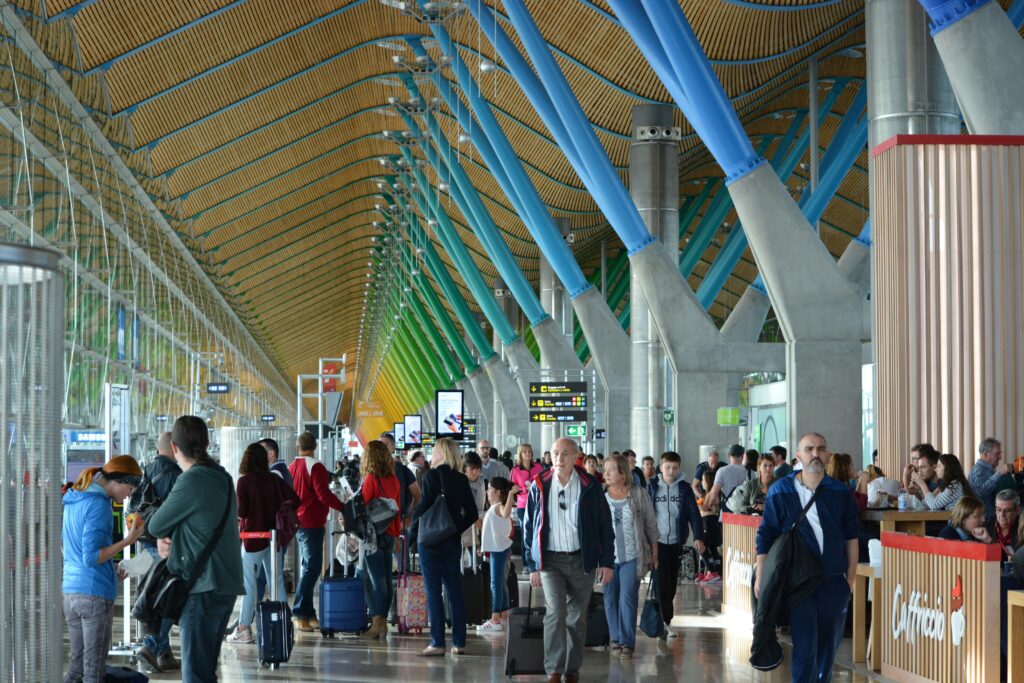
Barcelona-El Prat led the way with growth of 4.1%, followed by Madrid-Barajas (+3.3%) and Amsterdam Schiphol (+2.7%).
Germany’s major hubs were among the hardest hit. Munich recorded a 16.4% decline, while Frankfurt saw passenger traffic fall by 11%, largely due to seven days of industrial action during the month.
Airports that have consistently ranked among Europe’s strongest performers also lost momentum. Passenger numbers fell at Istanbul Airport (-6.8%), Istanbul Sabiha Gökçen (-3.4%), London Gatwick (-8.8%) and London Heathrow (-5.3%).
Rome Fiumicino (-0.6%) and Paris Charles de Gaulle remained broadly stable.
Regional airports continue to outperform
ACI EUROPE’s figures show that medium-sized and smaller airports remained more resilient than major hubs.
Passenger traffic at medium-sized airports increased by 2.1%, while small airports achieved growth of 5.5%.
The trend reflects their stronger focus on intra-European routes, which have been less affected by geopolitical tensions. Low-cost carriers also maintained capacity levels, while some travellers appear to be shifting from long-haul trips towards shorter European destinations.
However, smaller airports continue to lag significantly behind pre-pandemic levels, with passenger volumes still 27.7% below those recorded in 2019. According to ACI EUROPE, this reflects structural changes in the aviation market and ongoing concerns about the long-term financial viability of many regional airports.
Border controls raise fresh concerns
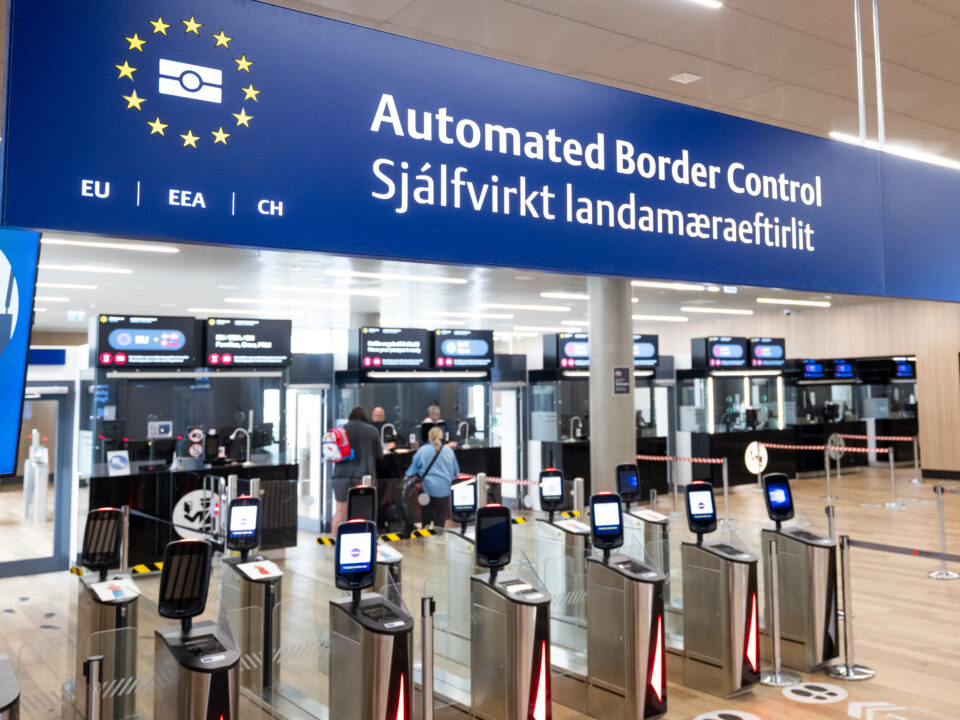
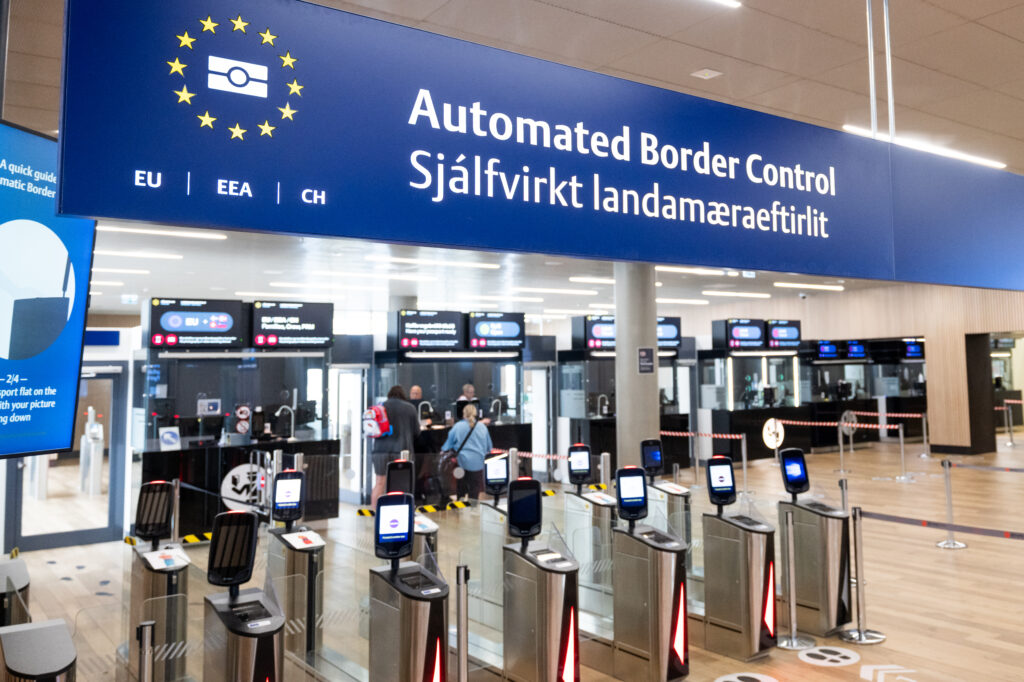
Although demand remains relatively strong and fears of jet fuel shortages have eased, ACI EUROPE warned that new border control procedures linked to the Schengen Entry/Exit System could create increasing disruption for passengers.
Jankovec said airport operators are becoming increasingly concerned about delays and operational challenges caused by the system.
“Unless authorities are allowed to introduce greater flexibility, including fully suspending the system where operationally necessary, disruptions for passengers will intensify over the coming weeks and months,” he warned.
According to ACI EUROPE, the issue risks damaging Europe’s reputation as an efficient and welcoming travel destination if practical solutions are not introduced.
The slowdown was not limited to passenger travel. Freight traffic at European airports fell by 5.3% in April, while aircraft movements decreased by 0.8%, reflecting broader challenges facing the aviation sector as geopolitical uncertainty continues to influence travel patterns and global trade.