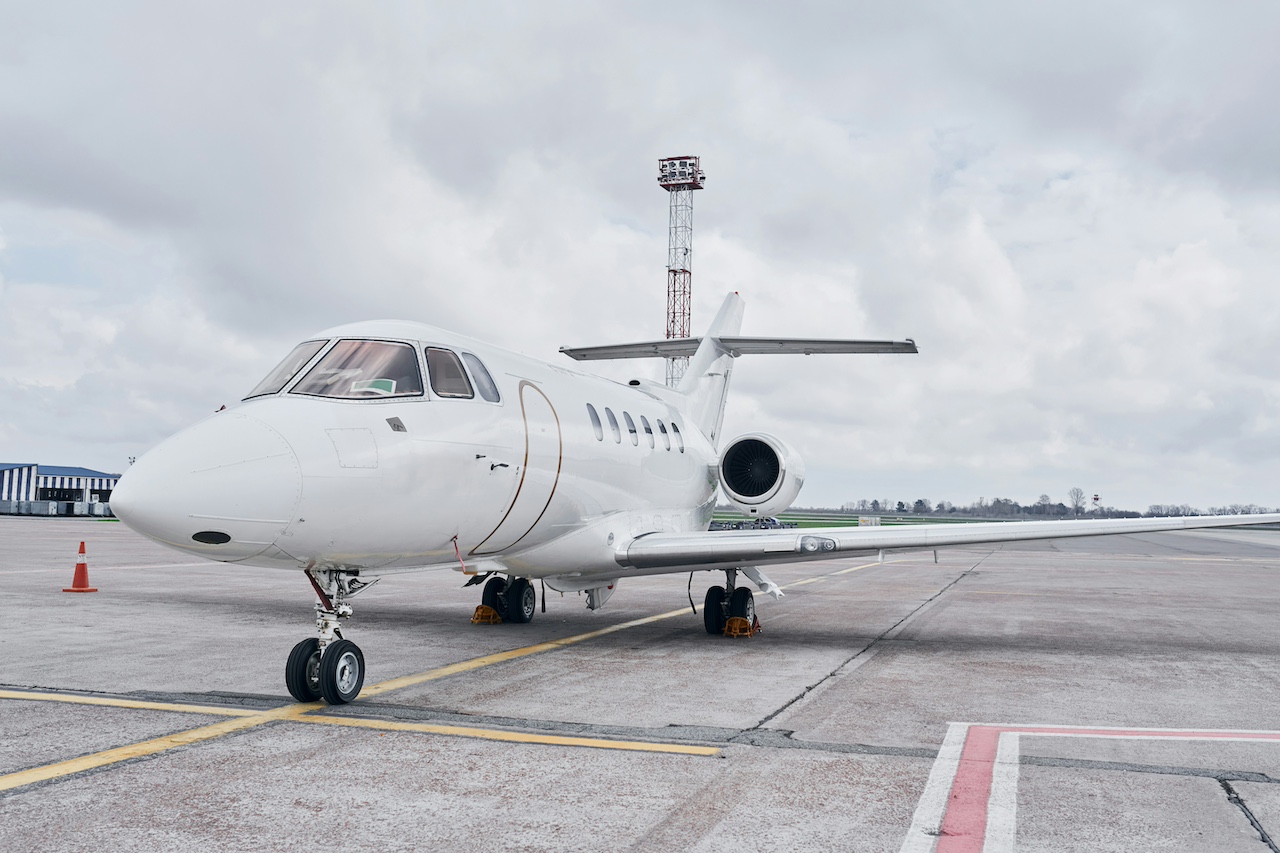



A car has collided with a private plane at Italy’s Milan Linate Airport, with security camera footage revealing the vehicle crossed the tarmac at some speed towards a light business jet, before striking the aircraft’s nose. No one was reported to be injured in the 10-August incident, which is being investigated by authorities.
CCTV images show a Fiat Panda appearing to accelerate across the path of a Hawker Beechcraft 400A bearing the registration I-AERB as it moved from a stand, before coming to a halt after the contact. A person exited the vehicle immediately. The aircraft had been “in service for a handling company,” said a summary of the incident by the Aviation Safety Network.
According to Flightradar24, the 33-year-old jet is operated by the Italian air charter company Slam Lavori Aerei. Like the car, it is reported to have sustained considerable damage.
Imagine having to call your insurance agent and explain that you just T-boned a $5M private jet in a Fiat Panda.
— Predictivemoney (@Predictivemoney) August 11, 2026
Absolute madness at Milan Airport today. pic.twitter.com/Gl9R9yTGle
An airport spokesperson told press: “Airport emergency services responded immediately to inspect the aircraft and secure the apron, allowing normal flight operations to resume safely with minimal delay to passengers.”
Two planes due to land at the Milan hub had to be diverted as a result of the crash, while authorities undertook around half an hour of safety checks. The affected flights included an inbound KLM Royal Dutch Airlines flight from Amsterdam Schiphol Airport which had been due to touch down at midday but flew instead to nearby Malpensa before eventually landing in Linate at 1:29 pm. A domestic ITA flight arriving from Rome Fiumicino was also diverted to Bergamo, and arrived in Milan over an hour and a half late.
Despite the disruption, airport operations at Milan Linate have now been fully restored, and flights are operating normally at the time of writing.
Based on data from 2023, global loss-adjusting company McLarens has estimated that 64% of worldwide aviation incidents (excluding light aircraft) occurred on the ground, while an analysis by underwriters Global Aerospace found that “ground claims are becoming more prevalent” due to a combination of factors including workforce shortages, climate change and extreme weather events, increased passenger volume, congestion, and outdated infrastructure.
In March 2026, a copilot and pilot of an Air Canada flight from Montreal to New York’s LaGuardia were killed in a collision with a fire engine which had been given permission by controllers to cross runways to reach an incident on a different arriving flight.
That incident came just a month after two KLM Boeings collided during a taxiing manoeuvre at Amsterdam Schiphol, with no injuries to passengers or crew. Also in February 2026, a disaster was narrowly avoided at Brussels Airport after a pilot attempted to take off from a taxiway and had to abort the operation, coming to a halt near a series of fuel storage tanks. No passengers were reported to be injured, but the aircraft was attended by emergency responders, police, and fire crews, and passengers had to wait several hours before being deplaned since no stairs were available.
Some aircraft are fitted with a Runway Awareness and Advisory System (RAAS), a non-mandatory software that helps guide crew with ground manoeuvring.