


The American Federation of Government Employees union has filed a lawsuit against the Transportation Security Administration (TSA). The union, which represents some 47,000 TSA workers, is asking the organisation to to disclose documents regarding the TSA Gold+ privatisation plan.
On 5 August 2026, the American Federation of Government Employees has filed a lawsuit at the U.S. District Court for the District of Columbia against the TSA. The union is calling on the Freedom of Information Act to ask the TSA to disclose “documents related to a TSA airport checkpoint privatisation program called GoldPlus or Gold+.”
According to the lawsuit, the administration has been secretively pushing to expand the privatisation of airport security screening functions. While the TSA has been marketing GoldPlus to airports since at least August of 2025, the union only learned about its existence through a TSA-branded briefing flier found at Orlando International Airport.
Workers, Congress, and the flying public deserve to know what's happening with TSA's Gold+ program. That's why we're taking the agency to court. https://t.co/A4HwIzbsRv
— AFGE (@AFGENational) August 5, 2026
The privatisation plan was never formally disclosed to the American Federation of Government Employees (AFGE). After the discovery of the flyer in April 2026, the union filed a filed a FOIA request on 11 May 2026 in order to obtain documents pertinent to the roll-out of Gold+, a demand that hasn’t been met up until the time of writing.
“To date, TSA has failed to make a determination on Plaintiff’s FOIA request, to disclose any of the requested documents within the time stipulated under FOIA, or to provide any date when such documents will be disclosed,” the AFGE writes in the document.
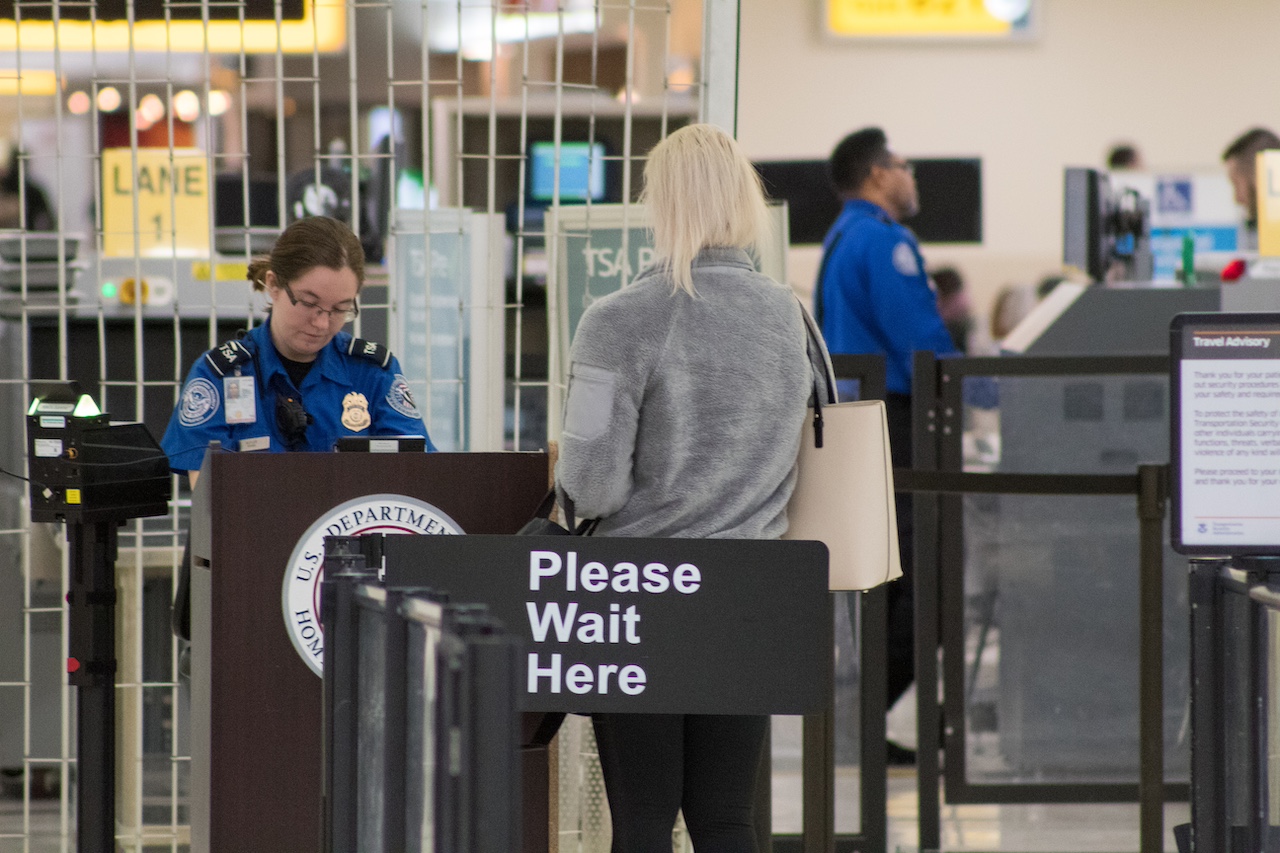
Although TSA workers are traditionally in charge of security screenings at airports across the United States, the Transportation Security Administration and airports (some 20 airports at the time of writing) are increasingly making use of privatised screening as part of the Screening Partnership Program (SPP). Privately-owned third-party contractors are being given the chance to manage both the screening workforce and technology in a process overseen by the federal agency.
TSA Gold+, which is set to be adopted by Charleston International Airport, Tampa International Airport, and Des Moines International Airport in 2027, is being marketed as the next step in the private-public partnership. According to the TSA, it encourages private investment, while accelerating technological innovation and enhancing the passenger experience. The Administration also said the highest level of security would apply, while security screenings would be less prone to disturbances linked to federal budget uncertainty.
However, the American Federation of Government Employees sees things differently. The union is concerned by the impact of the measure on the TSA workforce, on security, and on privacy.
“TSA has been keeping everyone in the dark about its privatization plans – TSA employees, members of Congress, airport authorities, and the flying public. And it’s little wonder why – this privatisation expansion is a major departure from the aviation security system established by Congress in the wake of the Sept. 11 terrorist attacks. Changes of this magnitude must not be made in the dark”, AFGE National President Everett Kelley said in a press release.
Moreover, AFGE General Counsel Rushab Sanghv warns that (partially) privatising the industry might have a negative influence on pay and benefits. Staffing would be the biggest expense of the private security screening firms, with cost cuts looming around the corner.
“We continue to push to make sure that our airports are safe and that our federal employees, our TSOs – the people who work at TSA at the airport, many of whom are veterans – are treated with respect, and they’re not replaced with poorly paid jobs that are going to impair public safety,” Sanghvi told USA Today.
At the time of writing, the TSA has not yet reacted to the formal request of the American Federation of Government Employees.