

In the far west of China, located at the crossroads of the ancient Silk Road, Xinjiang’s Kashgar is a bustling oasis of Uyghur culture, where the vibrant cacophony of merchants’ bazaars blends with the majestic splendour of the sacred monuments. Kashgar is a city where history, craftsmanship, and faith are intricately woven into daily life.
A grand welcome at the East Gate
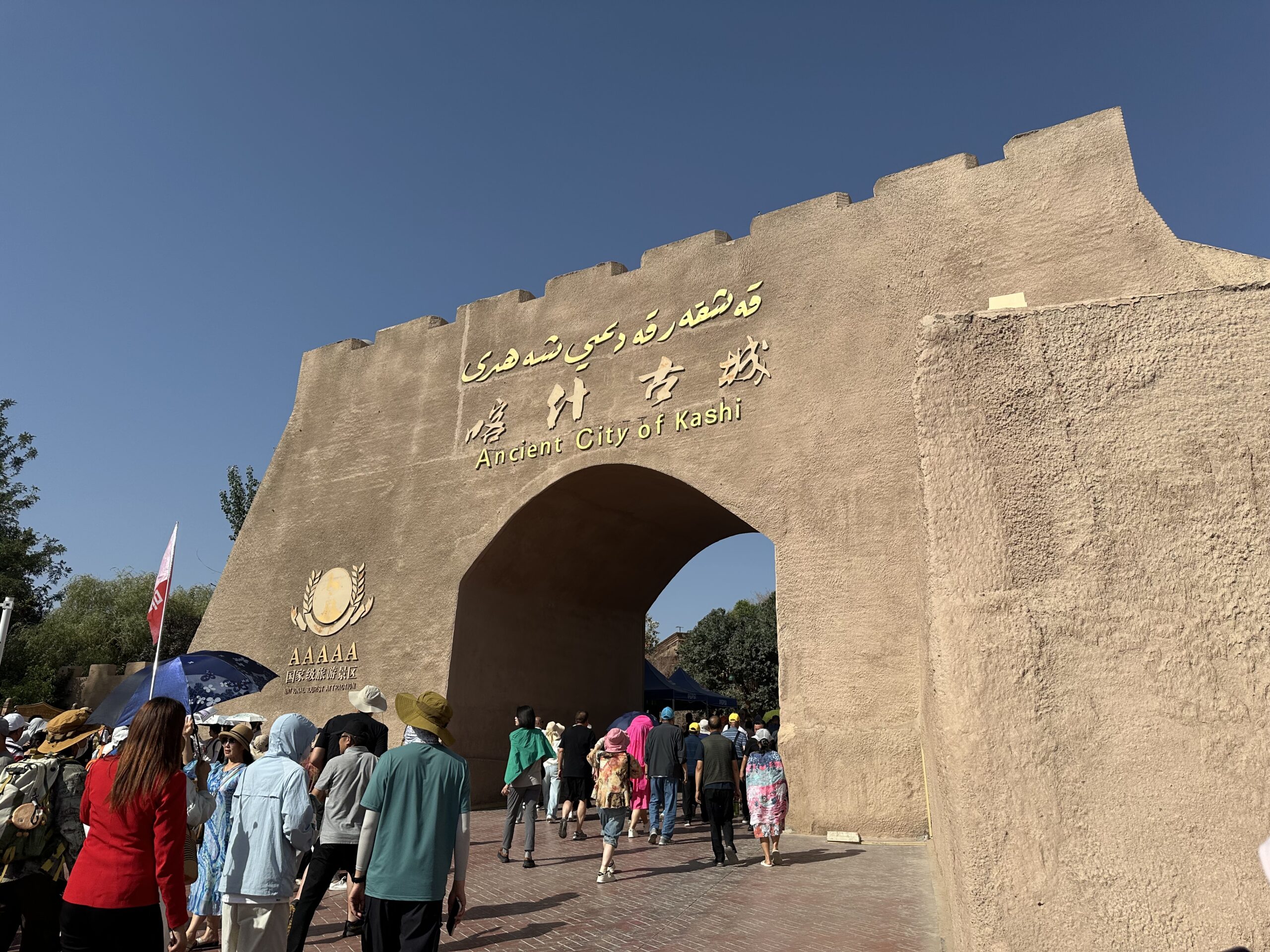
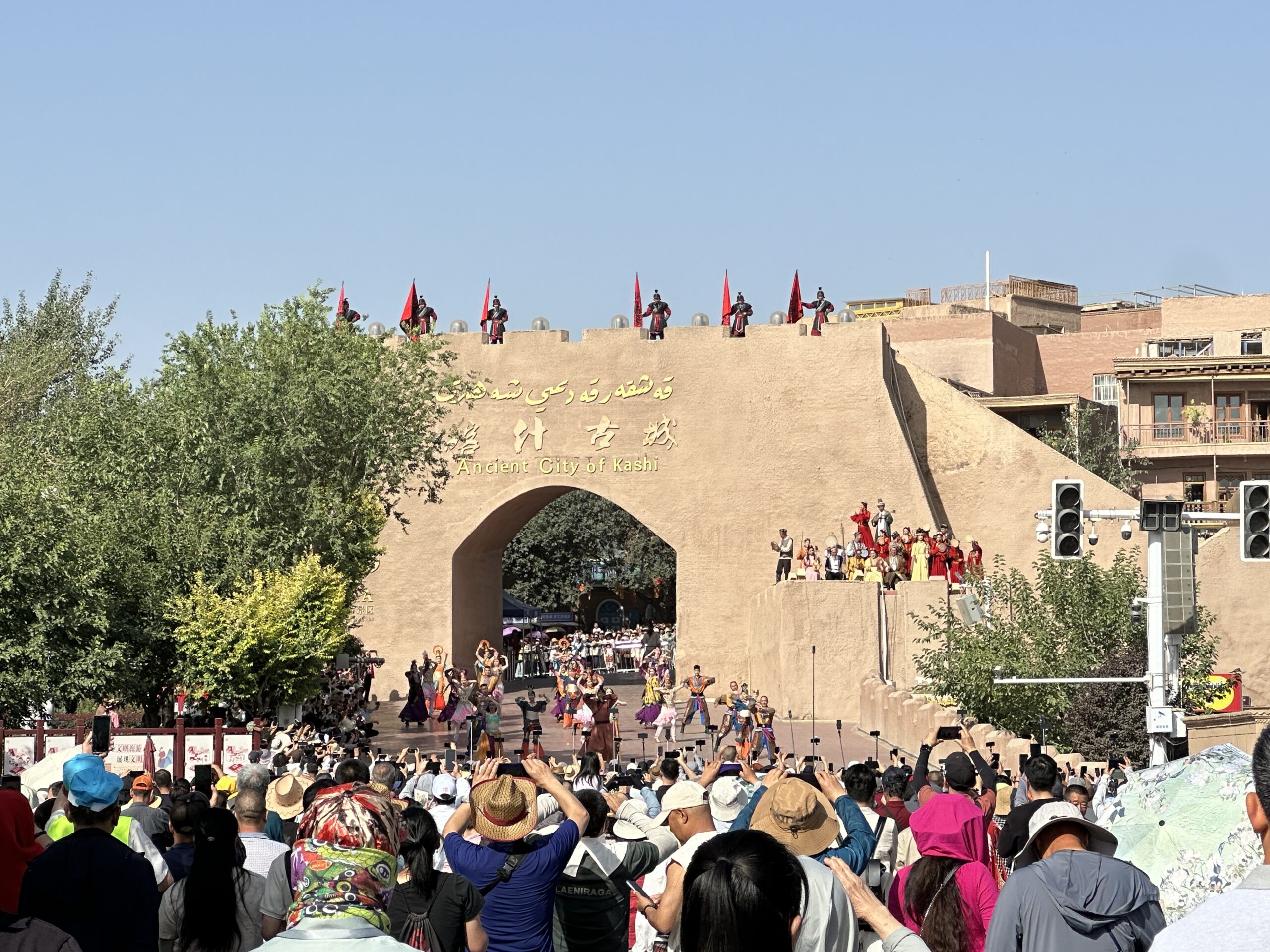
One of the most memorable experiences in Kashgar begins at the East Gate of the Old City, a gateway not just in stone but in atmosphere. Visitors arriving early in the morning can witness the opening ceremony, a lively daily ritual that blends cultural performance with tradition. As the large wooden doors swing open, musicians in traditional attire play Uyghur instruments like the rawap and dap, while dancers in colourful costumes perform a graceful folk story.
As anticipation grows, costumed guards symbolically welcome guests into the heart of Kashgar. It’s more than a show – it’s a celebration of the Silk Road spirit that illustrates a transition from the modern city into a living world of heritage. From here, tourists step straight into the labyrinth of narrow lanes of the Old Town, where bustling bazaars, mosques, and old houses unfold in a vivid tapestry of Uyghur culture.
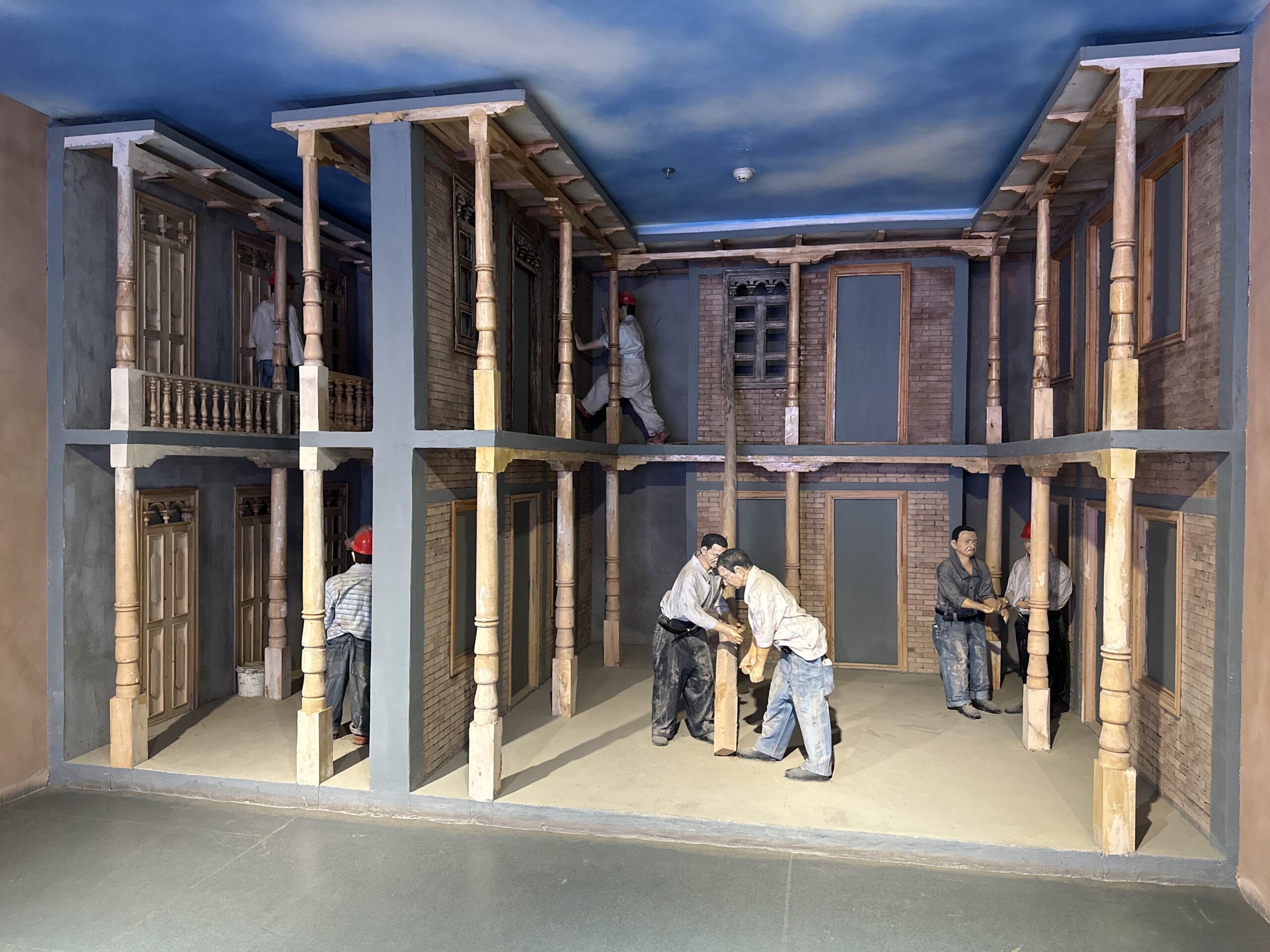
Stepping into Kashgar Old Town, the Memorial Hall offers an insightful journey through the city’s rich history, as it showcases the transformation of Kashgar’s historic heart. Divided into three main sections, it explores the reconstruction of old and unsafe buildings, the preservation of traditional Uyghur architecture and street layouts, and the improvement of residents’ living standards. Interactive exhibits include reconstructed street scenes, artefacts and photo galleries that chronicle the city’s changes.
A city of bazaars: The heartbeat of Uyghur craft and trade
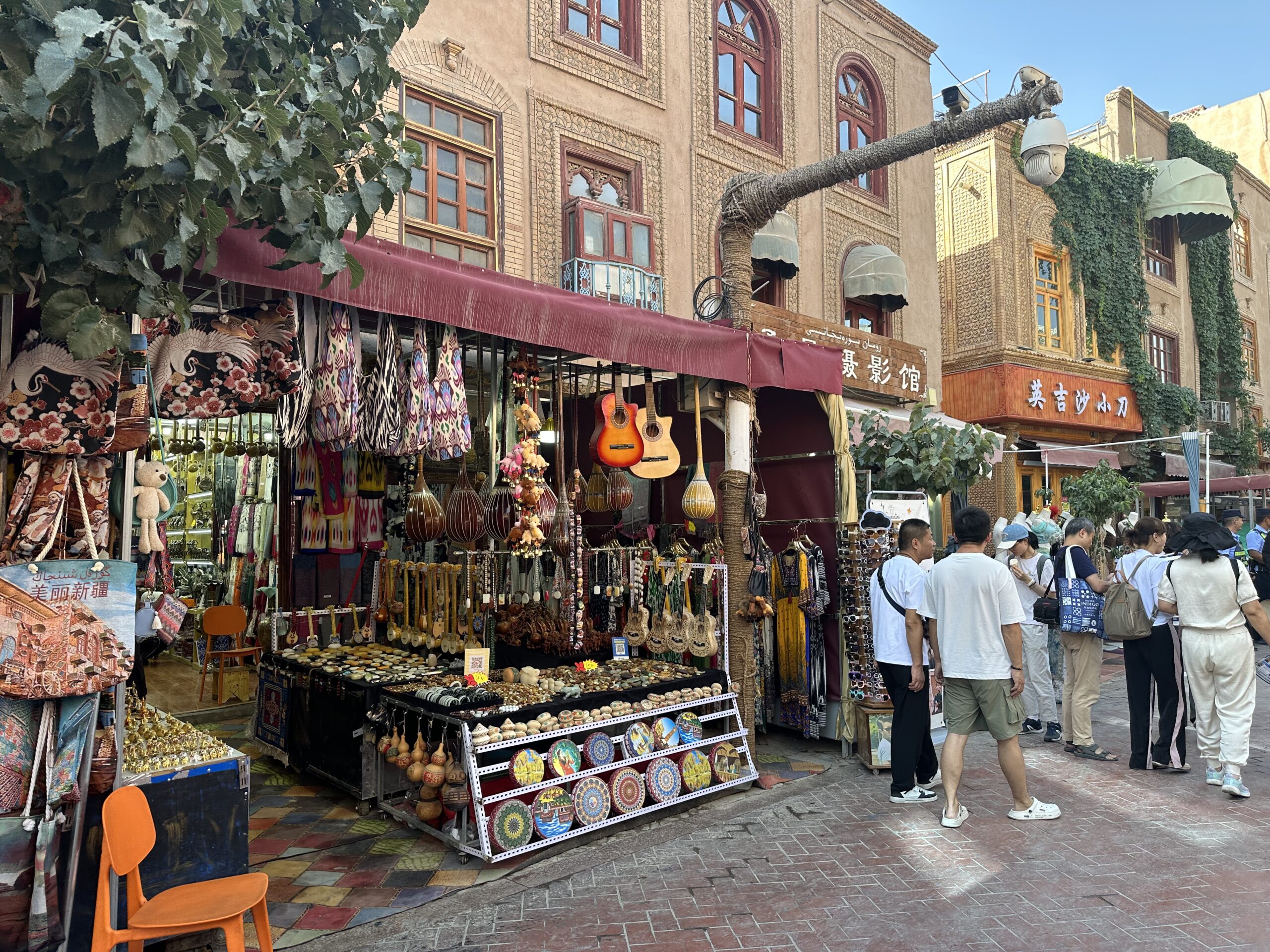
The traditional bazaars of Kashgar Old City are more than markets – they are living portraits of Uyghur life, each one full of the sounds,colours, and scents of a people whose spirit and culture have been shaped and tempered by the Silk Road. The Old City is home to five different markets, each radiating its own vibrant charm.
Flower Pot Bazaar – Near the Old City entrance, this market celebrates the millennia-old art of pottery. Local artisans shape and glaze pieces by hand, creating cascading pottery walls, jars, flower pots, and food plates adorned with intricate geometric patterns that reflect the traditions passed down through generations. Functional as much as decorative, these items are as much heritage as they are household essentials.
Ironworks Bazaar – Walking to the west part of the Old City, the clang of hammers signals the ironworkers at their craft. Here, the famed pichak knives, featuring copper handles inlaid with mother-of-pearl or engraved with sacred inscriptions, are forged alongside sturdy agricultural tools like iron pots and horse palms, preserving rich agrarian traditions and techniques honed over centuries on the Silk Road.
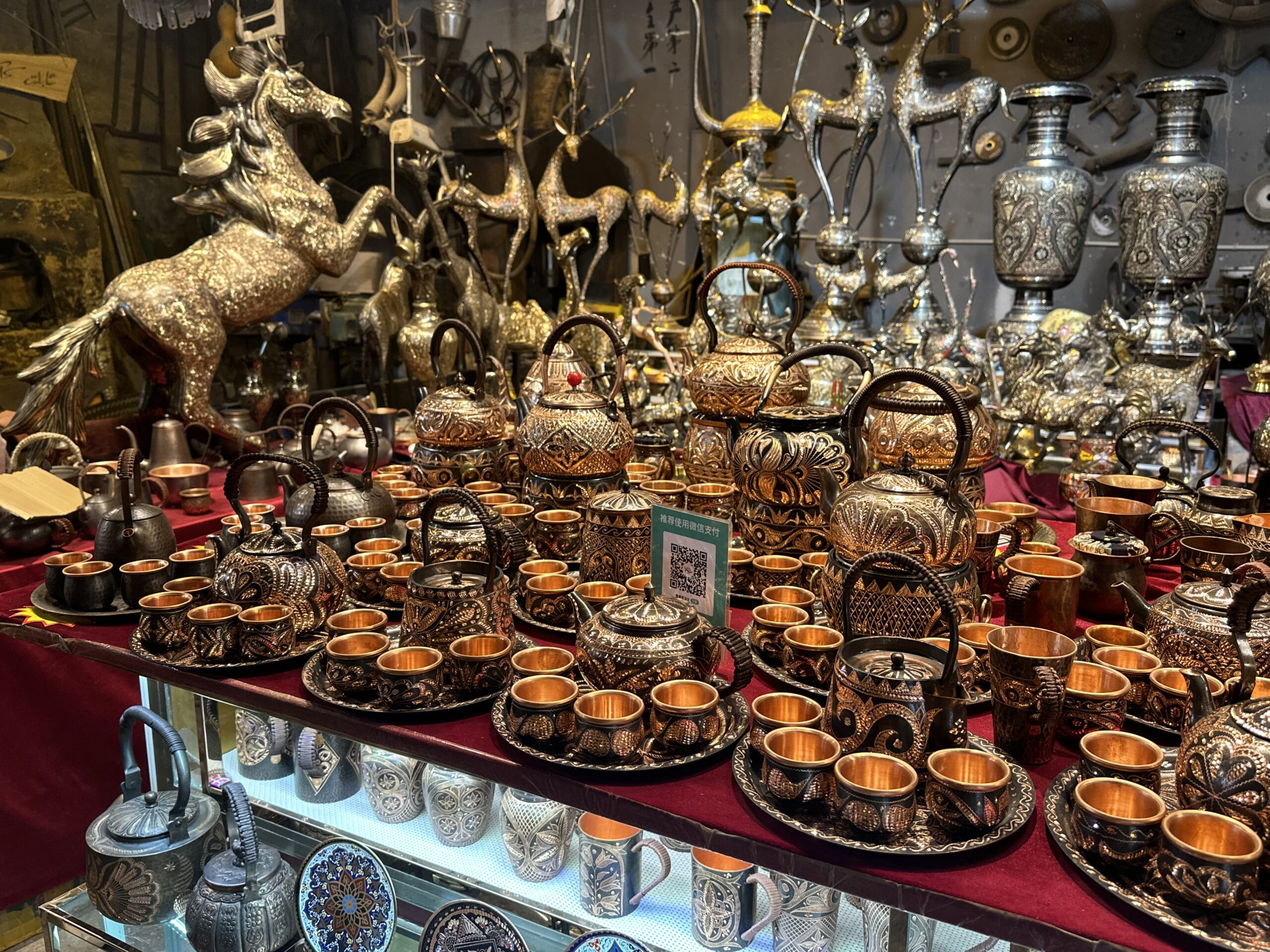
Wei Medicine Bazaar – A sensorial heaven scented by the aroma of more than 200 herbs, from snow lotus to saffron. Traditional doctors mix herbal teas on site, encouraging visitors to try a warming brew for a few yuans. Remedies here range from pain-relief tonics to revitalising herbal infusions, reflecting a long-standing tradition of medicinal knowledge that blends natural ingredients with cultural insight.
Flower Hat Bazaar – A festival of colour and texture, this market is home to the renowned Duopa hat, a symbol of Uyghur identity. Men’s hats feature black backgrounds with golden batan designs, while women’s hats shimmer with silk, colourful beads, and tassels. Creating a single boutique piece may take weeks to complete, with custom fittings available. However, the results are worth the wait, making it a memorable and meaningful souvenir.
Wooden Utensils Bazaar – Poplar and mulberry wood take shape as carved doors, windows, cradles, and musical instruments. Wooden bowls decorated with the batan pattern, a symbol of purity essential for traditional weddings, line shop shelves. Many artisans offer on-the-spot customisation, carving names or totems for visitors.
Glimpse into Uyghur culture: voices, rhythms and movements
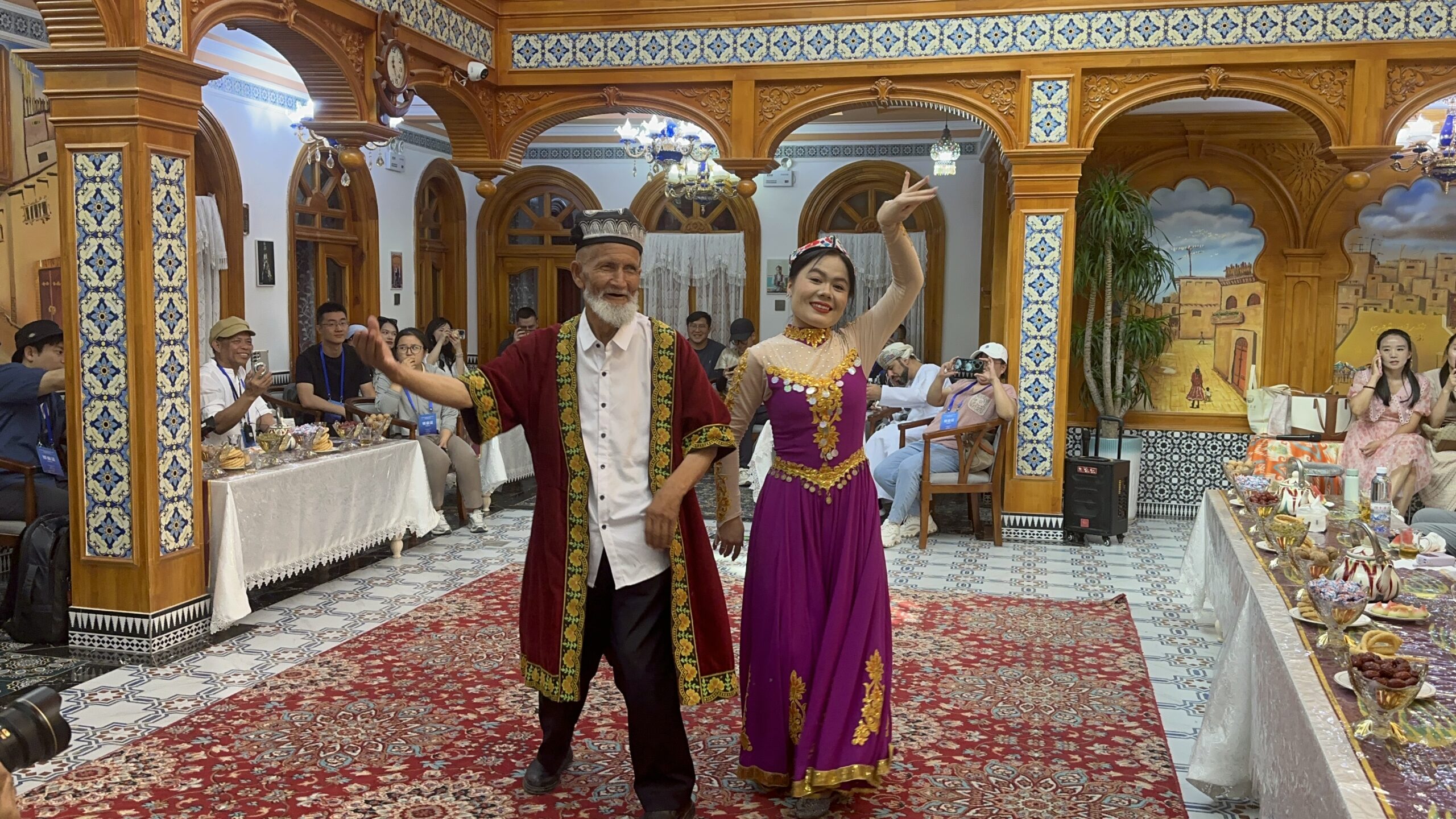
The Uyghur people’s deep connection to music and dance is visible throughout Kashgar, especially in the city’s small musical instrument shops tucked into narrow alleyways. Visitors wandering these streets can often hear the lively strains of rawap, dutar, and other traditional instruments. In one of the city’s tourist houses, local performers bring music to life, telling a story in every dance and movement, reflecting centuries of cultural heritage, and carrying traditions across generations. Each performance is a vibrant display of rhythm, colour, and history that offers a glimpse into the artistic soul of the Uyghur community.
Id Kah Mosque: Kashgar’s spiritual centre
In the centre of Kashgar lies the Id Kah Mosque, a centuries-old Uyghur symbol of faith and identity. Built in 1442 during the Ming Dynasty and expanded throughout the centuries, the mosque now covers a 25-acre complex – placing it among China’s largest and most influential Islamic centres. Its name, meaning “Place of Festivities” in Uyghur, speaks to its enduring status as the community’s religious centre.
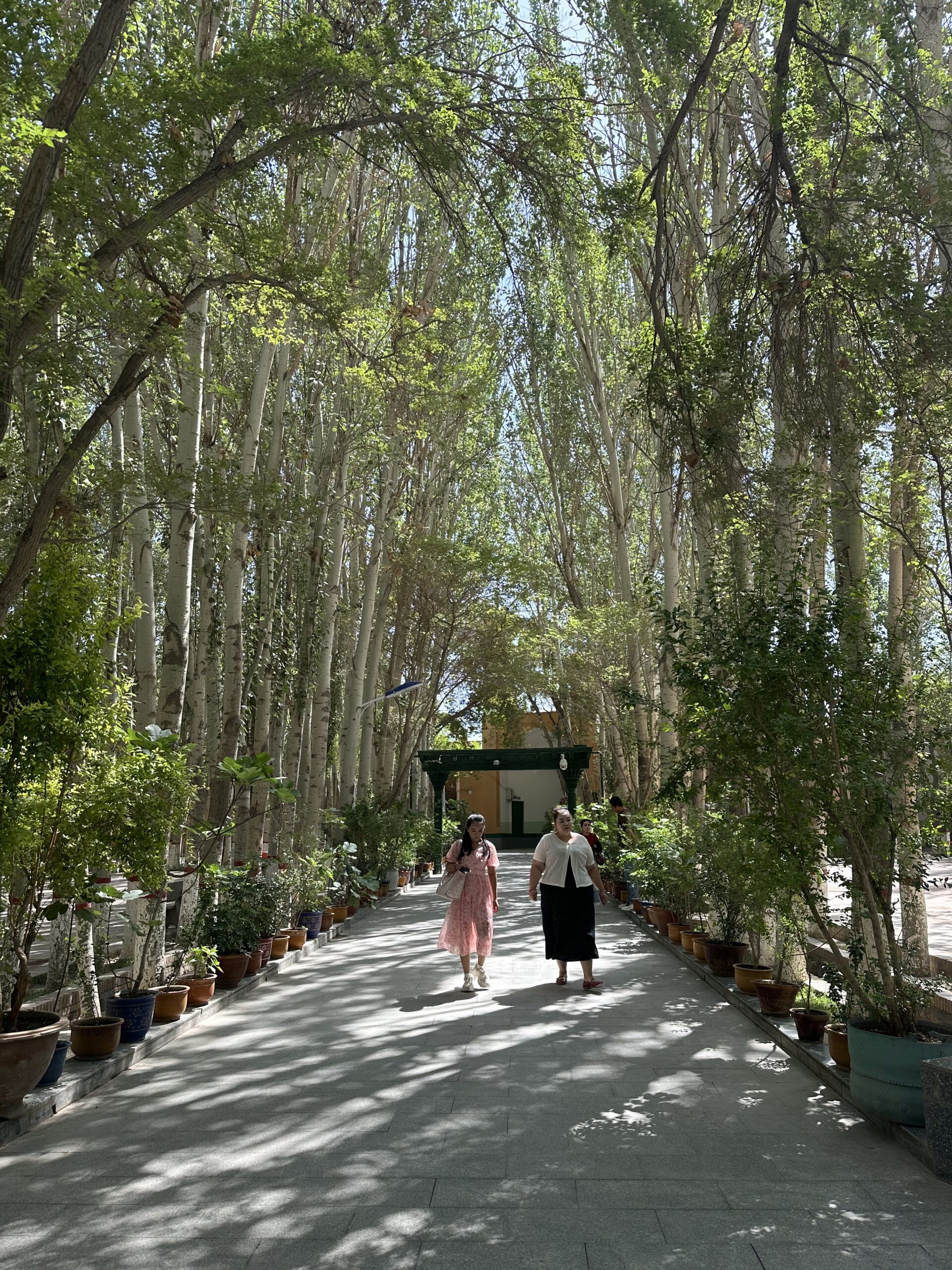
The architecture combines Central Asian and Islamic motifs: yellow-brick walls, a 12.5-meter gate tower flanked by two thin 18-meter minarets, door arches ornamented with grapevines and quotations from the Quran. The inner and outer halls of the mosque, 140 meters in length, accommodate over 5,000 worshipers, with wool carpets underfoot and 140 beautifully carved wooden columns overhead. The central courtyard, shaded by century-old poplars, has a purification pool and is lined with lecture halls and prayer corridors.
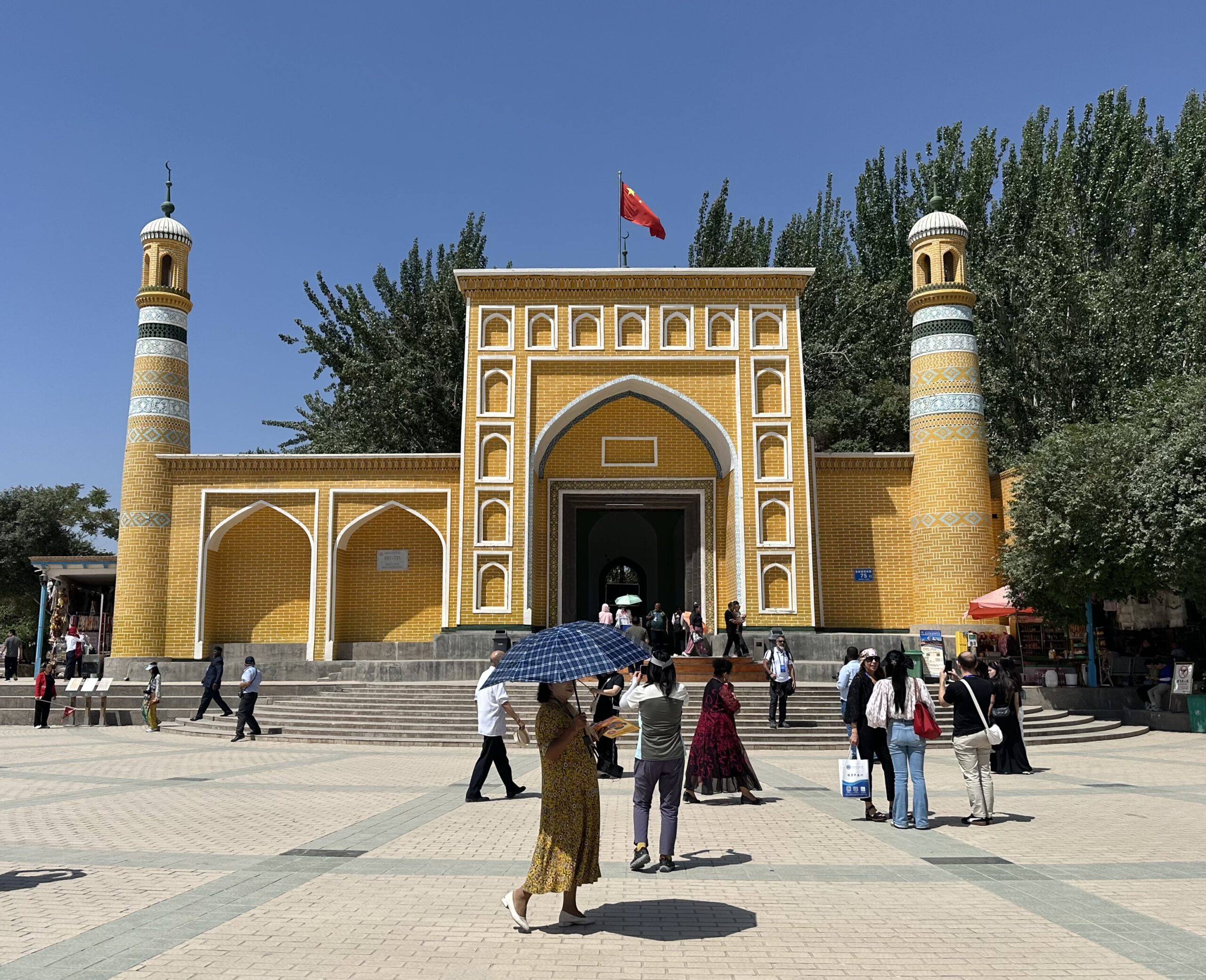
There are nearly 2,000 gatherings in Kashgar yearly. During Eid al-Fitr and Gurban, more than 15,000 pilgrims fill the complex, creating an impressive scene of devotion. The mosque’s design, with Persian glazes, Arabic calligraphy, and Uyghur wood carving, is a reflection of the city’s role as a cultural crossroads.
The mosque welcomes non-Muslim visitors to the courtyard and cloisters, but the Worship Hall is accessible for Muslim prayer only. For the most atmospheric visit, arrive early to witness the stillness of morning prayer or late on a Friday for the ambience of evening ritual. Dress conservatively: covered knees and shoulders. Women are welcome to wear a headscarf. Just a five-minute walk away, visitors can explore a charming craft bazaar and also enjoy the Princess’s Fragrant Garden, making it a full day of discovery.
Kashgar: A living Silk Road legacy
Whether you lose yourself in the winding Old City bazaars or stand in quiet reflection in the Id Kah Mosque courtyard, Kashgar offers a distinctive, vibrant blend of living heritage and sacred tradition. It is a city where the craftman’s hammer rings alongside the call to prayer, where handmade bowls and embroidered hats carry stories of the past, and where the Silk Road’s enduring spirit is still alive and continues to thrive.