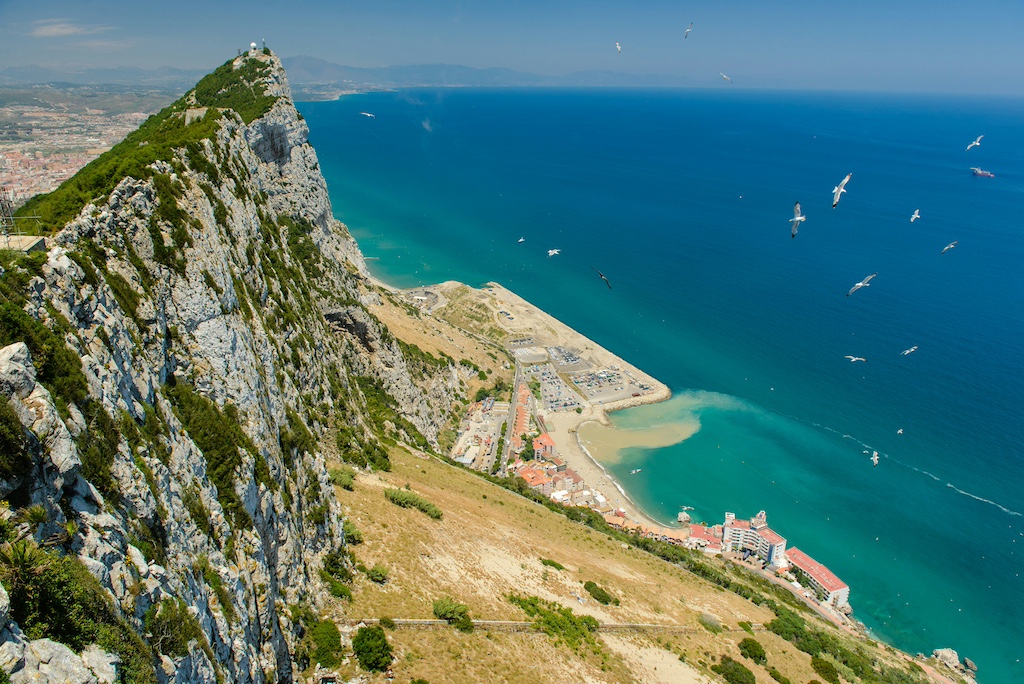



British travellers are three months away from restrictions on entering Gibraltar that mean they face Schengen style formalities and border checks conducted by Gibraltan and Spanish authorities.
Under the terms of an agreement signed last year, British arrivals will be treated as though they are entering the Schengen Area when they enter Gibraltar meaning they must register fully with the new EU-wide entry-exit system (EES). The first time they cross a Schengen border, they must register biometrics including fingerprints and facial images, as well as passport details, and travel dates. Their entry and subsequent exits from the bloc will be traced by the digital system.
People accustomed to frequent crossings into Gibraltar, a British Overseas Territory on a headland off Spain’s southern coast after 15 July 2026 will find passport requirements have tightened. Beyond that date, British passport holders must ensure their documents are less than 10 years old on the day they enter Gibraltar, and that they have at least three months’ validity remaining after their planned departure date.
Catch my evidence before the House of Commons Foreign Affairs Select Committee at 2.30pm Gibraltar Time in GBC. https://t.co/XxInyANjQe
— Fabian Picardo (@FabianPicardo) April 20, 2026
What’s more, visits to the territory will be capped at a total of 90 days in any 180 days, a change from the current unrestricted 90-day visit length. The new 90-day stay includes any time spent elsewhere in the EU, Iceland, Norway, and Switzerland.
Irish passport holders, and Schengen nationals are exempt both from the border registration requirements and the limits on the duration of their stay, as are residents of Gibraltar—who will need to prove residency with a certificate.
Although the terms of Brexit, the UK’s exit from the European Union, were negotiated by the Conservatives, now in opposition, the party’s shadow foreign secretary Priti Patel has criticised the new border arrangements, saying they carry “significant implications for British citizens travelling to Gibraltar and these need to be considered. Parliament cannot be expected to sign a blank cheque to the EU.”
About 15,000 people cross the Spain-Gibraltar border every day, around half the territory’s workforce. Fears surrounded the negotiation of the new border system, including the enforcement of a hard border that would slow the flow of goods and provoke delays. To avoid this, the agreement about to come into force has necessitated the creation of new facility for passport checks at the airport to cater to cumulative passport checks on arrivals from third countries.
Announcing the deal, authorities on both sides claimed it creates a “fluid border between Gibraltar and Spain,” and establishes a bespoke customs model that promises to “eliminate burdensome goods checks at the land border.”