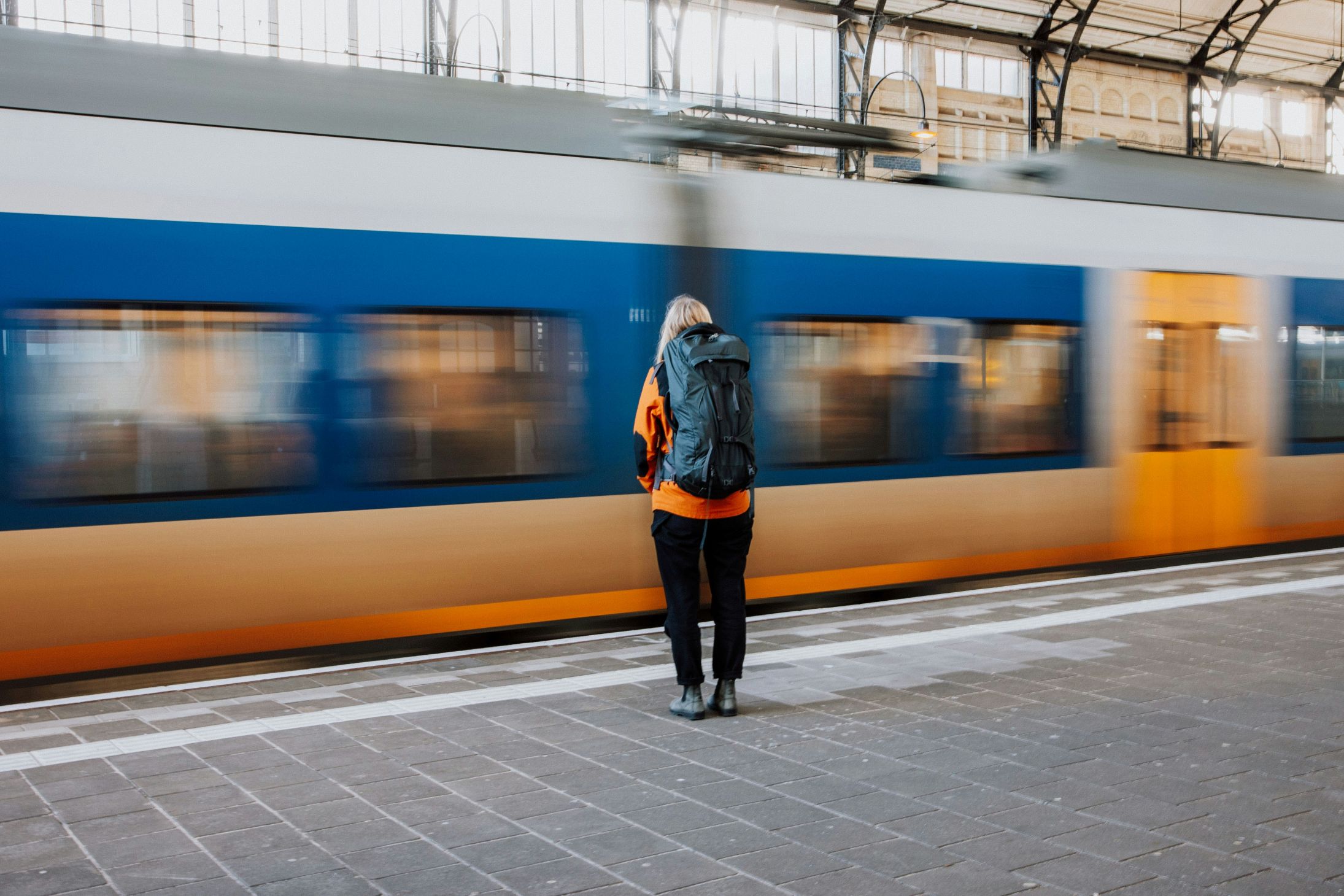



Finland and Sweden will finally be linked by rail this summer ending decades of being “rail-isolation” for Finland and effectively opening up what could become Europe’s longest continuous train journey, from the continent’s north-east to its far south-west.
At a time when the aviation sector remains under pressure from soaring jet fuel prices, rerouted flights and ongoing geopolitical tensions, rail is quietly reasserting itself as a more stable alternative. Travel demand has not disappeared but shifted, with many travellers avoiding routes linked to the Middle East while still looking for ways to move across Europe.
For those heading north, there is an added incentive. Finland has once again ranked as the world’s happiest country, while neighbouring Sweden also sits firmly in the global top tier. This new link effectively allows travellers to experience both in one seamless journey.
The long-awaited connection hinges on the reopening of the Tornio–Haparanda rail link, on the Finnish-Swedish border. From Tornio, passengers will be able to cross into Haparanda and connect onwards to the wider European rail network for the first time in decades.
The project follows a bilateral agreement confirmed last week, with Finland investing €1.9 million to restore the line. The service is expected to be fully state-financed by the 2030s.
No exact date has yet been confirmed, but the launch is expected in late June, in time for the summer holiday season. Finland’s Minister of Transport and Communications, Lulu Ranne, said, “The goal is to get the train service started during the summer”.
In practical terms, the link will enable a rail journey of roughly 5,000 kilometres, stretching from Kolari in Finnish Lapland to the Algarve in southern Portugal. It would make it the longest continuous rail route in Europe, a major draw for Interrailers.
From https://t.co/xTTbt1eQQQ :
— Chris Ogilvie (@Ogilvie_CJ) April 17, 2026
“Anyone want to set a new record?
When Tornio 🇫🇮 – Haparanda 🇸🇪 services start this summer, a new longest train journey in EU is possible.
Geodesic 4000km
Kemijärvi 🇫🇮 – Lagos 🇵🇹, surpassing previous best 3855.54km Riksgränsen 🇸🇪 – Lagos 🇵🇹” pic.twitter.com/DxWZ4j6I8W
The journey, however, is not for the time-pressed. A full trip between Helsinki and Stockholm by rail will take around 24 hours, compared with roughly 18 hours by ferry or a much shorter flight. Those choosing rail will be trading speed for a slower, more scenic journey.
The reconnection restores the Tornio–Haparanda route, a line that dates back to the early 20th century but fell out of use for passenger traffic in the late 1980s and early 1990s.
To mark the reopening, Haparanda’s historic station is being revamped as the meeting point between the two systems. Finnish operator VR trains will run to Tornio and terminate at Haparanda, where passengers can simply walk through the station building to connect to Swedish Norrtåg services.
From the outset, the main obstacle has been the different track gauge systems used by Finland and Sweden. Sweden uses the standard European 1,435 mm gauge, while Finland, then part of the Russian Empire, adopted the broader 1,524 mm gauge.
A solution was found early on. After the rail bridge over the Torne River opened in 1919, shortly after Finland gained independence, engineers implemented a dual-gauge, four-rail track system. That same approach, updated with modern infrastructure, remains in use today and will support the return of passenger services in 2026.
The reopening will also mark Finland’s first regular international passenger rail connection since services to St. Petersburg were suspended in 2022 following Russia’s invasion of Ukraine. According to Ranne, the link is expected to strengthen “security of supply and resilience in times of crisis”, while supporting cross-border mobility for work, study and tourism in the Bothnian Arc region.
Beyond passengers, the route carries clear strategic weight. Rail corridors have historically regained importance in periods of geopolitical tension, offering a more stable channel for goods and connectivity when other routes become uncertain.