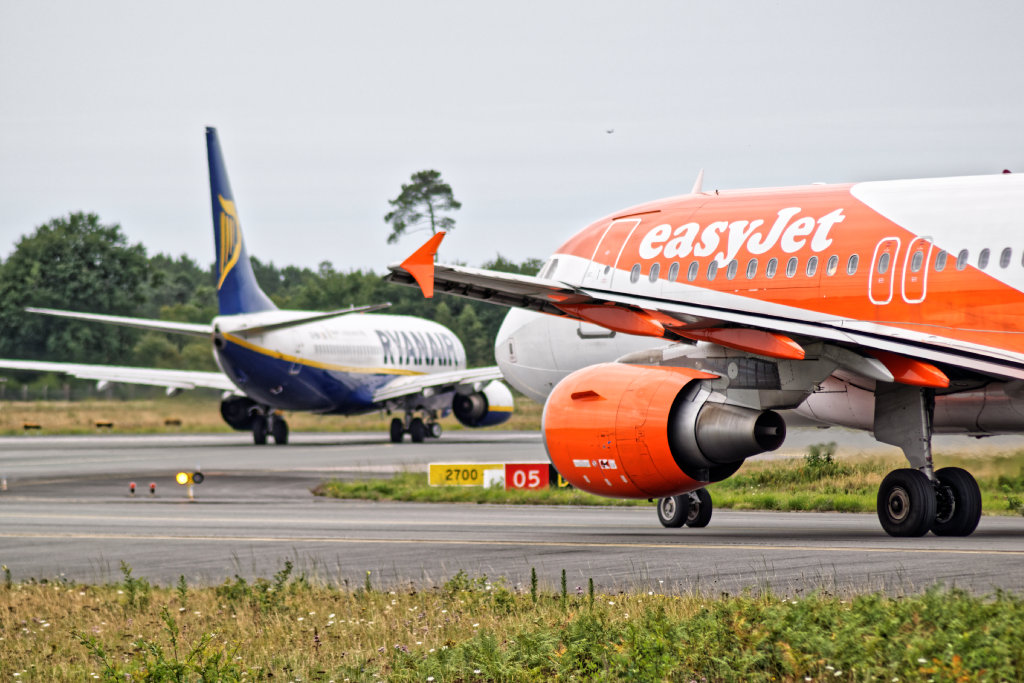
The warmer air caused by climate change will oblige airplanes to ascend more slowly, meaning departing aircraft will create noise pollution for a larger number of residents.
A new study, carried out by scientists from the University of Reading and published in the journal Aerospace, looked at how rising air temperatures change the way aircraft take off. As hotter air is less dense, its lift generation is reduced, and this keeps aircraft closer to the ground for longer after take off.
The researchers looked at three possible future scenarios, depending on how much greenhouse gas pollution humans will produce. While departing aircraft climb angles will decrease by 1-3% on average, individual hot days could reduce climb angles by up to 7.5%. That will not just impact pilots and the overall experience during a flight, but it will also have a noticeable effect on those living in the proximity of an airport.
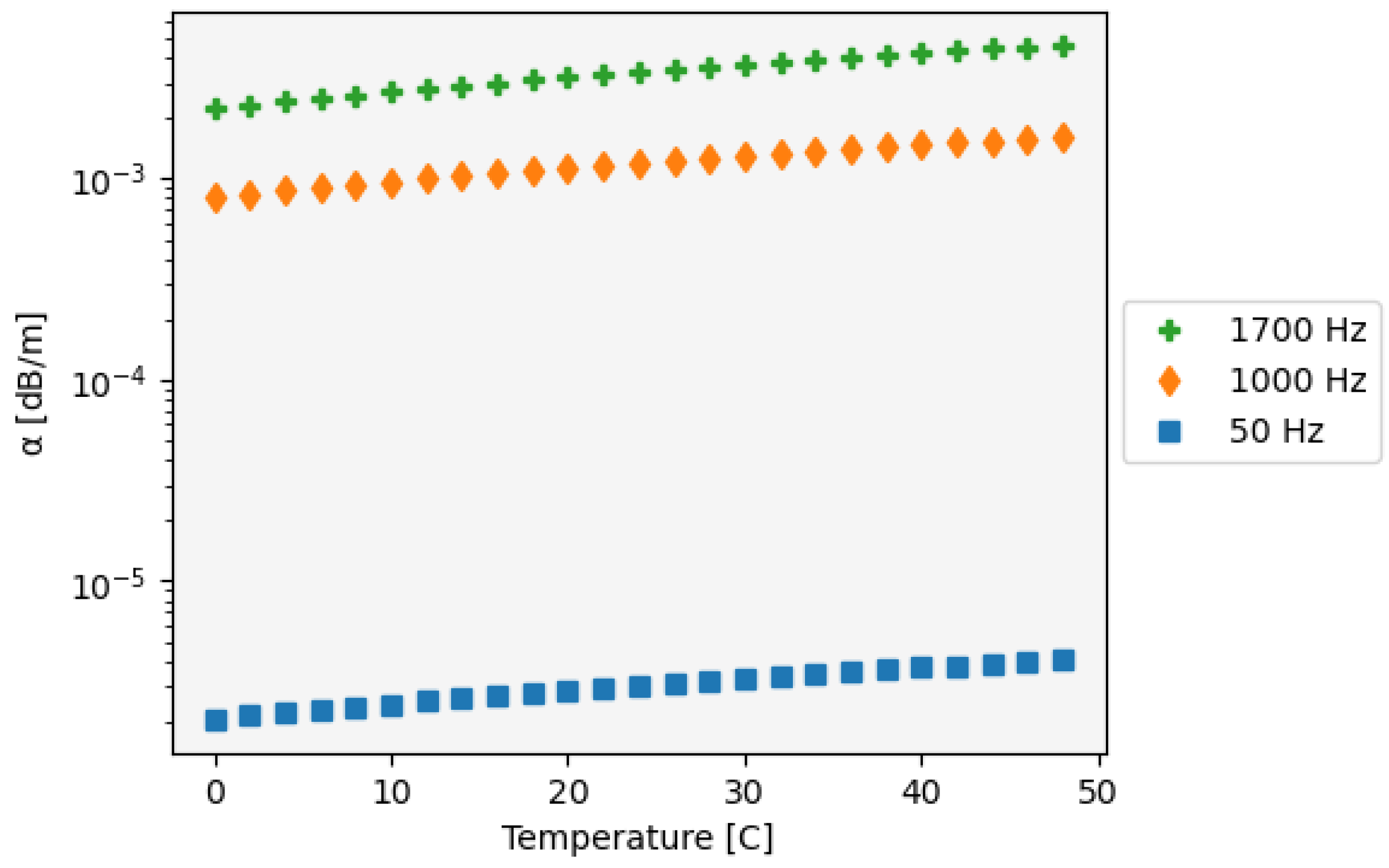
“Over the next three decades, thousands of extra people in London could be blighted by noise pollution caused by climate change. The problem gets worse with different types of sound, too. Low-frequency noise, which travels further, will increase the most. These deeper sounds are particularly annoying to human ears and can cause stress and sleep problems. Without action on greenhouse gas emissions, rising temperatures will make managing the problem of airport noise more difficult, even as engine technology advances”, said Dr Jonny Williams, lead author at the University of Reading.
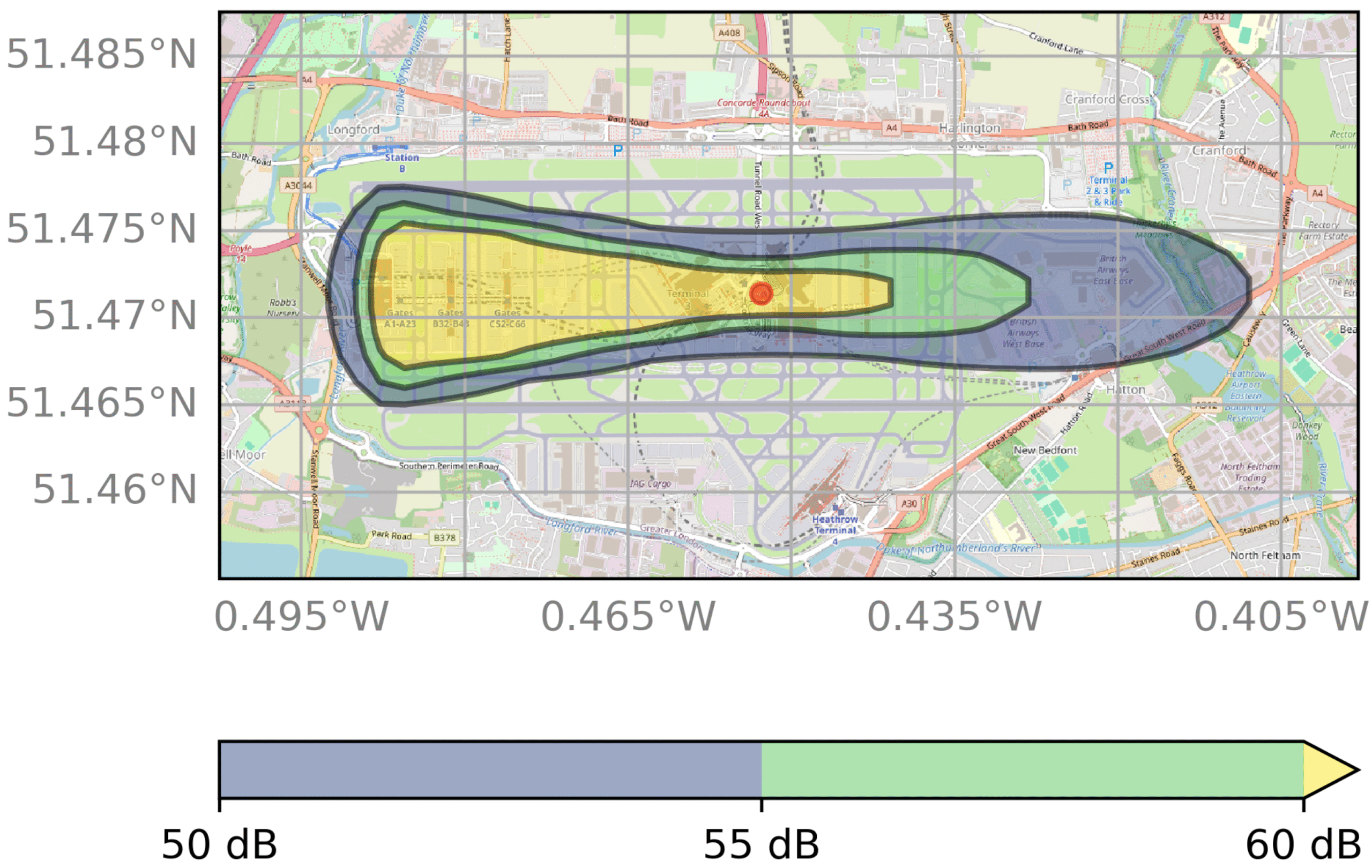
Extra residents affected
The researchers looked at 30 European airports, projecting noise levels using ten climate models. They more specifically focused on the 50-decibel level, as this is considered to be a boundary where aircraft noise becomes more noticeable. Using the climb angles of the Airbus A320, an aircraft commonly used for European flights, they were able to identify a new perimeter within which residents should expect major noise pollution.
Taking the example of central London, where around 60,000 people live within the 50dB noise footprint of an A320 aircraft, climate change could mean that an extra 2,500 people would be exposed to that boundary by 2050. In Madrid, 2,000 more residents could be exposed, while in Lisbon, San Sebastian, and Düsseldorf, researchers are talking about an extra 1,500.

“Together with increased turbulence and more airport flooding, we can now add noisier flights to the growing list of ways climate change is affecting aviation, with unwelcome consequences for those who live near airports and are impacted by noise”, added University of Reading’s Professor Paul Williams.
The new research is all the more alarming since the European Commission had estimated that over 83.7% of Europe’s residents will live in urbanised areas by 2050, compared to 76.5% in 2015. The scientists’ numbers could thus increase even more if those new urban residents choose to settle down in the vicinity of airports around the continent.