


Airlines handled checked baggage more efficiently in 2025 than they have in years, despite welcoming a record number of passengers. According to SITA’s 2026 Baggage IT Insights report, the global rate of mishandled baggage fell by 23% compared with the previous year, dropping below pre-pandemic levels for the first time. Around 5 billion passengers travelled by air in 2025, while the number of mishandled bags fell to 24 million worldwide. The report also shows that the industry has reduced mishandled baggage by almost three quarters since 2007.
The improvement does not mean airlines have solved the problem. Mishandled baggage, which includes delayed, damaged and lost luggage, still costs the aviation industry an estimated $6.3 billion every year. SITA estimates that each mishandled bag costs airlines around $260 on average, replacing the long-used estimate of $150 with a new benchmark based on research involving airlines and ground handling companies. The report points out that airlines earn an average net profit of just $8 per passenger, meaning that one mishandled bag can erase the profit from more than 30 passenger seats.
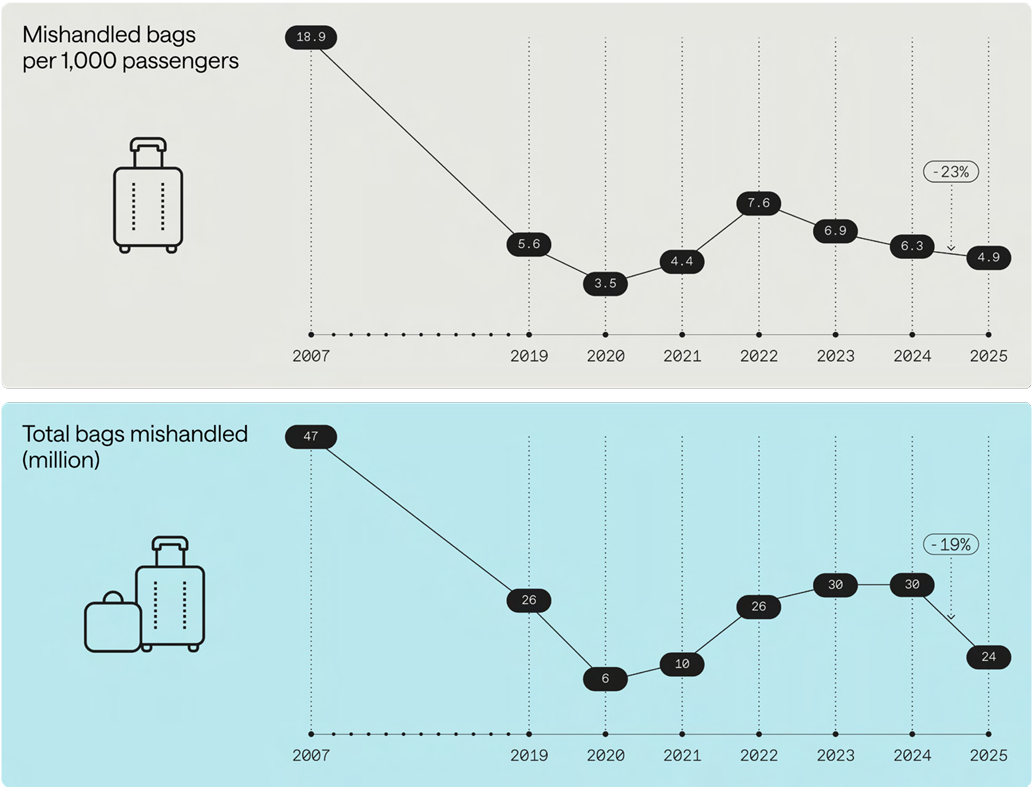
According to SITA, the latest improvements are the result of several technologies working together rather than one breakthrough innovation. Airlines and airports are increasingly sharing baggage information in real time, allowing staff to identify potential problems before bags go missing. Artificial intelligence (AI) is also helping operators predict delays, recommend alternative routes for luggage and make quicker operational decisions. Other technologies contributing to the lower mishandling rate include automated baggage sorting systems, biometric baggage drop, where passengers can identify themselves using facial recognition, and RFID baggage tags that allow luggage to be tracked electronically throughout its journey.
Passengers are also becoming part of the baggage tracking process. Many travellers now use location trackers such as Apple AirTags to monitor their luggage throughout their journey. By allowing airlines to access that location information when a bag goes missing, passengers can help speed up the recovery process. SITA says its integration with Apple’s Find My technology reduced permanently lost luggage by 90% during the first year of operation and shortened the recovery time for delayed bags by 26%. The company has also integrated Google’s Find Hub location-sharing feature into its baggage tracking platform, giving airlines another source of real-time location data.
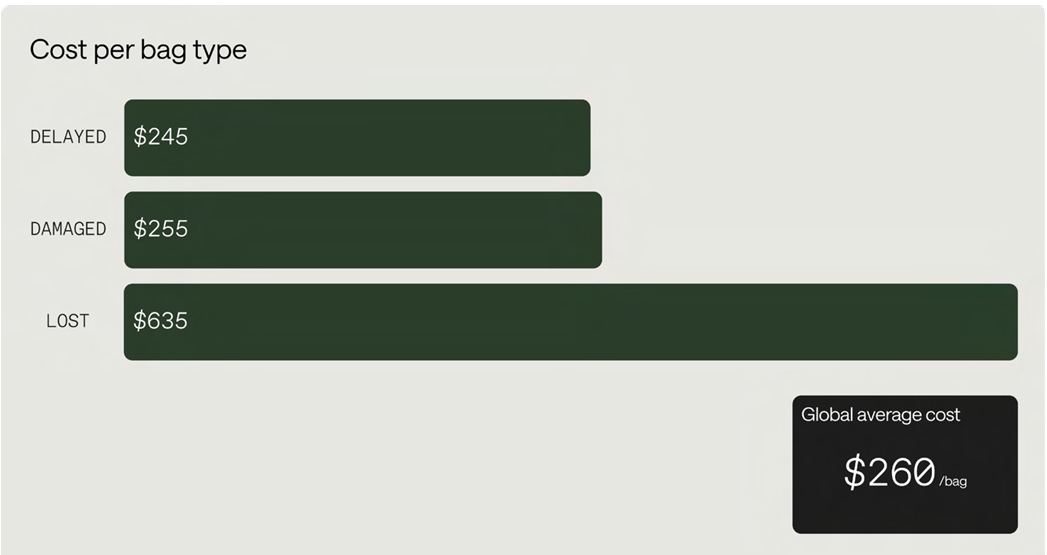
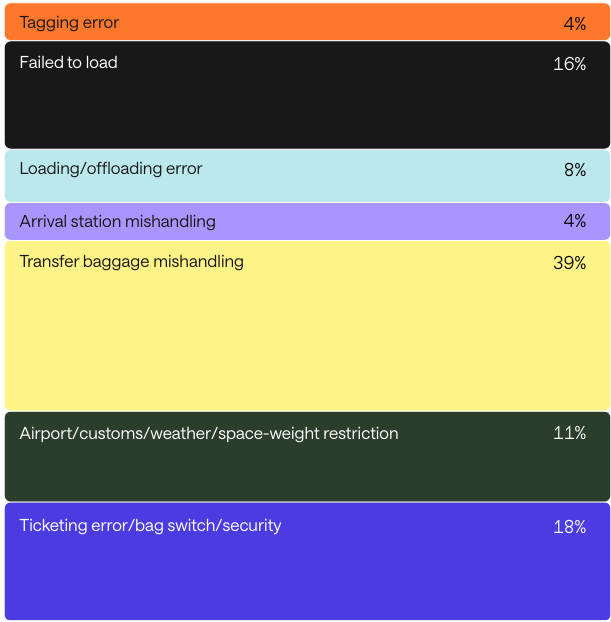
Although baggage handling has improved overall, transfer flights continue to be the biggest source of problems. Bags that need to move between connecting flights accounted for 39% of all mishandled baggage cases in 2025, only a slight improvement from 41% the year before. International journeys are therefore much more likely to experience baggage issues than domestic flights because they usually involve more transfers, more baggage handlers and tighter connection times. Delayed baggage remains the industry’s biggest challenge, representing around three-quarters of all mishandled bags and roughly 70% of the total costs associated with baggage problems.
The report also highlights examples of how automation is reducing delays in practice. Thai Airways introduced SITA’s automated baggage management tools across nine airports, replacing several manual processes with digital systems. One task that previously took baggage staff around three minutes per bag now takes only one second. Besides saving staff time, the airline has been able to process delayed baggage more quickly, reduce paperwork and collect more detailed information about the causes of baggage delays, allowing it to improve operations further.
Looking ahead, airlines are planning further investment in digital baggage services. Around 73% say AI will be one of their IT investment priorities over the next two years, while half intend to provide passengers with real-time baggage updates throughout their journey. Industry-wide baggage tracking under IATA Resolution 753, an international standard that requires airlines to record baggage at key points such as check-in, loading, transfers and arrival, has now passed the 50% adoption mark, with full compliance targeted for 2027. SITA also expects future services to include printing baggage tags at home, dropping luggage off before arriving at the terminal and even routing bags separately from passengers when that improves efficiency.