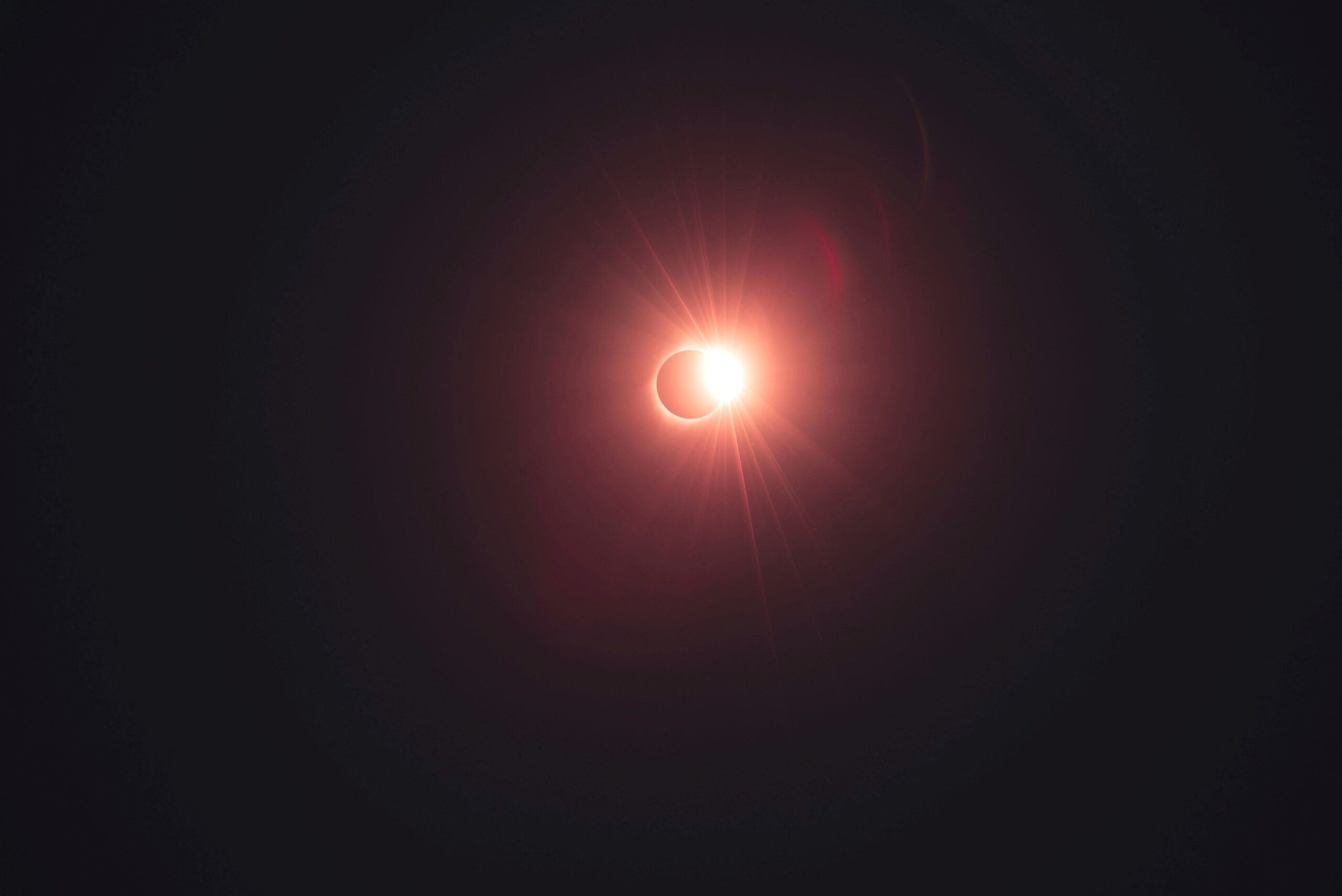



Notices warning that stocks of solar eclipse glasses are running out have been abounding online in the last few days, ahead of what promises to be a spectacular celestial event. With much of Europe in the midst of a particularly hot, dry summer, cloudless skies could provide some of the best conditions to observe it.
The hype isn’t without reason. Although two to five solar eclipses occur somewhere on Earth every year, this will be the biggest one in almost thirty years and the first total solar eclipse anywhere on the globe since 8 April 2024, when millions watched it sweep across Mexico, through 15 US states and on to eastern Canada.
This summer, it’s Europe’s turn.
⚠️ Safety first ⚠️
— ESA Science (@esascience) August 8, 2026
If you're getting ready to observe the total solar eclipse on 12 August, please follow safety rules:
🚨 use only certified eclipse glasses (ISO 12312-2)
🚨 do not look through devices without a special solar filter
Check out the safety list below!… pic.twitter.com/VMBQyTaJjE
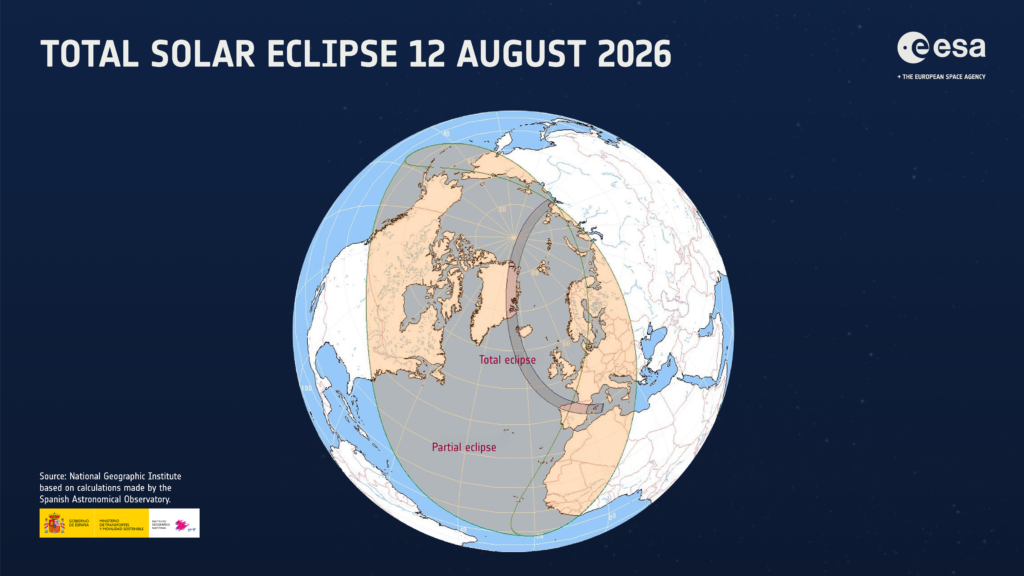
The so-called path of totality, where the Moon completely covers the Sun, will stretch from Greenland and Iceland in the north to Portugal and Spain in the south. At its maximum, totality will last two minutes and 18 seconds. Spain has particular reason to prepare, as it will be the first total solar eclipse visible from the mainland in over a century.
Aside from a shortage of eclipse-viewing glasses, short-term rentals in Iceland and Spain have also been affected by the excitement surrounding the eclipse. As if a once-in-a-lifetime eclipse were not enough, it will also coincide with the Perseid meteor shower reaching its peak and a six-planet alignment before dawn. It’s a royal flush for stargazers and telescope enthusiasts.
However, the eclipse won’t be total everywhere. By the time it reaches Portugal and Spain, totality will “only” last around a minute.
Elsewhere, the sun will be 94% covered in Dublin and 83% in Oslo, and will be visible as far away as Montreal (18%) and New York (9%).
Scientists are no less excited than the wider public. While on a cruise ship in a Greenland fjord, eclipse mapmaker Michael Zeiler told The Independent that he hopes to capture any aurora forming in the north during totality, along with a solar outburst timed just right.
Total solar eclipses provide a unique opportunity to study the Sun, and on Aug. 12, we'll take to the skies to learn more.
— NASA (@NASA) August 7, 2026
NASA-funded teams will study the eclipse with a high-flying research jet and scientific balloons: https://t.co/ec9MqxTSAS pic.twitter.com/c0mIAC1szU
The European Space Agency (ESA) will provide live coverage from Spain, where NASA-supported university teams will launch over 60 high-altitude balloons. Carole Mundell, ESA’s Director of Science, described the event as being about more than just the eclipse itself. She described it as “an incredible alignment of heavenly bodies”, but also as a “very human moment” that connects us, with our feet on the ground, to the cosmos.
Belgium is not in the path of totality, as the Moon will cover “only” around 91% of the Sun. The eclipse will begin at around 7:18 pm., peek at approximately 8:13 pm., and end at around 9:05 pm.
According to Hans Coeckelberghs of the Royal Observatory of Belgium’s Planetarium, the eclipse will be particularly difficult to see from Brussels, as the sun will already be very low in the sky.
He suggests checking potential viewing spots a few days beforehand, at roughly the same time, to make sure the western horizon is visible.
Those who miss this eclipse can take comfort in the knowledge that an even bigger one will occur on 2 August 2027, lasting more than six minutes at its maximum as it sweeps from Spain across North Africa.
Whatever you do on Wednesday, make sure you have the right gear. Glasses should carry ISO 12312-2 certification; sunglasses, CDs and other DIY tricks will not suffice. “You only have two eyes; it’s not worth losing them”, Coeckelberghs warns.