


On 12 August 2026, some parts of the world will be able to observe a total solar eclipse. With the natural spectacle just hours away, we tell you how to safely and successfully photograph a solar eclipse, even as a beginner.
Parts of the Arctic, Greenland, Iceland, Portugal, and Spain are about to stand witness to a spectacular natural phenomenon: a total solar eclipse. The eclipse will start in Reykjavik at around 4:47 pm and end somewhere between 8:27 pm and 8:35 pm in Spain. Other regions will not be able to benefit from a total eclipse but will still get a glimpse of the show.
The event has already led to a boost in arrivals in western Iceland as well as in northern and eastern Spain in particular, while special cruises and flights have been organised to give people a once-in-a-lifetime opportunity to experience the moon obscuring the sun.
Protect your gear
Many of those who are planning on seeing the spectacle have already gotten their hands on a pair of solar viewers, which according to NASA’s guidelines should conform to the ISO 12312-2 international standard for filters for direct observation of the Sun. However, as many of the observers are undoubtedly planning on taking some pictures, it is worth knowing that cameras too need solar protection.
“To take images when the Sun is partially eclipsed, you’ll need to use a special solar filter to protect your camera, just as you’ll need a pair of solar viewing glasses (also called eclipse glasses) to protect your eyes. However, at totality, when the Moon completely blocks the Sun, make sure to remove the filter so you can see the Sun’s outer atmosphere – the corona”, NASA writes.
Indeed, when pointing a (phone) camera directly at the Sun – even in the lead-up to a total eclipse – this can create permanent damage, especially when exposing the camera to the light for a longer period of time. The internal sensor could get damaged, leading to dead pixels or worse. When taking a picture with a phone, NASA recommends putting a solar viewer in front of the lens. When using a dedicated camera, one should buy a special ISO 12312-2 lens protector.
Know your camera
Whether you’re planning on using your phone or a super professional camera, the most important thing is to know how to handle it. Even the best quality gear won’t matter much if you don’t know exactly how to use it and how to manually handle the settings.
If you want to use a special camera tonight and you’re quite well-acquainted with it, don’t hesitate to play around with it a little during the day. If possible, go to the spot from where you’re planning on looking at the solar eclipse and try to find the appropriate angle, exposure, and so on. Better be safe than sorry.
If you own a complicated (professional) camera but don’t know yet how to handle it, it might be a good idea to grab your phone instead. Nowadays, most phone cameras are able to take great quality pictures while being user-friendly as well. Even in this case, you might want to take a deep dive into the possibilities of your phone’s camera, from timer over exposure to wide-angle and everything in between.
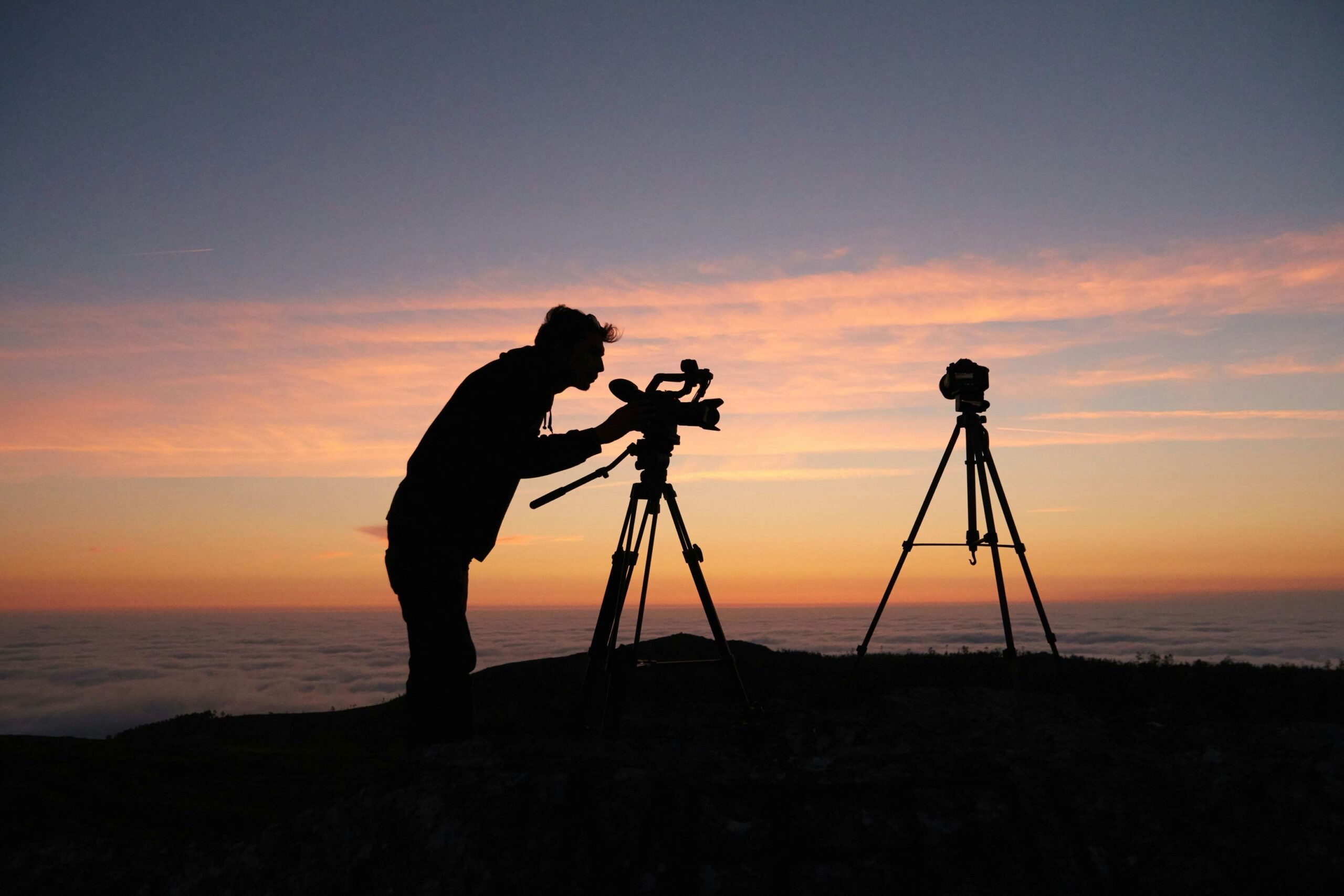
No matter the gear you’re opting to take with you, a tripod and a timer might come in handy to avoid blurry pictures when the luminosity is down.
Look away from the Sun
During a (total) solar eclipse, the Sun tends to be all we care about, and it is not difficult to see why. However, as most people will be concentrating their cameras on the eclipse itself, your best shot at taking an unforgettable eclipse picture might be looking elsewhere.
“The real pictures are going to be of the people around you pointing, gawking, and watching it. Those are going to be some great moments to capture to show the emotion of the whole thing,” NASA photographer Bill Ingalls recommends.
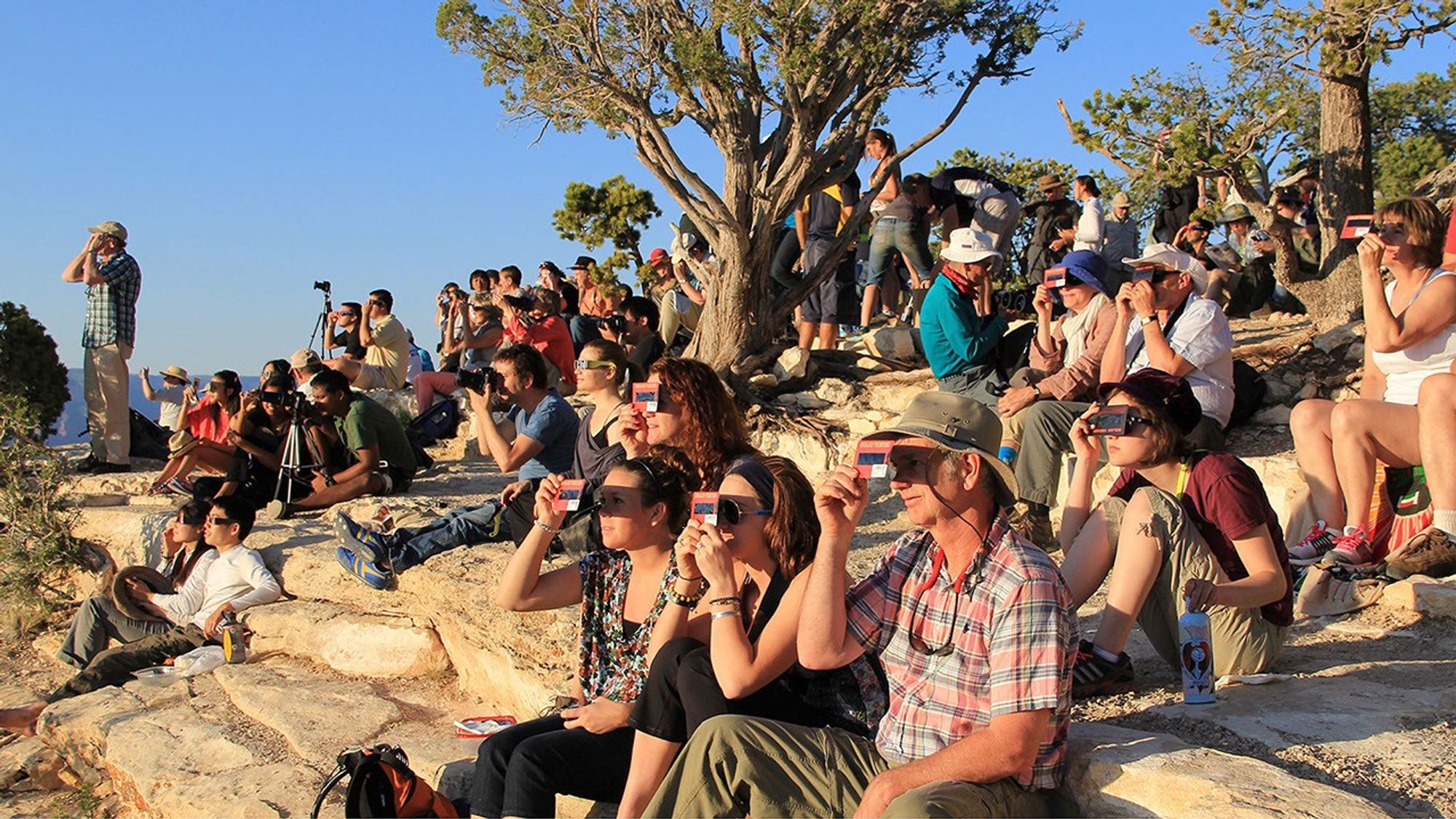
The beauty of the solar eclipse might be found everywhere during the natural phenomenon. The Sun reflected in the sea or a pond, the strange light shining through the trees in your backyard, or a little animal confused by the event: beauty lies everywhere, especially during such a unique natural wonder.
Don’t forget to enjoy the moment
We, humans, are increasingly looking at the world through our phones. Whether it is during a concert, a sports event, or a solar eclipse, the perfect picture or video seems to be more important than the real-life thing. Tonight of all nights, try to remember to enjoy the moment away from your phone or camera, as it might be a once-in-a-lifetime opportunity.