


The adventure travel market is now worth $1.16 trillion (€1 trillion) globally, with most travellers saying they are “open to adventure,” says a new report from the Adventure Travel Trade Association (ATTA), in an analysis of consumer segments and how to appeal to them.
North American consumers are high-spending and influential
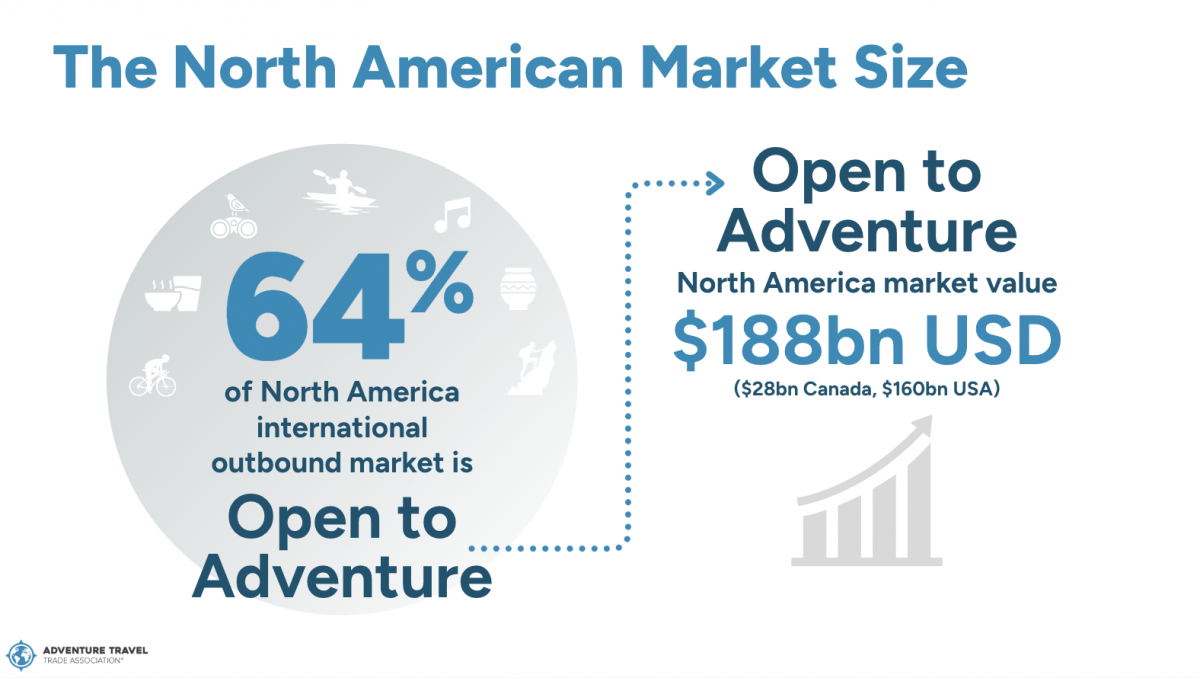
In North America, which the report calls “one of the world’s most influential outbound regions,” adventure travel is “firmly mainstream”, and a majority (64%) of consumers who travel internationally are “adventure-aligned,” the analysis says. The resulting outbound market is valued at approximately $185 billion. It’s a market that matters because it is high spending, with the power to define how destinations “design, position, and communicate their offerings.”
One trend reported to be “critical for operators” is the way consumers now seek adventures beyond the clichés of high-octane thrills, blending “exploration with cultural immersion, iconic natural and heritage sites, and opportunities for learning or personal growth.” That means that while “hiking, wildlife, and outdoor activity remain important,” consumers want them enriched with storytelling, community, or culinary layers.
Four consumer types
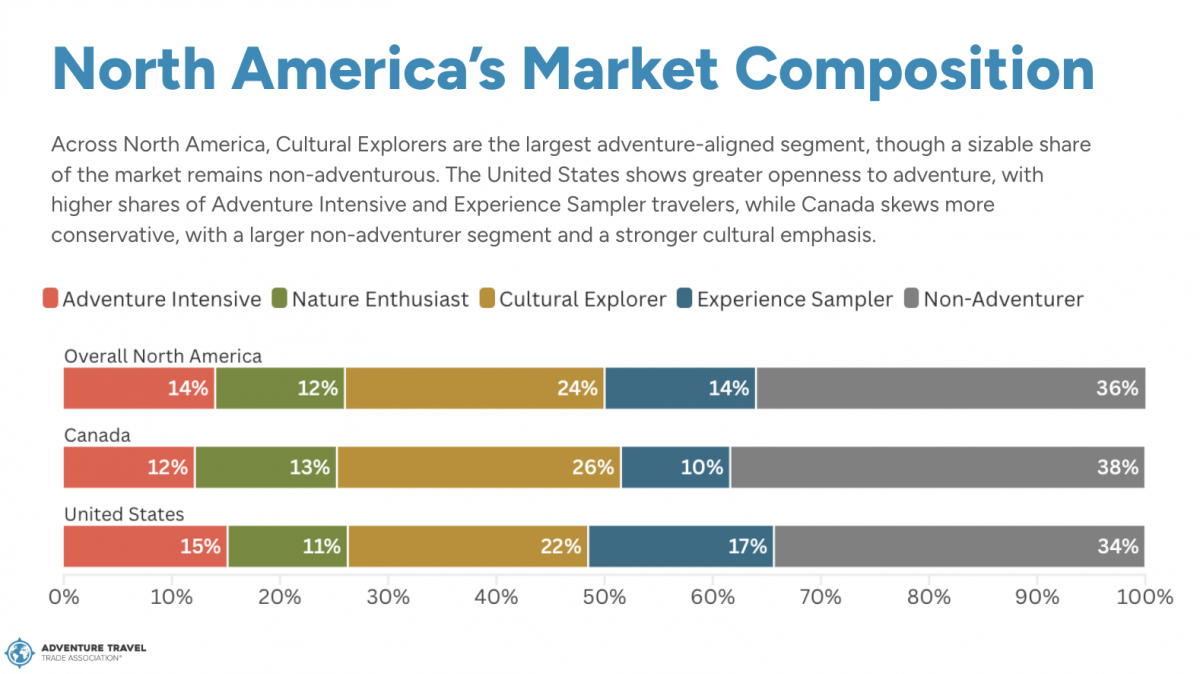
The report also breaks consumers into four broad segments: Cultural Explorers, Adventure Intensives, Nature Enthusiasts, and Experience Samplers. It identifies Cultural Explorers (24% of the market) as the “largest adventure-aligned group in North America.” They want “cultural immersion and education,” and show a “strong interest in heritage-rich destinations and iconic sites.” With an older average age, they seek a balance between enrichment and comfort. The report highlights that “For destinations with deep historical or cultural assets, this segment represents a particularly strong opportunity.”
Next, representing 14% of the market, Adventure Intensives are the “most activity-driven,” but the report warns providers “rugged does not mean rough around the edges.” This segment still expects quality, “seamless logistics”, and high overall value.
Nature Enthusiasts (12%) prioritise nature and outdoor engagement and have a “preference for structured discovery over unpredictability.” And finally, Experience Samplers (14%) are “motivated by a mix of adventure, personal growth, and cultural engagement” and are “drawn to variety and layered itineraries” within a single trip.
Value value value
For all these consumers, the “value–experience equation” is a key factor, ATTA says. They are “willing to spend, often significantly, but they expect a clear return on that investment.”
In terms of that outlay, while US travel consumers are likely to spend more per night and per trip, prioritising smooth transitions and comfort, Canadians stay longer and value safety, clarity, and, as seen below, sustainability. Both markets spend directly with local businesses, the research found. Operators can tap into this willingness to spend out if value is clear, offering transparency on what’s included and what isn’t, and upfront quality standards.
Sustainable practices are something consumers from North America are seeking and willing to participate in, particularly Canadians, who place “greater emphasis on safety, reassurance, and environmental mindfulness,” while US consumers can be persuaded to engage “when responsible options are clearly positioned and convenient.”
When it comes to destination, ATTA frames consumer wishes as “aspirational but measured.” North American outbound adventurers are looking for “established and well-connected destinations,” favouring “Western Europe, cross-border travel between the US and Canada, and the Caribbean.” Central America and the Mediterranean also feature high on the wish list thanks to their accessibility and cultural riches.
European consumers are diverse, value-driven, and seek meaning
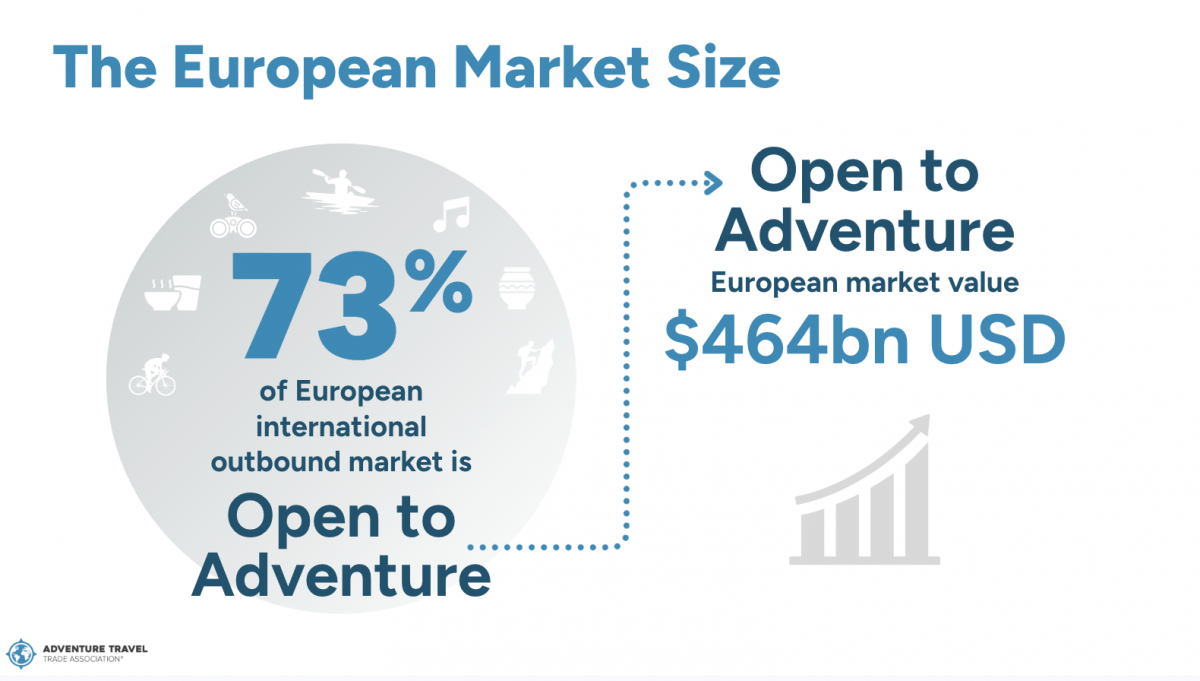
In Europe, ATTA reports a market that is worth $464 billion, with a whopping 73% of consumers “open to adventure”, but the drivers are more diverse than in North America. The report focuses on France, Germany, Italy, the Netherlands, Spain, and the United Kingdom—six of the region’s “largest and most influential outbound travel markets.”
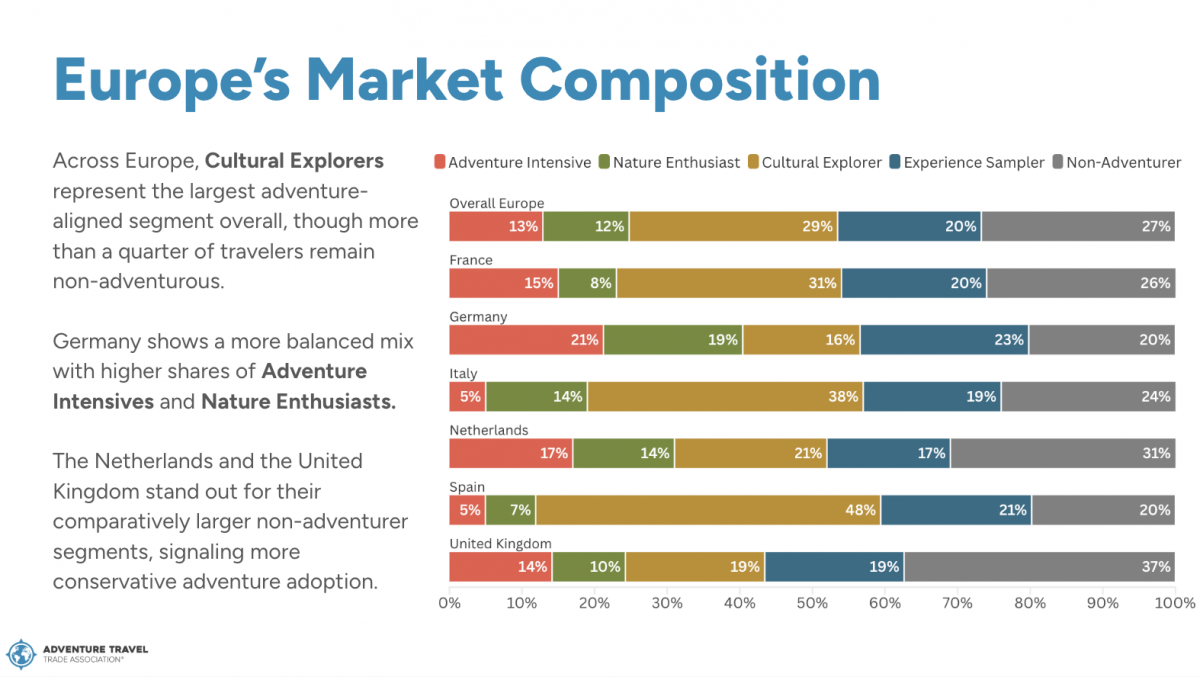
European consumers “often combine culture, nature, and exploration with shared experiences and personal enrichment,” and the largest segment is composed of Cultural Explorers, who seek “heritage, local cuisine, and immersive experiences over high-adrenaline pursuits.”
However, adrenaline junkies are more common towards the north of the region, as Heather Kelly, Director of Research and Knowledge at ATTA, explains: “In southern markets like Spain and Italy, cultural immersion sits at the heart of adventure travel, while in countries like the Netherlands and the UK, travelers often prioritize active exploration. Understanding those nuances helps destinations design experiences that resonate with each market.”
Like the North American consumer, Europeans want “value,” indeed, “cost and affordability” are the decisive factors across all six countries. But value does not necessarily mean “low in price.” Trips that feel worthwhile, comfortable, and well-designed, with an emphasis on meaningful experiences, are considered worth it.
“European travelers are highly experienced and increasingly motivated by meaningful travel,” said Russell Walters, ATTA Regional Director for Europe. “They want to connect with local culture, spend time in nature, and feel that their travel choices benefit the places they visit.”
That last point means that sustainability is a “widely accepted” concept among European consumers who express “willingness to consume local products, reduce waste, or travel outside peak seasons when those options are easy to incorporate into the experience,” the report says. Overall, the ATTA analysis offers industry stakeholders insights and strategies for attracting and retaining an adventure-led consumer base that only appears to be growing worldwide.