

Imagine walking to work. It’s a regular workday. Rigmaroles. Distractions. Rituals. Will the report be ready on time? Is that new colleague going to say something stupid about your shoes again? Are the renovations ever going to stop? Who’s cooking tonight?
Remnants of ice and snow on the ground mean you have to watch your footing. Then something catches your eye. Something extraordinary. It wasn’t there yesterday. But what is it? It looks so real. You scan around, wondering if it’s a prank. You bend down for a closer look… and you’re instantly swept into a secret world of tiny art.
Though fictional, this scenario could well have played out on a dark December morning in 2016 when a mysterious miniature house appeared like a pop-up restaurant for mice on a busy street in Malmö, Sweden.
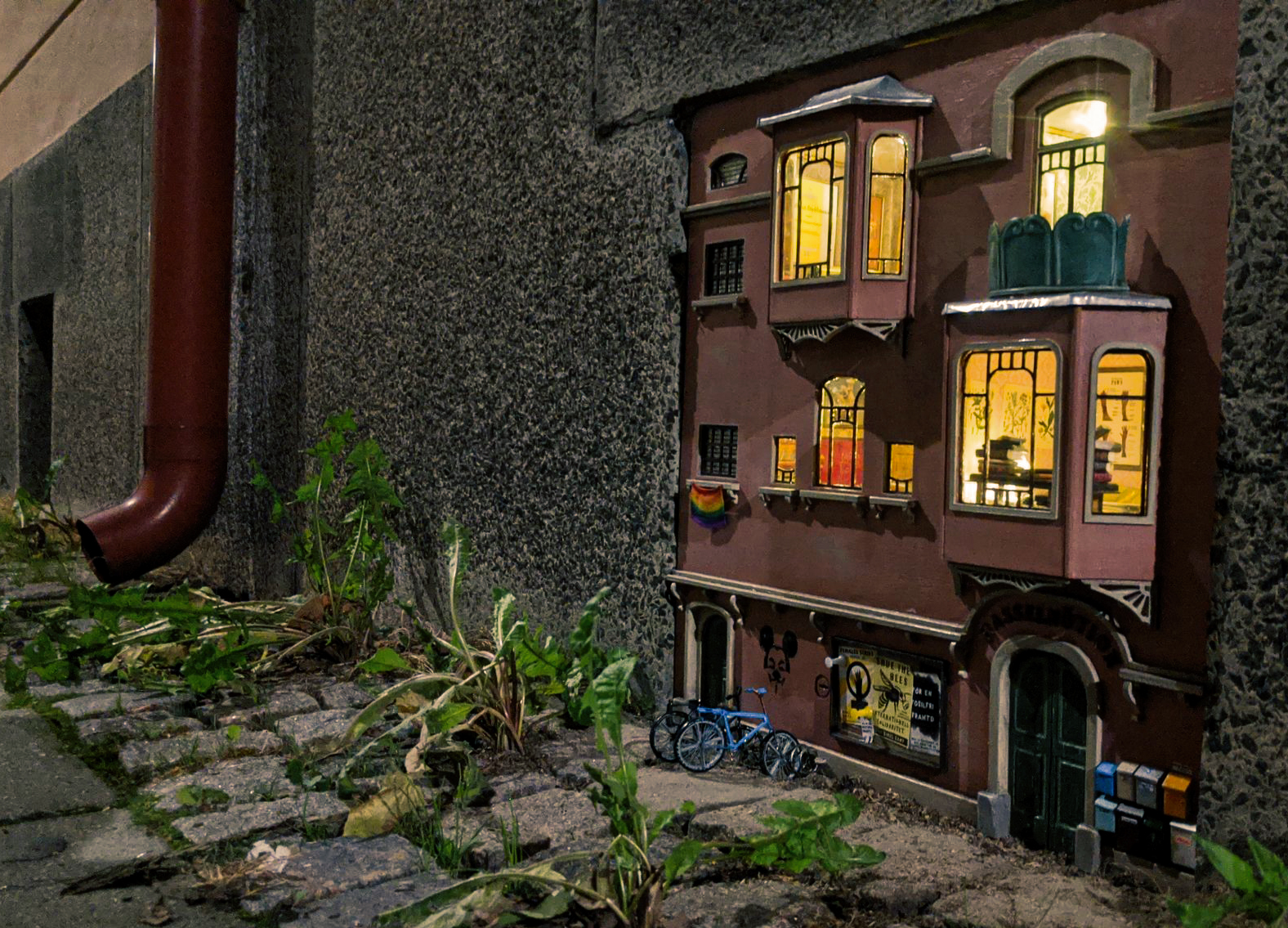
Built with scaled precision, the installation conjured up visions of nissar going about their own quotidian lives, worrying how the cost of living will affect business, rushing to the chemist before it closes, buying Italian takeaway for dinner, and getting in some last-minute Christmas shopping.
No one knew who was behind the stunt or why. Speculation took hold. Confusion reigned. The only clue was a Banksy-like stencil of a mouse-eared V for Vendetta character captioned ‘Anonymouse’.
Guerilla art can be a powerful medium for activism to raise awareness about issues. But the Anonymouse collective offered no apparent political and social message, nor an obvious commercial agenda. Could it simply be art for the people, a kind gesture? We would have to wait nearly a decade for an answer to that question.

Anonymity to a point
The Anonymouse crew – later nicknamed ‘Banksy Mouse’ – were not ready to reveal themselves. For years, they conjured up playful alternative worlds like the Italian eatery ‘Il Topolino’, the insect-inspired pharmacy ‘Apoteket Cikadan’, and the nut shop ‘Noix de Vie’, which popped up in southern Sweden and other countries.
Then, as mysteriously as it started, the V-Mouse team decided to pull back the curtain. It was announced in June that these finely crafted pieces were the work of two Swedish artists, Elin Westerholm and Lupus Nensén.
The pair had met while working as designers on the British version of the Wallander TV series.

At first, they said they wanted to do something creative and fresh, but with a whimsical note to brighten up the dark Scandinavian winter. People loved the idea. Somehow, it struck a chord.
When announcing they would be retiring the Anonymouse series, Nensén attributed their successful partnership to their different but complementary aesthetics, merging his gothic stylings with Westerholm’s Swedish folkhem (people’s home) sensibilities. Somehow, they managed to “make it all look as though it belongs to the same world”, he concluded.
And while that world may seem secretive or even out of step in the prosaic of daily life, the grown-up version of every child is happy to adjust their eyeline for a glimpse of simpler, perhaps more magical times.
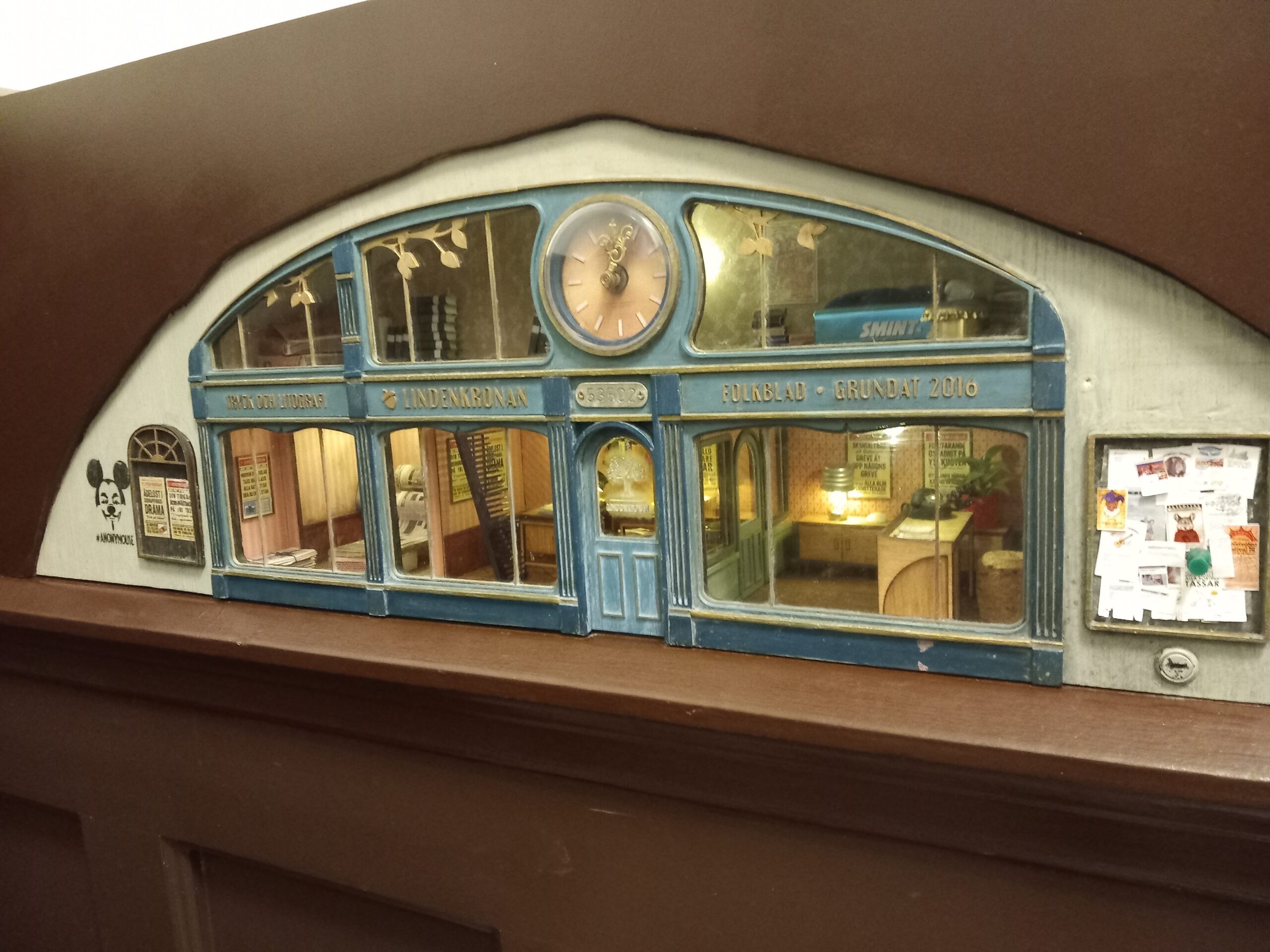
Mystery revealed, a summer exhibit
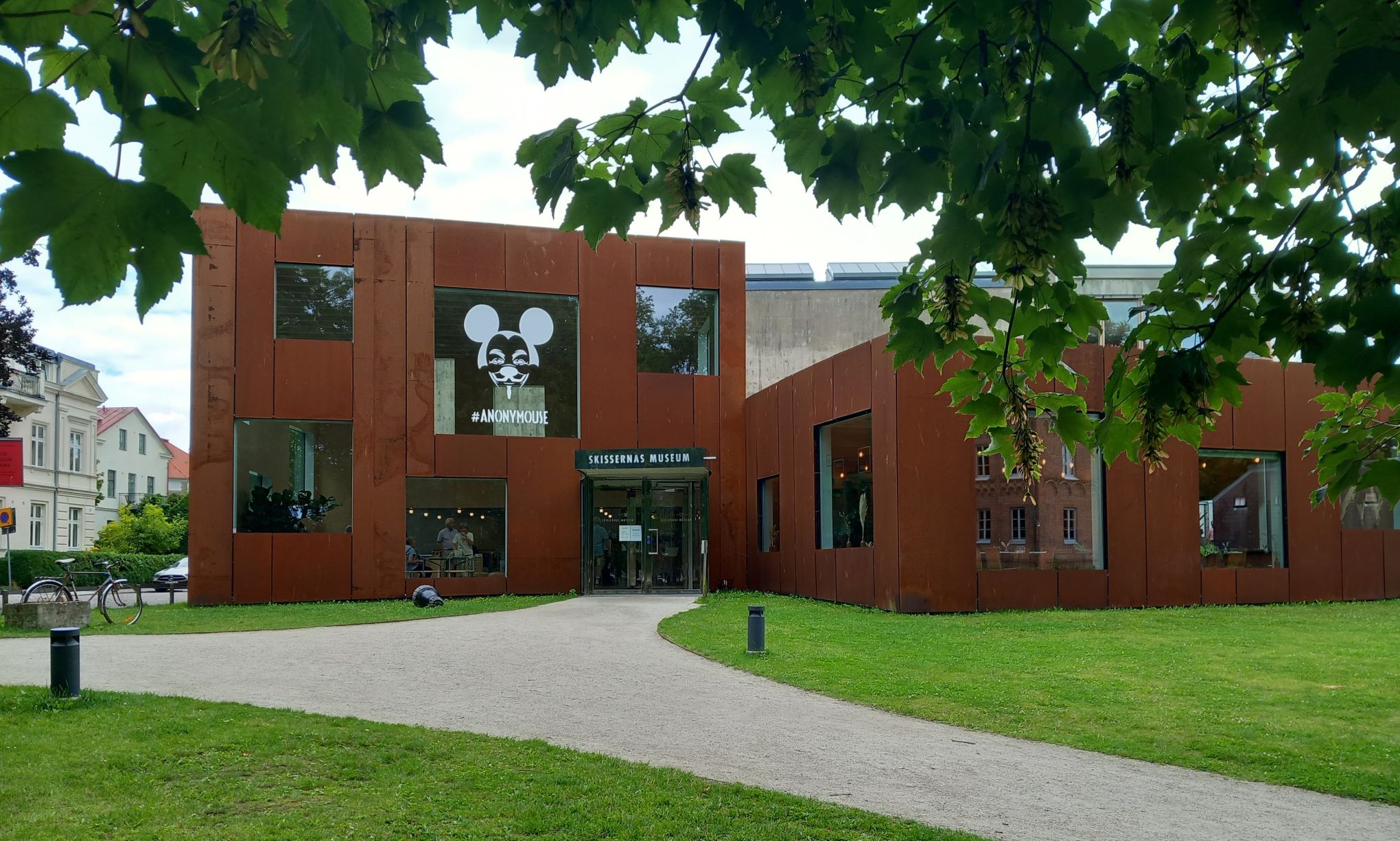
Several original Anonymouse mini-houses were featured in a Summer Exhibit at Lund’s Skissernas Museum – dedicated to the artistic process and public art – from 27 June to 24 August 2025. Young and old are encouraged to find objects like safety pins and a paper clip immersed in the miniature displays (all at ground level, of course!).