

A nineteenth-century sea fort near Amsterdam has been shortlisted for a national museum award recognising sustainability. Pampus is one of three finalists for the 2026 VriendenLoterij Museum Prize, which this year celebrates “the green museum”.
An expert jury selects the finalists, before a public vote determines the winner. The winning museum receives €100,000 to realise its proposed project. Voting runs from 5 to 27 November, with the winner due to be announced on 2 December.
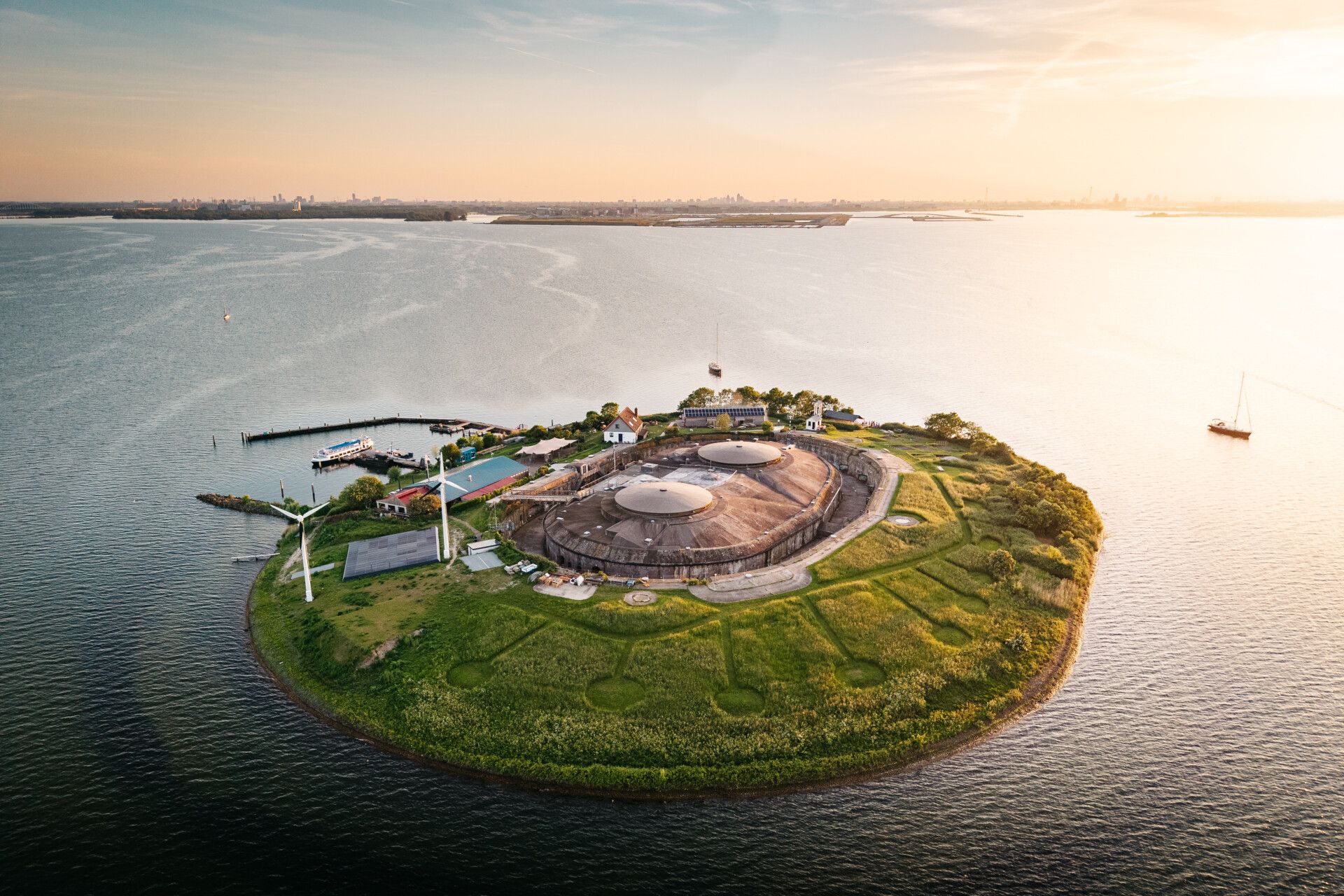
Located in the IJmeer lake, Pampus forms part of the UNESCO World Heritage-listed Dutch Water Defence Lines. Its former garrison had to survive for long periods without help from the mainland, making self-sufficiency essential to the fort’s original purpose.
That challenge has taken on a new meaning. Pampus now operates without fossil fuels, generates its own renewable energy and purifies water from the surrounding lake for use on the island. According to its website, official approval to serve the treated water as drinking water is still pending.
“This combination of heritage and practical solutions for the future makes Pampus a rather special place,” said spokesperson Anouschka Zanolla. “Our selection is a wonderful recognition of everything our team has been working towards.”
The island also grows some of the vegetables and herbs used in its kitchen, while providing space for wildlife. Together, these activities demonstrate how the careful use of natural resources can become part of everyday island life.
“The next step is to help visitors experience more of this ingenuity for themselves,” Zanolla said. For visitors, she added, the “adventure” begins on the boat journey to the island.
Exploring self-sufficiency
Winning the prize would allow Pampus to create interactive installations around the island, exploring energy, water, food and materials. The aim is to help visitors understand the practical choices involved in becoming more self-sufficient.
“How can you harness the wind’s energy? Which tiny creatures help a vegetable garden thrive? And how can you preserve summer’s harvest to enjoy in winter?” Zanolla asked.
“Through hands-on activities, tasting and experimenting, visitors would discover how inventive and enjoyable a more self-sufficient way of living can be.
“The island’s history provides the starting point, showing how ideas from the past can inspire practical solutions for the future.”
Seeing home differently
Pampus hopes visitors will leave with more than happy memories of an unusual island. Its ambition is to encourage them to consider how the ideas they encounter could apply to their own lives.
“The ambition is to spark fresh curiosity about the water from their taps, the electricity in their sockets and the food on their plates. Perhaps they will even think: ‘I could try that at home.’
“The message is an optimistic one: a more sustainable future offers opportunities for creativity, discovery and enjoyment.”
“If so much is possible on one small island, imagine what could happen beyond its shores,” Zanolla told Travel Tomorrow.
More information about the nomination and public vote is available on the Pampus website.