


Research by scientists at Imperial College London and the London School of Hygiene & Tropical Medicine estimates that more than 50,000 people died from heat across 854 European urban areas during the summer of 2026. Around two-thirds of those deaths were attributed to human-induced climate change. Comparisons with earlier research suggest it was the deadliest summer for heat-related mortality this century in the areas studied. These are modelled estimates, rather than a count of deaths recorded on death certificates, but their implications are stark.
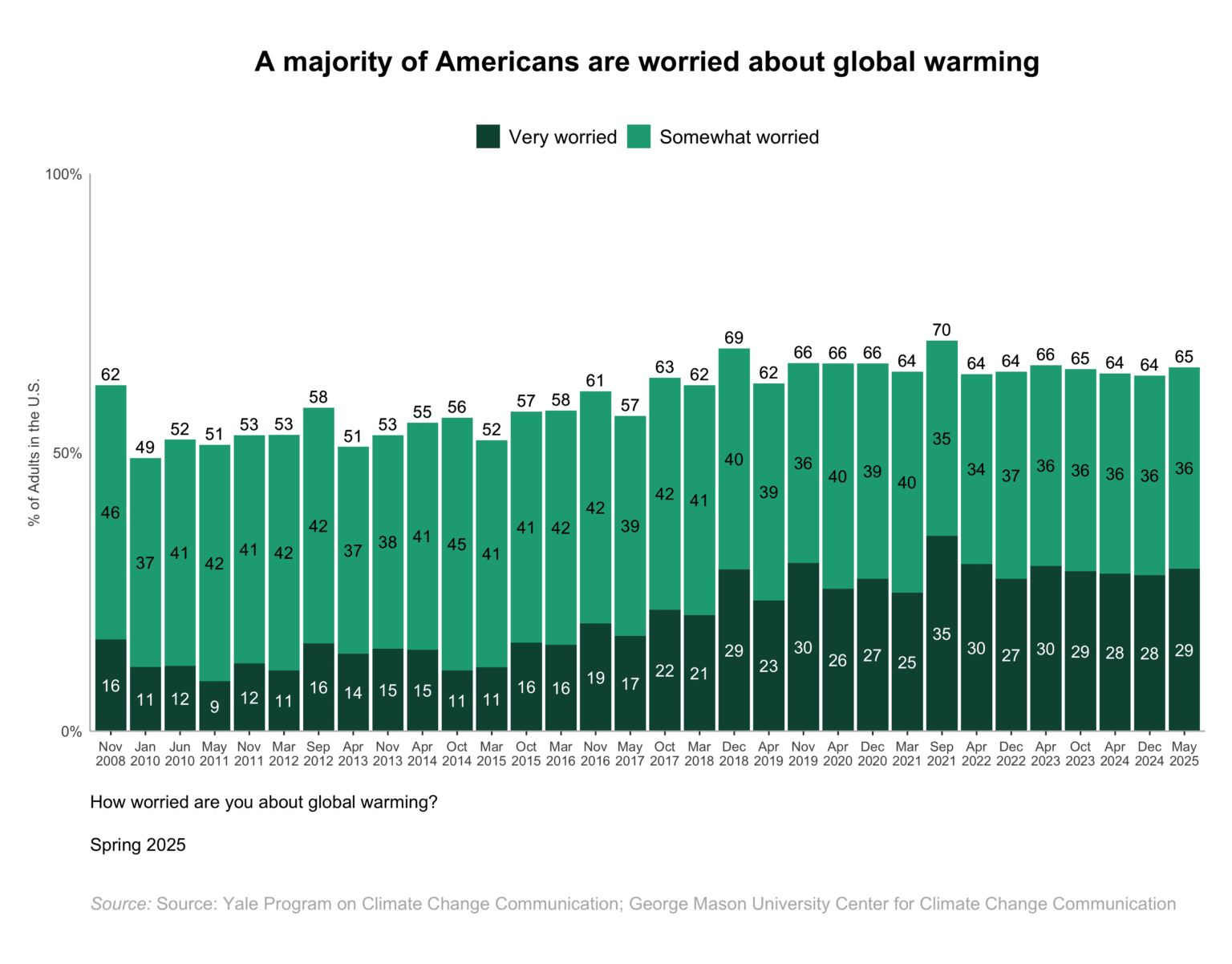
Yet public understanding of climate change remains uneven. According to the spring 2025 Climate Change in the American Mind survey, 65% of Americans were at least “somewhat worried” about global warming, including 29% who were “very worried”. Only 60% recognised that global warming is mostly human-caused, while 28% attributed it primarily to natural changes in the environment.
“Majorities of Americans think global warming is affecting many extreme weather events or related impacts in the United States, including extreme heat (75%), wildfires (72%), droughts (72%), flooding (71%), air pollution (69%), rising sea levels (69%), hurricanes (68%), water shortages (67%), tornados (67%), reduced snowpack (64%), water pollution (62%), agricultural pests and diseases (60%), electricity power outages (59%), and diseases carried by mosquitoes and ticks, such as Lyme disease and West Nile Virus (58%),” stated in the research.
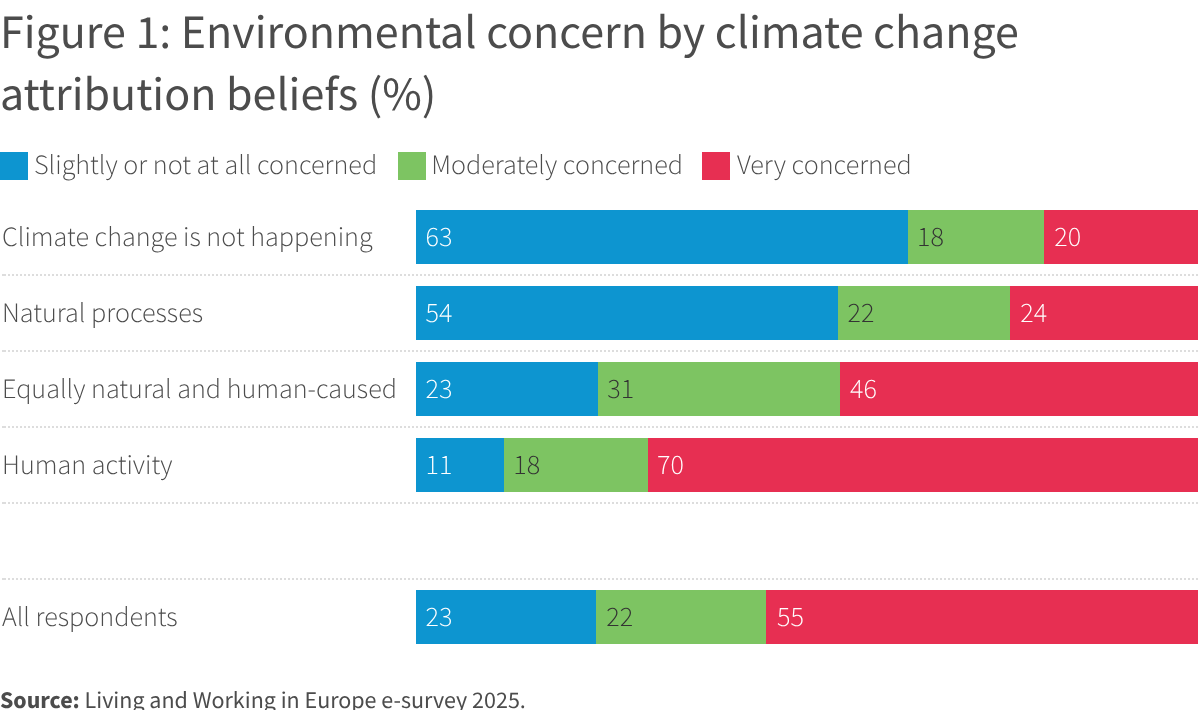
A similar gap between concern and understanding emerges in Europe. Findings from Eurofound’s Living and Working in Europe e-survey, published in December 2025, showed that 57.7% of respondents attributed climate change mostly or entirely to human activity. Another 22.3% considered natural processes and human activity equally responsible, while 16% attributed it entirely to natural causes and 4% denied that it was happening. These figures describe the survey’s participants, rather than necessarily representing all Europeans.
The underlying science, however, is far from new. In 1856, American scientist Eunice Foote demonstrated that carbon dioxide warmed more than ordinary air in her sunlit experimental apparatus, suggesting that changes in atmospheric CO₂ could alter the climate. John Tyndall subsequently established that gases including carbon dioxide and water vapour absorb infrared radiation. In 1896, Swedish scientist Svante Arrhenius calculated how burning fossil fuels and increasing atmospheric CO₂ could raise global temperatures.
The science is both clear and inconvenient.
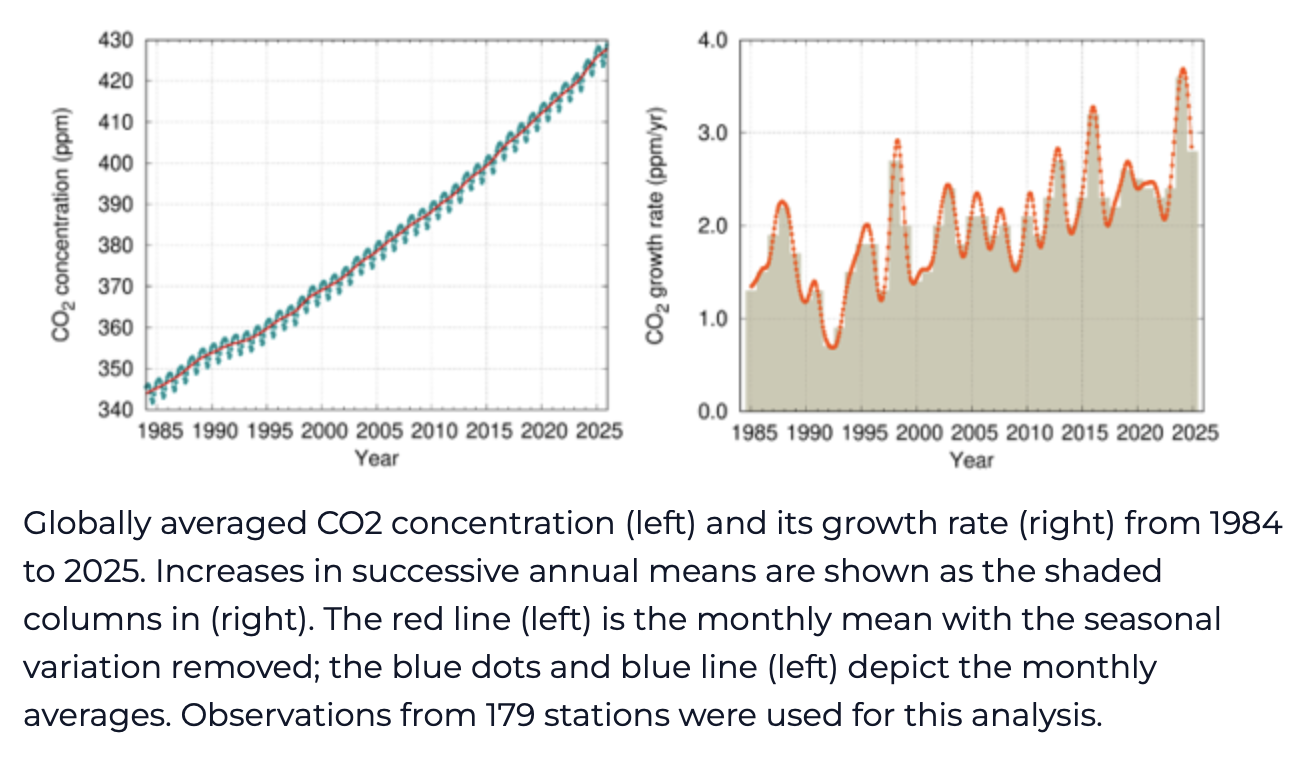
Increasing evidence shows that greenhouse gas concentrations in our atmosphere are accelerating. About half of the total CO2 emitted each year remains in the atmosphere, and the rest is absorbed by Earth’s land ecosystems and oceans. Meanwhile, the warming influence of long-lived greenhouse gases increased by 56% between 1990 and 2025, with CO₂ accounting for approximately 81% of that increase, according to the US National Oceanic and Atmospheric Administration.
Air transport currently generates “only” some 2.5% of global CO₂ emissions, but this is of the same order as the total emissions of Japan, the world’s fifth-largest State emitter. Aviation generates at least 3.5% of the climate’s “effective radiative forcing”, with efficiency improvements still well exceeded by growth in traffic. Without markedly more effective climate policies, damaging emissions from air transport are projected to at least double current levels by 2050, the global “net-zero” target. Given developments in other sectors and without further intense remedial action, aviation’s share of global emissions is projected to rise to about 20% of the global total by 2050, with some sources indicating even higher proportions.
If we had invested resources in hydrogen as an aviation fuel, we might have seen much faster progress in developing clean aviation. Progress is being made but not quickly enough; hydrogen is being discovered trapped in underground reservoirs, continuously generated by Earth’s crust and mantle. The United States Geological Survey estimates global subsurface reserves could be between 1 and 10 trillion tons (with a median estimate around 5.6 to 6.2 trillion tons); recovering just 2% could satisfy global hydrogen demand for roughly 200 years.
In the last month, researchers at Oregon State University have announced that they developed BVR-19, a light-activated metal-organic framework (MOF) that produces green hydrogen from water using sunlight. This method removes the need for expensive additional metal catalysts and forms spontaneously in aqueous solutions at room temperature without requiring external electrical energy or methane-steam reforming.
The case for investing in hydrogen is also made by John Coplin, former chief designer of the RB211 aero-engine and a former director of technology and design at Rolls-Royce. In an October 2021 discussion, Coplin spoke enthusiastically about tourism’s value and the need to fund engineers to accelerate the transition to hydrogen over the following decade.