



A majority of travellers say sustainability influences their decisions, but price, convenience and access to reliable information remain decisive when bookings are made, according to Trip.com Group’s 2026 Sustainable Travel Consumer Report.
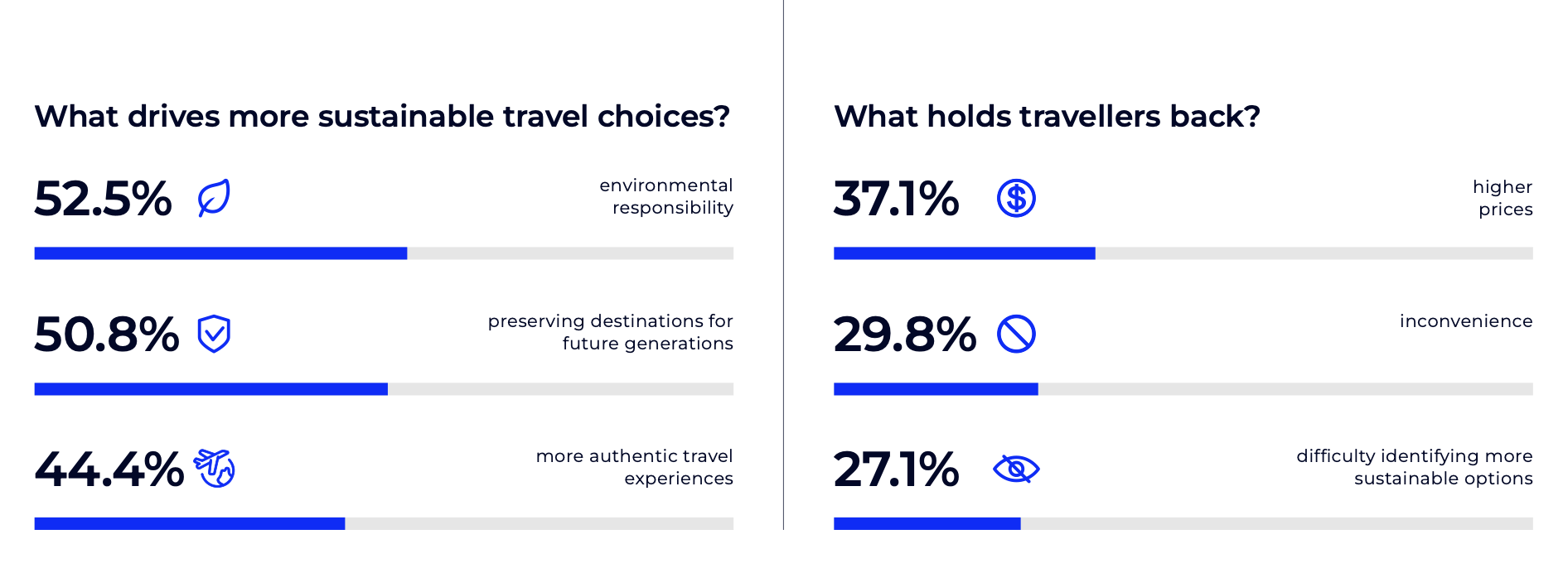
The study surveyed 8,777 people across 29 markets in four regions. It found that over three people in four (75.4%) regarded sustainability as important in travel decisions, while 56.8% said they deliberately selected more sustainable options. Environmental responsibility was cited by 52.5% of respondents, and 50.8% pointed to preserving destinations for future generations.
Practical considerations, however, continue to limit uptake. Higher prices were the most frequently reported barrier, selected by 37.1%, followed by inconvenience or extra effort at 29.8%, and difficulty identifying more sustainable options at 27.1%. When choosing travel generally, 64.1% prioritised price and 61.8% cited quality and comfort.
The findings also indicate that travellers increasingly associate lower-impact choices with the quality of a trip. Nature and outdoor destinations were identified by 41.6% as an option that could improve their experience. Scenic rail journeys followed at 34.1%, while 32.7% selected lesser-known destinations with fewer visitors. Hotels with established sustainability practices and off-season travel were also among the common choices.
More than half of respondents said good public transport or lower-carbon mobility would increase a place’s appeal, and 50.6% favoured destinations that protect natural and cultural heritage. Meanwhile, 62% had changed at least one aspect of a journey because of extreme weather. Delaying or rescheduling was the most common response to climate volatility, followed by changing the season or timing, and choosing another destination.
Younger respondents reported higher levels of engagement with greener choices. Almost seven in ten (69.5%) of Gen Z travellers and 63% of Millennials said they intentionally chose more sustainable options, compared with 50.6% of Gen X and 40.6% of Boomers. The results suggest that age may influence both booking behaviour and expectations of travel providers, although affordability remains a concern across the board.
Trip.com has launched a feature called My Travel Impact alongside the report. The in-app dashboard is intended to bring together stays at properties boasting the company’s “Certified Sustainable” label, as well as informing consumers about the emissions differences associated with selected flights and rail journeys. Flight estimates use the Travel Impact Model recommended by the non-profit coalition Travalyst, while rail comparisons are based on projected savings against travel by petrol car where comparable data is available.
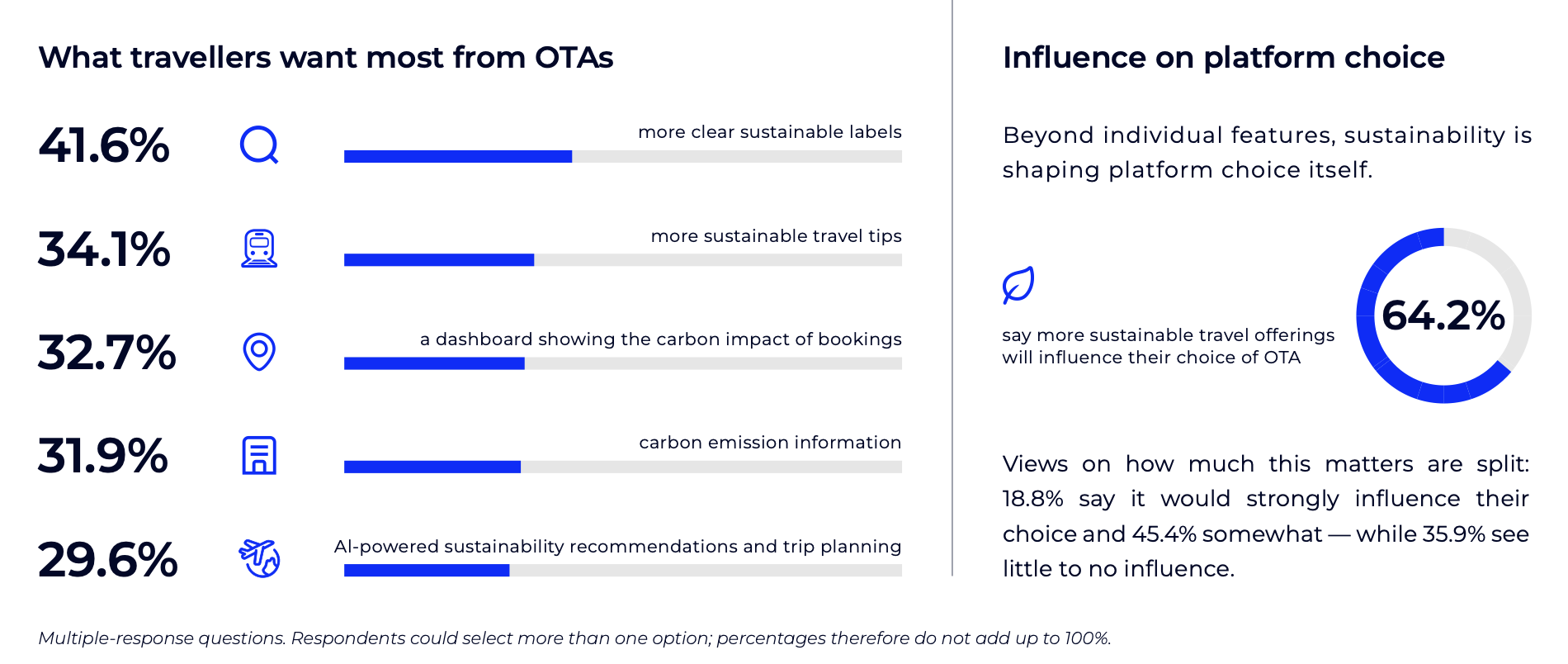
Demand for better guidance was a prominent theme: 41.6% wanted online travel agencies to provide clear sustainability labels, 32.7% wanted a dashboard showing the carbon impact of bookings, and 64.2% said the availability of more sustainable products would influence which platform they used.
Jane Sun, chief executive of Trip.com Group, said the travel industry had a role in protecting destinations, natural environments, and communities. “Making travel a positive force for the world it connects is a shared responsibility,” she said.
The survey was commissioned by Trip.com Group, and its findings should therefore be read as company-sponsored research rather than a fully independent assessment of consumer intentions and trends.