



Are the days of learning a new language by memorising strange-sounding words from thick dictionaries coming to an end? Have we been doing it all wrong?
New research from University College London (UCL) and Tohoku University in Japan challenges traditional approaches to language learning. The study suggests that mastering unfamiliar sounds is just as important as learning vocabulary and grammar.
The study, published in the Journal of Experimental Psychology: General, found that people with a particularly good ear for sounds process unfamiliar speech differently. Rather than interpreting it through the patterns of their native language, their brains treat it more like plain sound.
When learning a new language, people naturally associate new sounds with ones they already know. The more unfamiliar the pronunciation, the harder it is to distinguish and reproduce.
So why do some learners appear to master these differences with considerably greater ease?
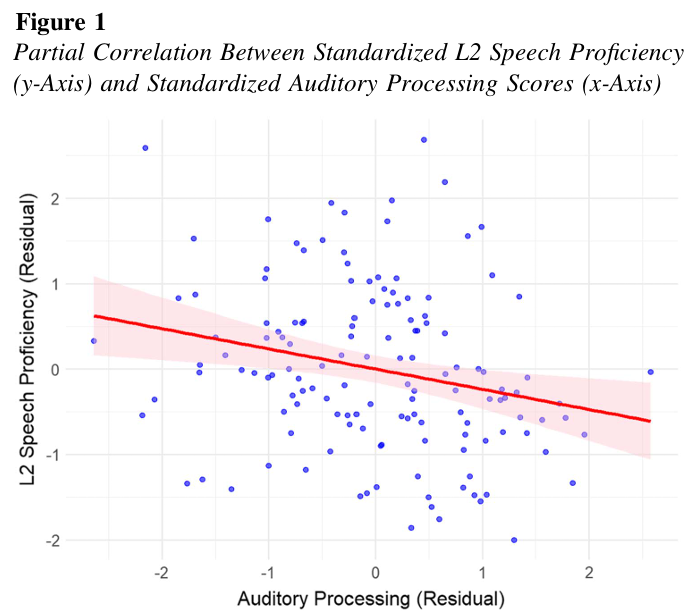
To find out, researchers measured the auditory precision of 67 Japanese English learners, testing their ability to detect subtle changes in pitch, tone, and duration in non-speech sounds.
Using fMRI, they then monitored the participants’ brain activity as they distinguished between two English vowels with no direct Japanese equivalent: the ‘a’ in ‘cat’ and the ‘u’ in ‘cup’.
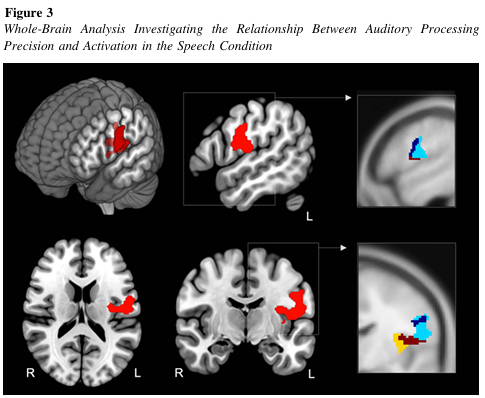
The findings were striking. Those with greater auditory precision were better at distinguishing unfamiliar pronunciations and relied less heavily on the left sensorimotor cortex — the part of the brain normally used for language processing. Their brains responded to the unfamiliar vowels much as they would to non-speech sounds, such as tones or beeps.
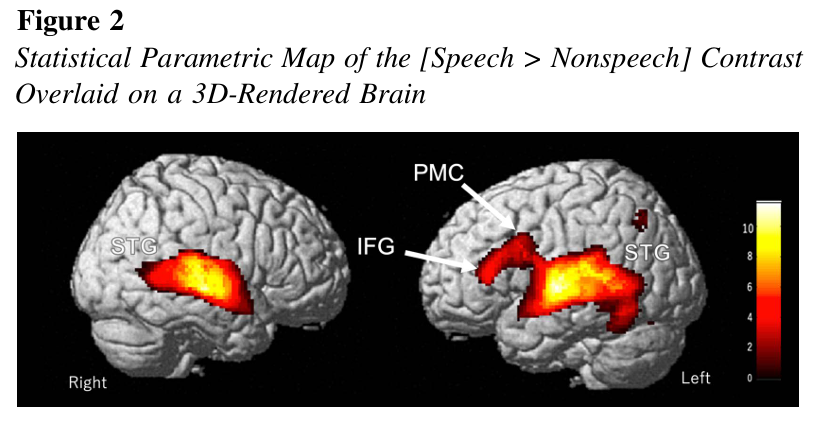
By treating new sounds as acoustic information rather than forcing them into familiar patterns, these learners were better equipped to tell them apart. In other words, learning to hear a foreign language without constantly comparing it to one’s own could make all the difference.
The study did not consider spelling, but writing systems may introduce an additional dimension. When a learner’s mother tongue lacks letters for certain sounds, they may associate new words with the nearest familiar spelling, which could result in the loss of subtle distinctions in memory as well as in the ear.
Prof Kazuya Saito-van Poeteren (UCL), the study’s lead author, argues that difficulties learning languages are not necessarily down to nationality or biology. “I do not think British people are biologically bad at languages. The problem is more likely to be that many people receive too little meaningful exposure, combined with teaching methods that do not necessarily train the auditory skills needed to make the most of that limited exposure”, he told The Guardian.
Foreign language education, Saito-van Poeteren says, “should move beyond an approach based on ‘more practice’ and towards one that develops learners’ ear for language learning in line with their auditory characteristics”.
Prof Padraic Monaghan, professor of cognition at Lancaster University, agrees that our brains are “naturally attuned to acquire languages through exposure”, though learners vary in their sensitivity to sound, at least in the early stages.
The findings bring to mind Israel’s ulpanim, intensive Hebrew-language schools originally established to help immigrants integrate into Israeli society. Their immersion-based approach encourages learners to listen, speak and absorb unfamiliar sounds through conversation and repetition rather than constantly relying on translation.
The researchers now hope to develop teaching methods combining conventional language learning with specific auditory training. In the meantime, it’s a good reminder that a new language is learnt not only on an app, but also by listening to people or deciphering songs.