


Holiday habits are back to pre-pandemic levels, according to the UK travel trade association ABTA, but travellers are becoming increasingly cost-conscious, and rather than giving up on holidays, they are opting for cheaper accommodation, eating out less while away and turning to package holidays for better value for money.
Although 2026 has been a challenging year for travel, with the conflict in the Middle East disrupting routes and affecting fuel prices, British holidaymakers have shown little inclination to stay at home, according to ABTA’s latest Holiday Habits 2026–27 report.
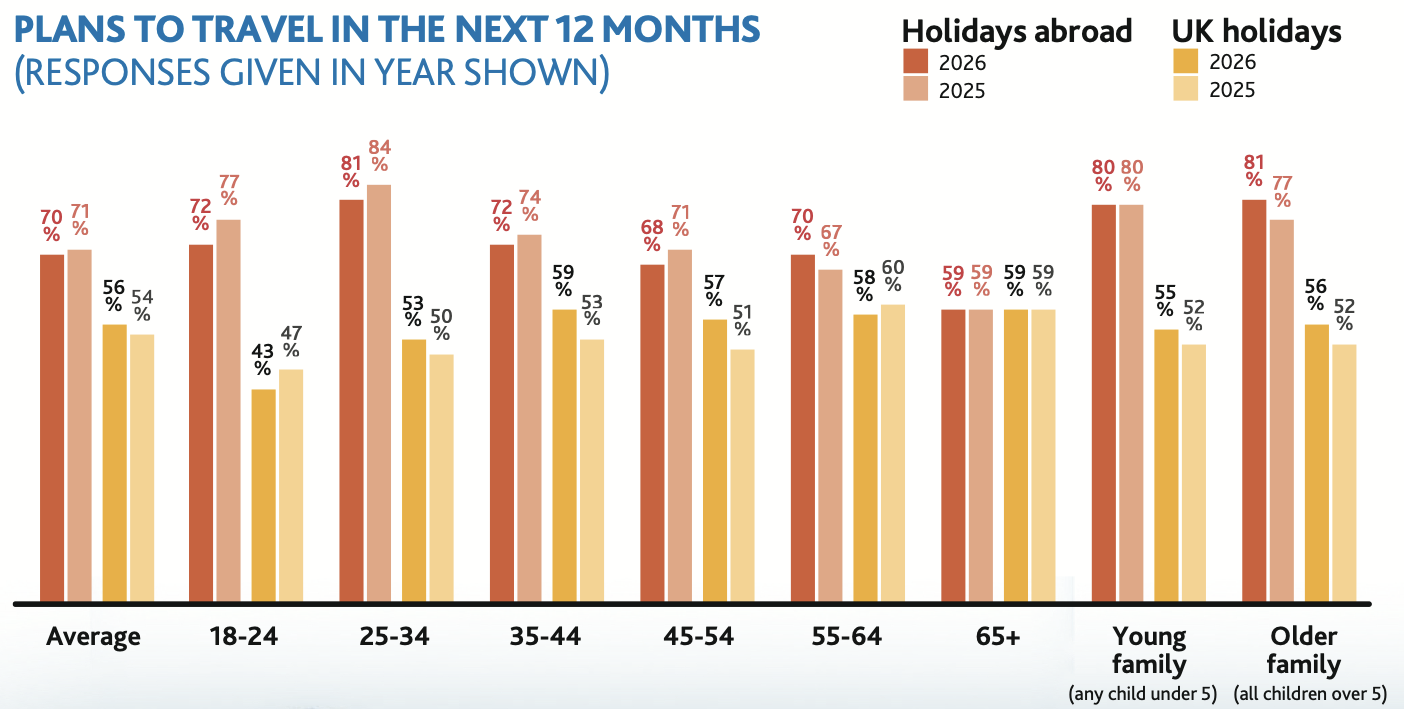
Based on a survey of 2,082 UK adults, the report found that 88% had taken a holiday in the previous 12 months, matching pre-pandemic levels, while 70% planned to travel abroad over the coming year.
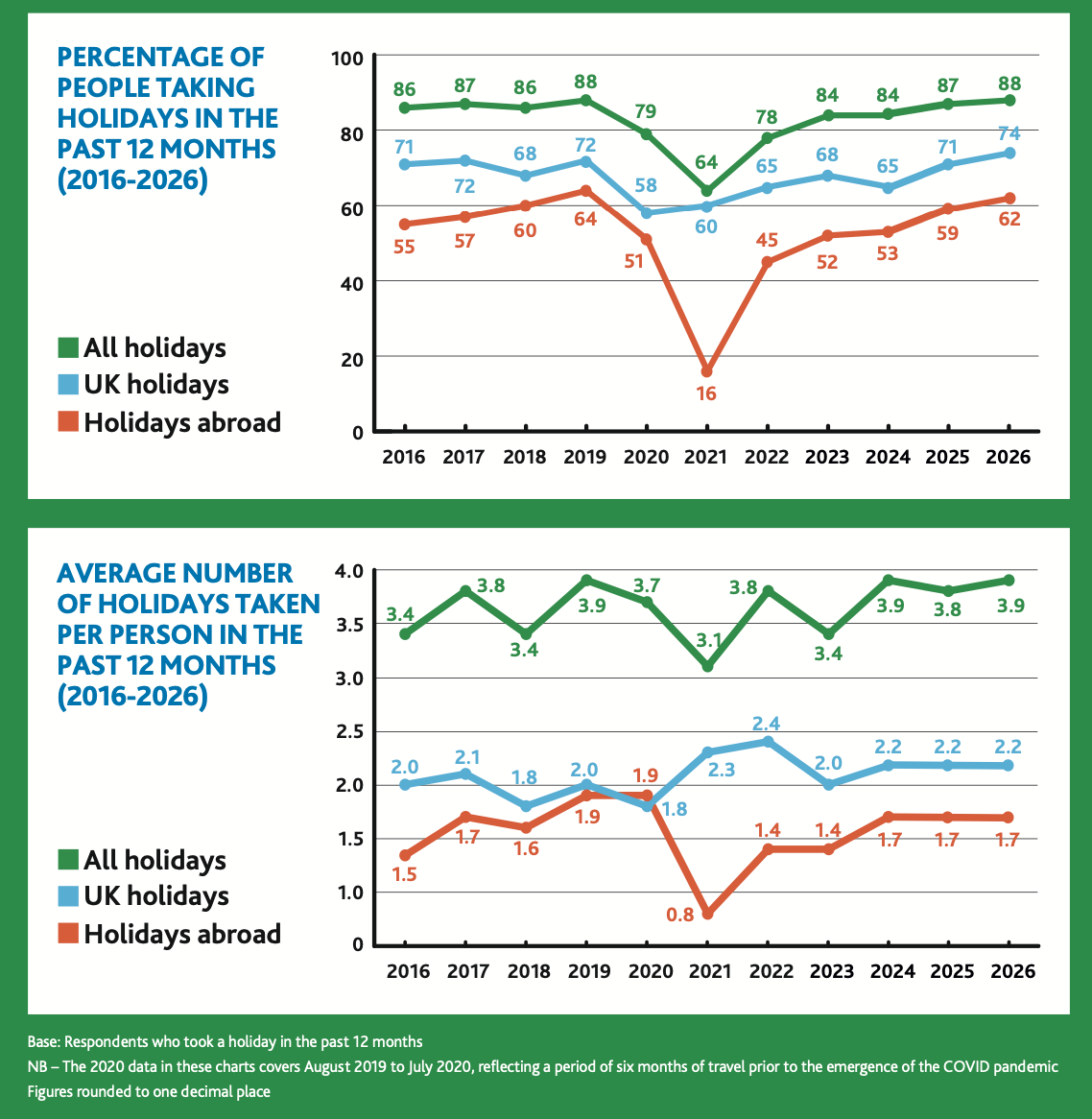
The changes in travel patterns, however, have been “evolutionary rather than revolutionary”, with most shifts amounting to just a few percentage points.
“Demand has held up well despite a range of challenges this year, and that looks set to continue, as does the willingness to prioritise spending on travel over other discretionary items”, said Mark Tanzer, ABTA’s chief executive.
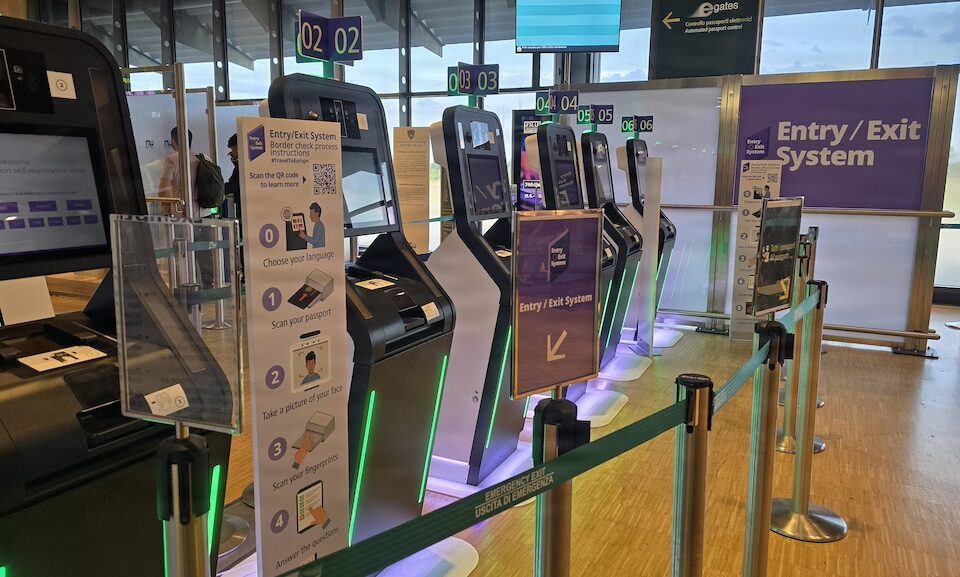
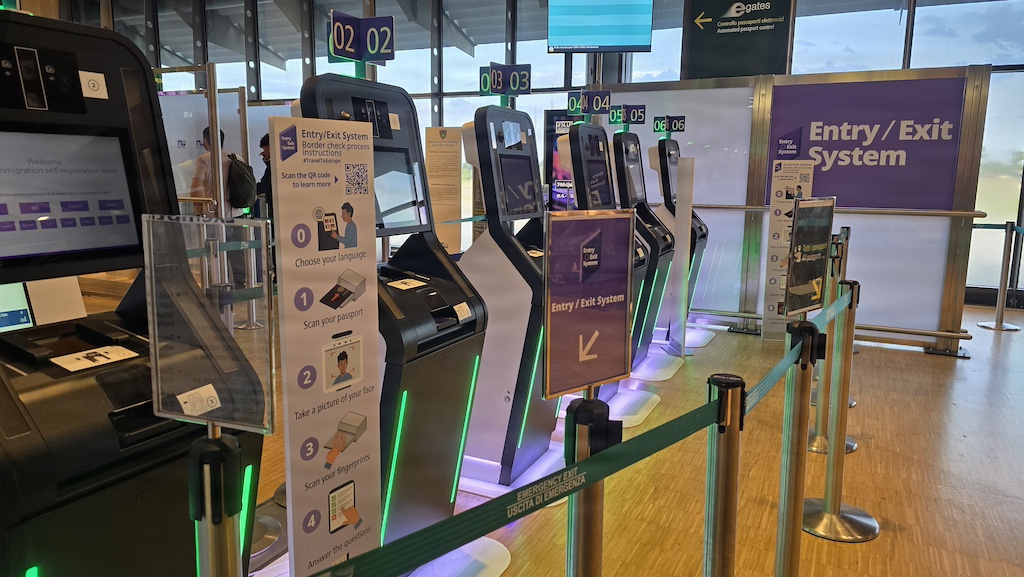
He noted that beyond the Middle East, Europe’s new Entry/Exit System and climate-related events have also affected people’s travel plans.
But perhaps the biggest change he has observed relates to travellers’ behaviour and purchasing power.
Holidaymakers are reluctant to sacrifice their trips, with only 7% saying the cost of living would prevent them from going on holiday altogether.
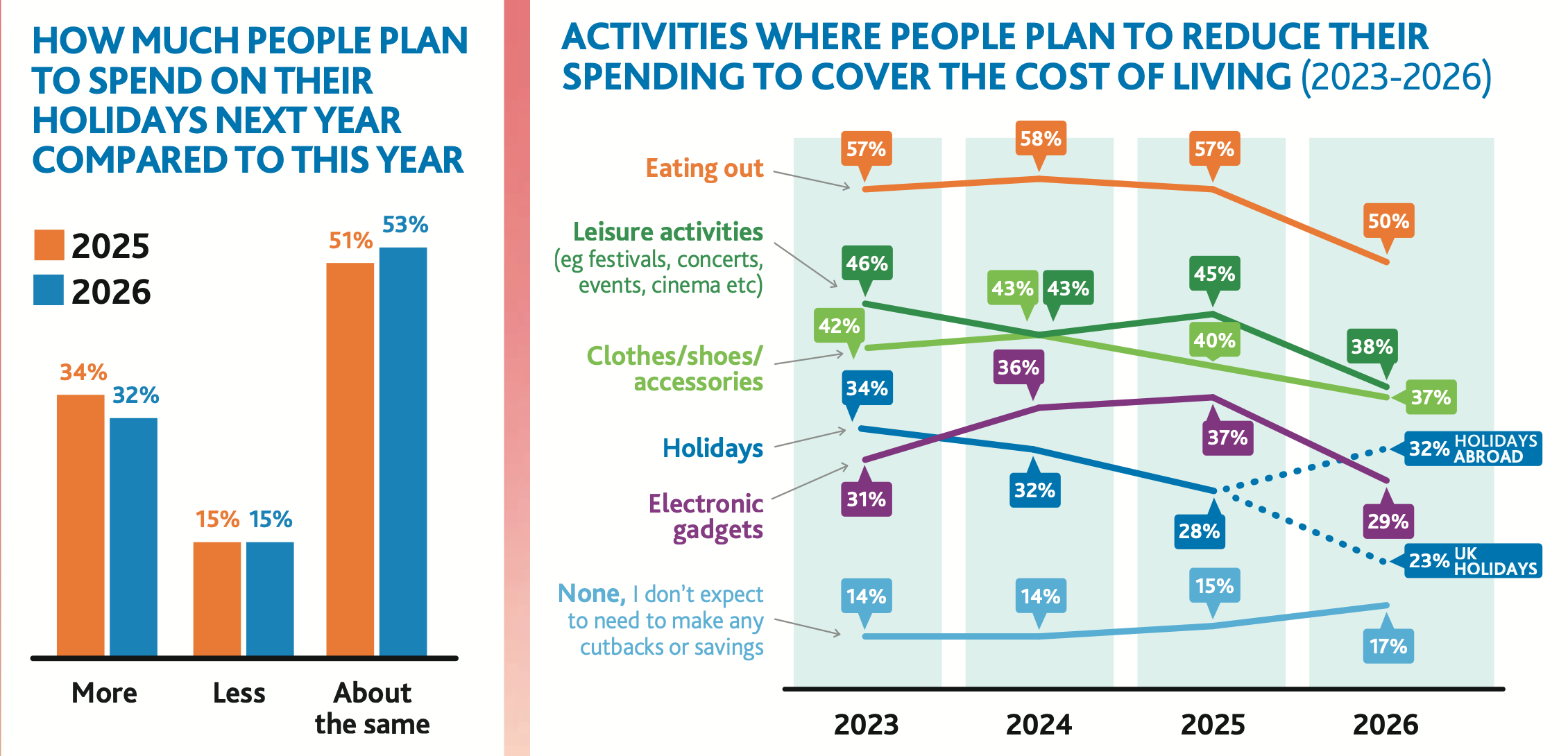
While 50% would cut back on eating out, 38% on leisure activities and 37% on clothes and accessories, only 23% would reduce spending on UK holidays, rising to 32% for holidays abroad.
Once on holiday, however, travellers are also watching their spending, with 21% intending to book cheaper accommodation and 19% planning to eat out less.
Package holidays are enjoying renewed popularity, with 63% of those who travelled abroad booking a one, up two percentage points from last year. Travel agents are also making a comeback, with bookings through travel professionals rising from 34% to 38%.
Ease of booking (60%), value for money and the reassurance of having someone to turn to when things go wrong are among the main attractions.
Some 32% still plan to spend more on holidays over the coming year, down from 34% last year, though the spending is more a reflection of increased prices rather more travelling.
Europe remained by far the favourite destination, with 84% of overseas holidaymakers, followed by North America (20%), Asia (15%), and Africa (13%).
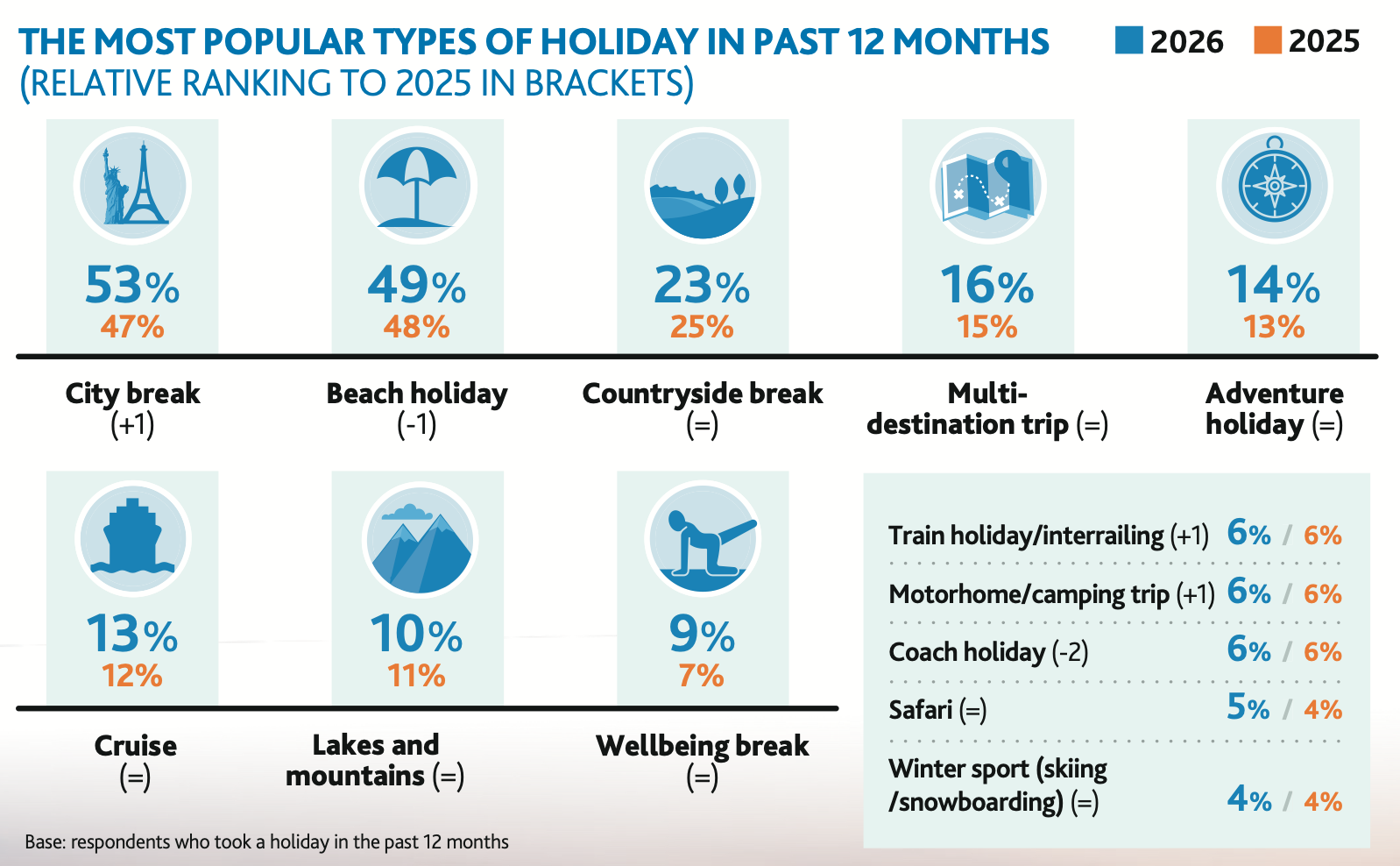
Although beach holidays remained the favourite among families (57%), city breaks took the overall lead, rising 6 points to 53%, ahead of beach holidays at 49%. Wellness breaks also gained ground, reaching 9% this year.
Cruises remained stable at 13%, but interest in taking one over the coming year has increased to 17%.
The reasons echo those behind the renewed popularity of package holidays. Value for money was cited by 52% of respondents, while 40% appreciated being able to pay essential costs upfront, avoiding unpleasant surprises.
Cruises are also attracting more families, with 23% of those with children under five having taken one, up 3%.
All in all, holidays remain a spending priority with British travellers increasingly prepared to cut back on dining out, clothes and other leisure activities than giving up a holiday.