

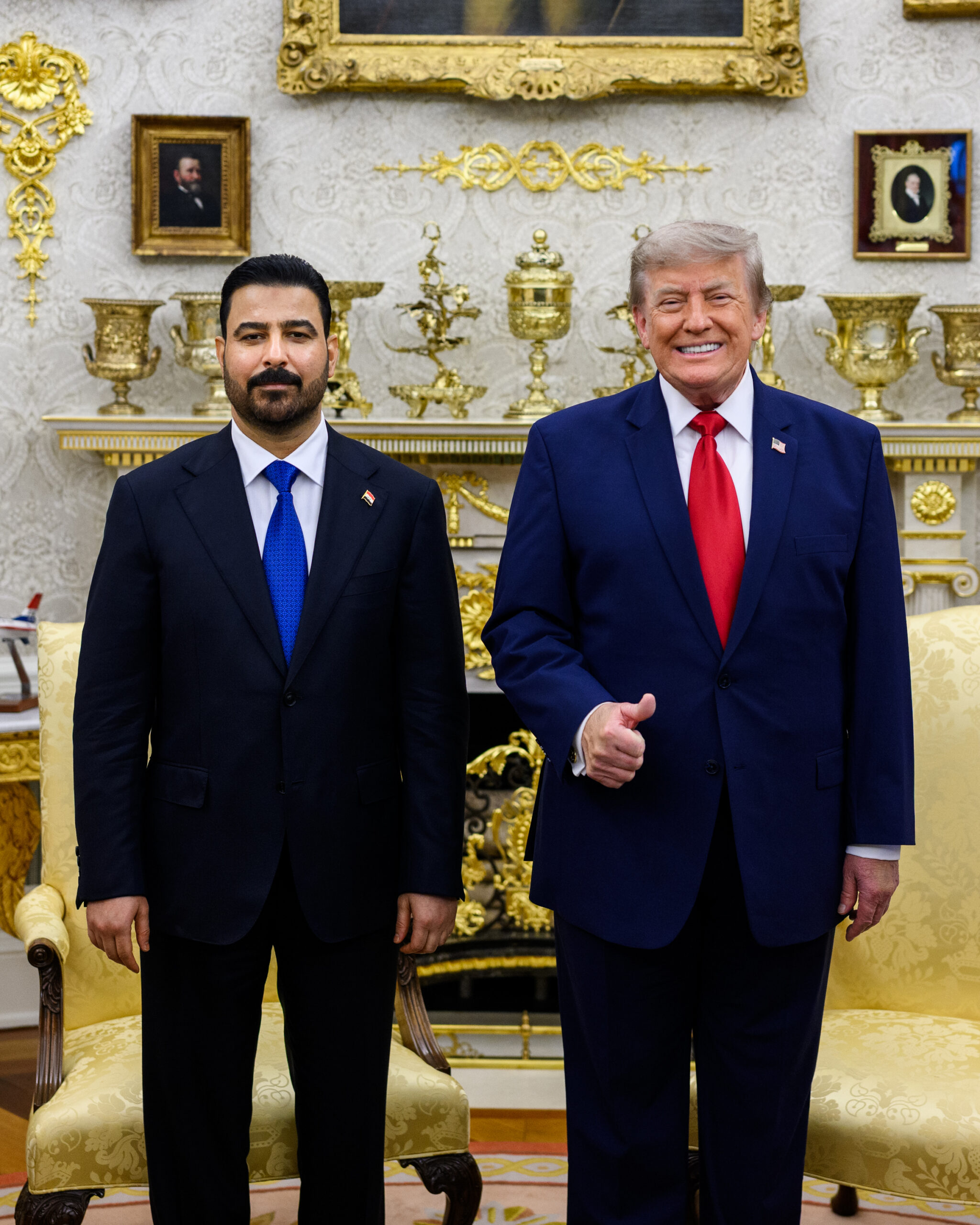
Ali al-Zaidi’s emergence as Iraq’s prime minister represents more than a generational change in Baghdad. The former businessman brings to office the instincts of someone accustomed to thinking in terms of capital, execution and commercial opportunity rather than ideology alone. His first weeks have suggested an energetic and pragmatic leader seeking to restore Iraq’s international economic relationships while preserving the country’s delicate regional balance.
During his July visit to Washington, al-Zaidi placed investment at the centre of diplomacy, pursuing partnerships with major American energy and infrastructure companies and presenting Iraq not as a permanent theatre of crisis, but as a market capable of absorbing capital on a significant scale. Agreements announced around the visit were valued by Iraq’s oil minister at approximately $200bn. Such numbers should be treated as prospective commitments rather than completed investment, but the direction is unmistakable: al-Zaidi wants international capital to see Iraq differently.
The economic case for this shift is urgent. Oil accounted for an estimated 53% of Iraq’s real GDP, 88% of government revenue and 91% of merchandise exports in 2025, leaving the country acutely exposed to production restrictions, lower prices and regional disruption. The IMF estimates that oil revenues could continue to represent more than 90% of government income through 2030 without substantial reform, while Iraq’s non-oil growth declined from 13.8% in 2023 to about 2.5% in 2024.
Al-Zaidi therefore inherits not merely an economic challenge, but a question of national resilience. His strength is that he appears to understand investment diplomacy as an instrument of sovereignty: the broader Iraq’s partnerships, private sector and productive economy become, the less vulnerable Baghdad will be to fluctuations in one commodity or pressure from any single foreign power.
Tourism should become one of the defining pillars of this diversification. Iraq possesses six UNESCO World Heritage properties and an almost unparalleled concentration of civilisational, archaeological and religious assets: Babylon, ancient Ur, the citadel of Erbil, the southern marshlands, the holy cities of Najaf and Karbala, the historic memory of Baghdad and the mountain landscapes of the Kurdistan Region.
Yet the country’s most widely available internationally comparable tourism data remain strikingly outdated. The World Bank records 892,000 international arrivals in 2013, while recorded international tourism receipts reached approximately $955mn in 2020. These imperfect figures reveal both a statistical weakness and an economic opportunity. Iraq is already receiving substantial religious and regional travel, but has not yet converted the full scale of that movement into an integrated visitor economy built around international hotels, destination management, cultural routes, retail, restaurants, entertainment, transportation and professional tourism services.
Aviation will determine whether this potential becomes an investable industry. Iraq’s National Development Plan states that its airports handled approximately 2.04mn passengers in 2022, compared with almost 3.97mn in 2018, illustrating both the damage caused by instability and the scope for recovery. Baghdad International Airport’s existing three terminals have a combined theoretical capacity of roughly 7.5mn passengers a year, while the redevelopment programme envisages a new terminal initially capable of handling 9mn passengers and later as many as 15mn.
For al-Zaidi, these should not be regarded simply as transport projects. Airports are economic platforms: they attract airlines, hotels, logistics providers, conference organisers, retailers and international investors. A coherent programme linking Baghdad, Basra, Najaf, Karbala, Mosul, Erbil and Sulaymaniyah with simplified visa procedures, modern airport services and stronger global airline partnerships could transform Iraq into a regional junction between the Gulf, Türkiye, the Levant and Central Asia.
The test of al-Zaidi’s leadership will be whether his evident ambition can be translated into institutions that outlast political cycles: predictable regulation, transparent public-private partnerships, investment protection, credible procurement and consistent security. There are serious obstacles, and no responsible investor will ignore them. But frontier markets are rarely transformed by leaders who wait for perfect conditions; they are transformed by leaders who create confidence before it fully exists.
Al-Zaidi’s youth, commercial background and early emphasis on international economic engagement give him an unusual opportunity to become the architect of Iraq’s post-oil transition. If he treats tourism, aviation and travel-related infrastructure as national development policy rather than peripheral entertainment, Iraq could generate employment across every level of society, give new commercial life to its extraordinary heritage and reposition itself as one of the Middle East’s most consequential investment stories.
His task is not simply to govern a country rich in oil, but to reveal the far greater value of the Iraq that exists beyond it.