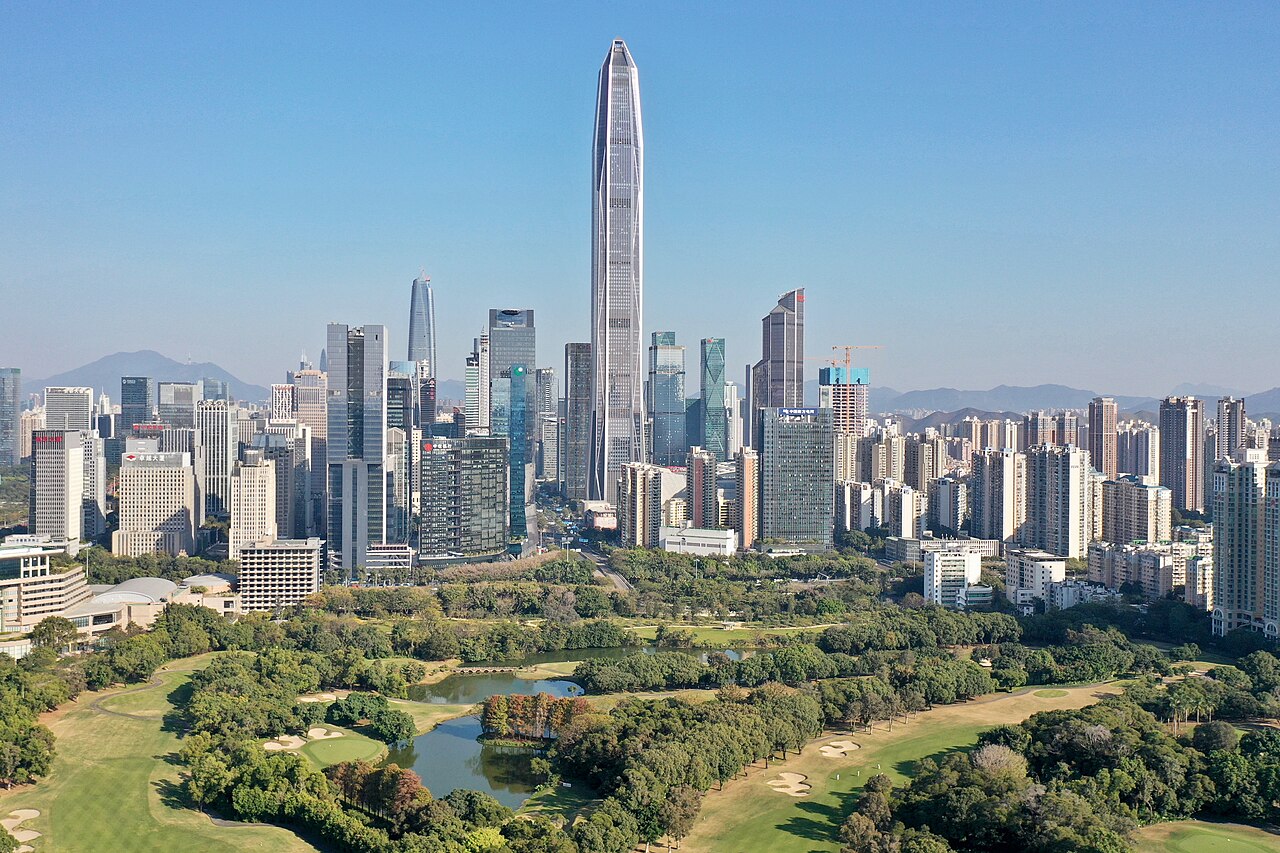



Skylines have been changing fast over the last few years, with new high-rises sprouting up everywhere, some instantly recognisable, others less so. Miniature models of famous city skylines have taken over souvenir shops, becoming go-to decorative pieces for travellers looking to remember the beauty of cities they have visited, or those still on their bucket list.
But aside from being holiday relics, buildings genuinely affect how city residents feel, according to a 2025 study of more than 2,000 respondents. Seventy-five percent said buildings had at least some impact on their wellbeing, and 49% admitted to smiling when they walked past “interesting buildings”.
While the study did not establish a direct correlation between building height and smile size, it was enough to prompt Radical Storage, a global luggage storage network operating in over 500 cities worldwide, to conduct further research and develop an index of the world’s top skylines.

From Shenzhen to New York via Dubai, its new ranking might help travellers decide where to go next, or which skyline to frame next.
The ranking weighs five categories: total skyscrapers over 150 metres (30%), the average height of a city’s ten tallest buildings (25%), nighttime skyline visibility (25%), skyline density (15%) and award-winning skyscrapers (5%). Radical Storage scored the top 100 cities listed by the Skyscraper Center, which ranks urban areas according to their number of buildings over 150 metres, before narrowing the field down to a top ten.
“Together, these weighted factors assess the height, visibility, and design of each skyline to reveal those that offer the most memorable urban experience,” the Radical Storage team explained.
China emerges as the big winner, taking six of the ten spots, with Shenzhen claiming first place.
Bordering Hong Kong, Shenzhen and its 679 buildings over 150 metres have built their reputation on speed. The city’s skyline grew so quickly that the term “Shenzhen speed” was coined in the 1980s during the construction of the Guomao Building, when workers reportedly completed one floor every three days. The former fishing town has since transformed into a global technology hub, and the Ping An Finance Centre now stands at 599 metres.
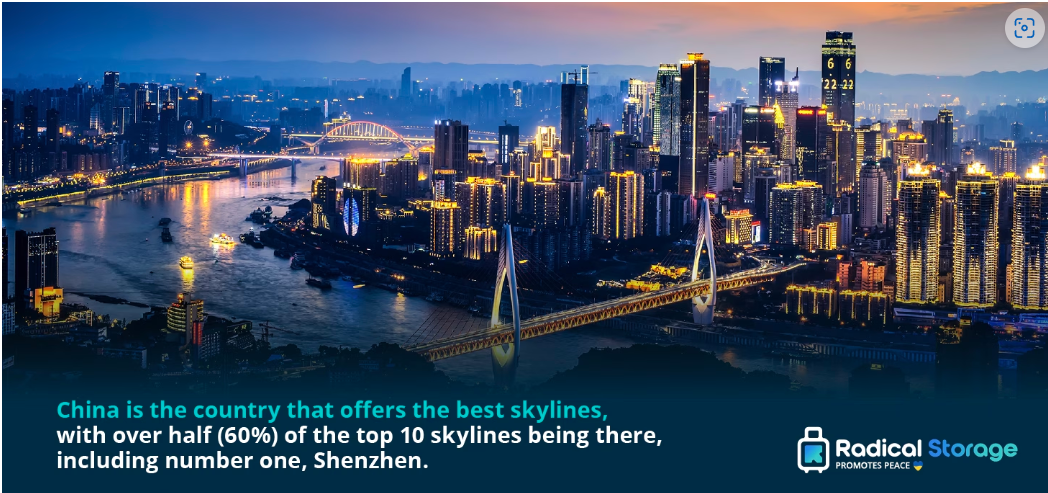
The other Chinese cities in the top ten are Hong Kong (3rd), Wuhan (yes, that Wuhan) in 5th place, Guangzhou (6th), Shanghai (7th) and Chongqing (joint 9th).
Probably not what you would expect, when skylines usually bring to mind cities like Dubai, which lands a healthy second place thanks to its 32 supertall towers, including the Burj Khalifa, the world’s tallest building at 829.8 metres. New York takes fourth place, with the most award-winning skyscrapers of any city on the list, 20 in total, headlined by the Empire State Building, star of everything from King Kong to Elf.
Hong Kong’s dense skyline has played a starring role in Godzilla vs. Kong and The Dark Knight, where Batman famously leaps from the Two International Finance Centre. Shanghai’s Bank of China Tower had its own Hollywood moment in Mission: Impossible III, while Tokyo, tied for ninth with Chongqing, has been a backdrop for Godzilla films since the very first one.
Ultimately, however, a great skyline is not just about how high or densely a city can build, but how it stays in people’s minds and affects those living beneath it day after day. After all, cities that reach the highest into the clouds are not necessarily those topping global happiness rankings, and the true measure of a place probably goes far beyond its towers.