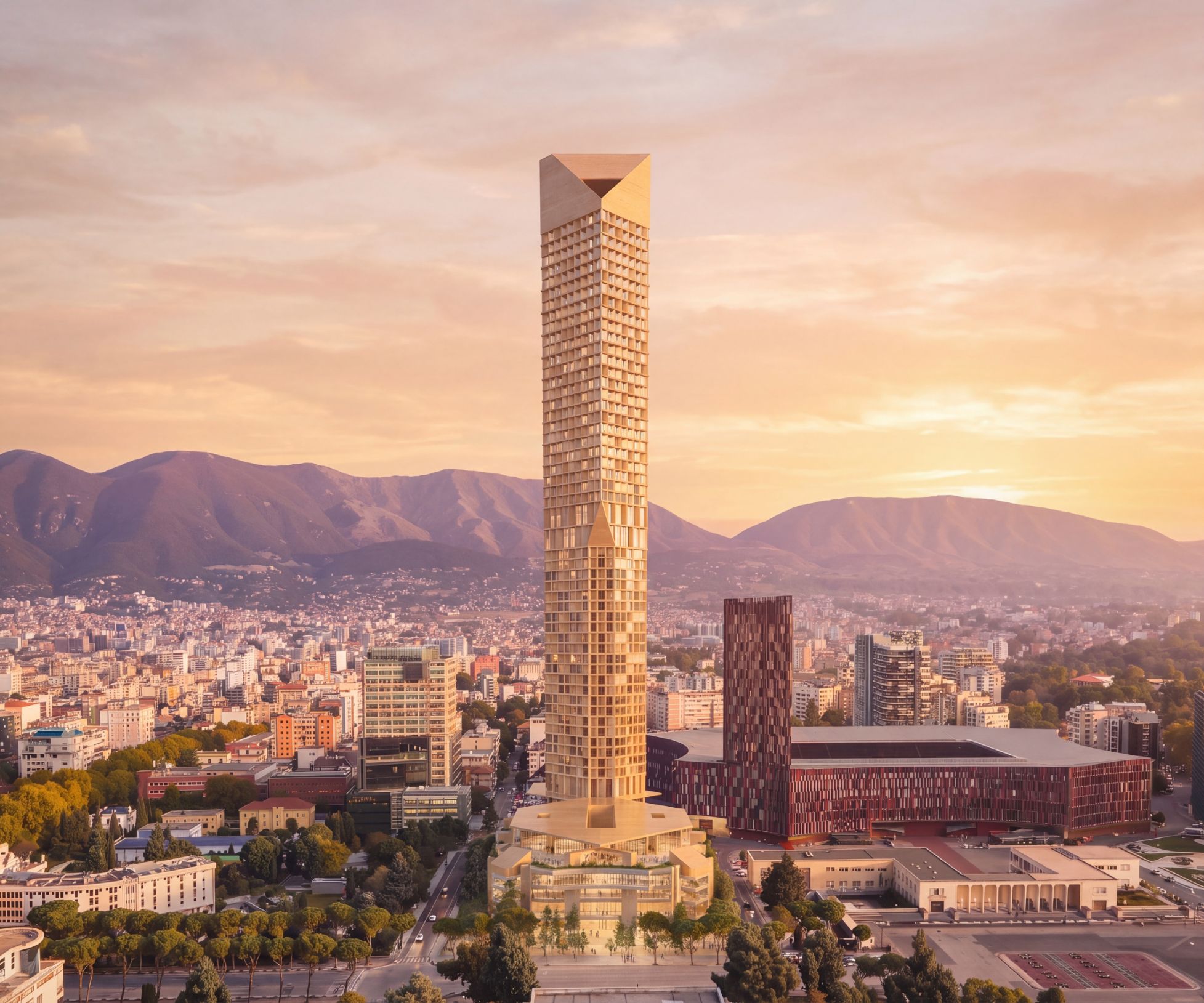



Tirana’s transformation, initiated a decade ago, is set to reach new heights, both figuratively and literally, with the renovation of the communist-era Palace of Congresses and the construction of a 260-metre skyscraper, a vertical landmark that will dramatically alter the city’s skyline.
The ambitious project, which combines the renovation of the existing building with the construction of a 260-metre tower, has been entrusted to Swiss architecture studio Herzog & de Meuron. The firm is known for landmarks such as London’s Tate Modern, Hamburg’s Elbphilharmonie and Beijing’s Bird’s Nest stadium, and for its approach of adapting existing structures rather than erasing them.
“Rather than altering its identity, the project seeks to strengthen its relationship with the city and its public realm”, as the studio put it.
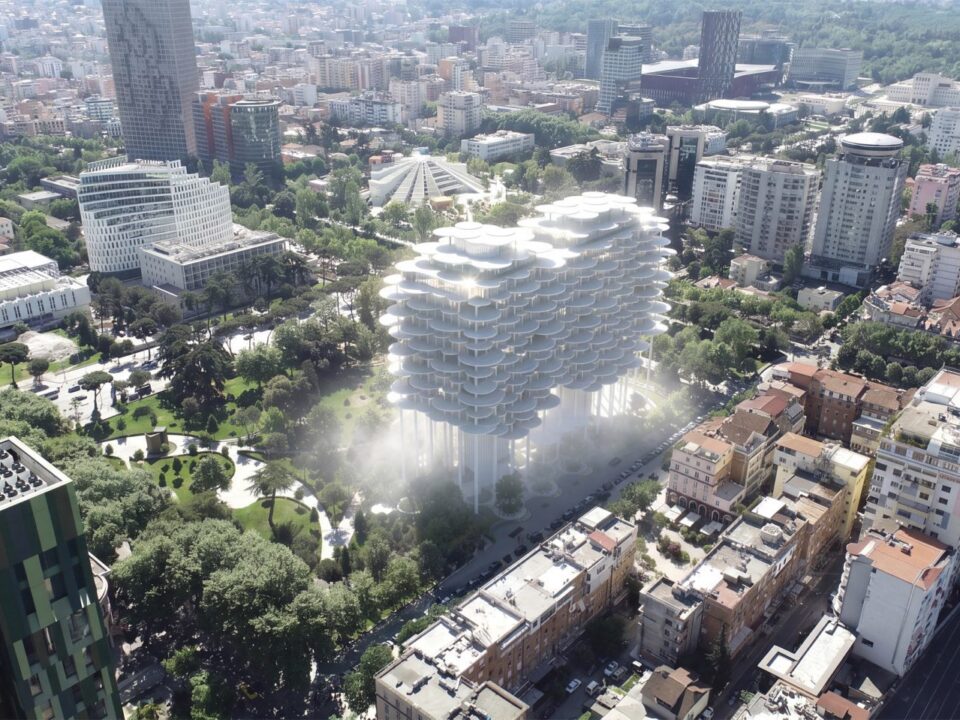
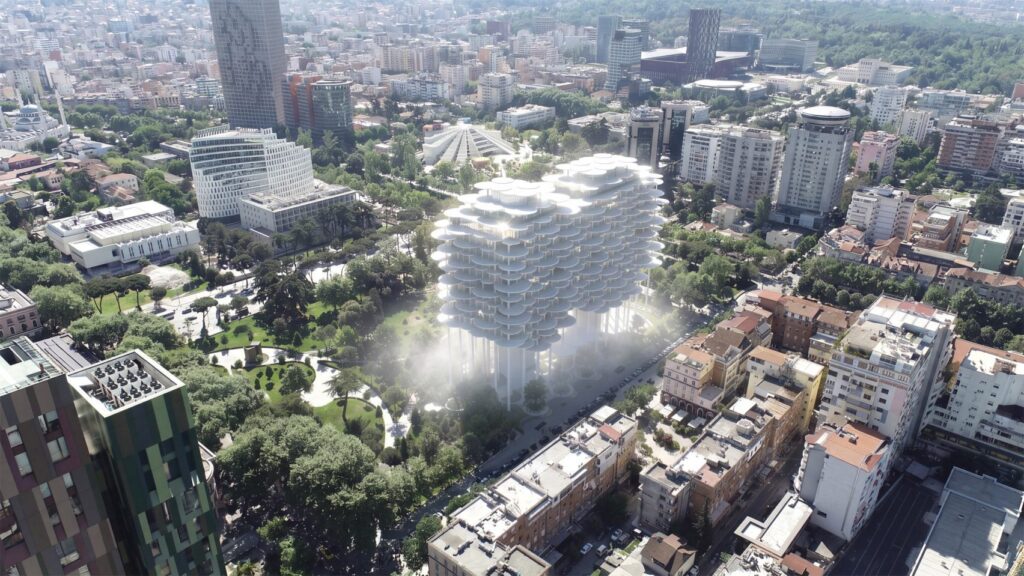
The building is centrally situated, sitting on Tirana’s main ceremonial axis, close to Mother Teresa Square, the University of Tirana, the Prime Minister’s Office, and other major state institutions.
The architects plan to preserve the identity of the original Palace of Congresses, designed by Albanian architect Klement Kolaneci and completed in 1986 during the final years of the country’s communist regime. The intervention on the historic building will remain deliberately restrained, focusing mainly on opening it up to the surrounding city and improving its connection with public space.
A new “Palace Garden” will replace the building’s more formal surroundings, creating a more accessible urban gathering place. The new green space is expected to host public events and become a popular meeting point for residents and visitors.
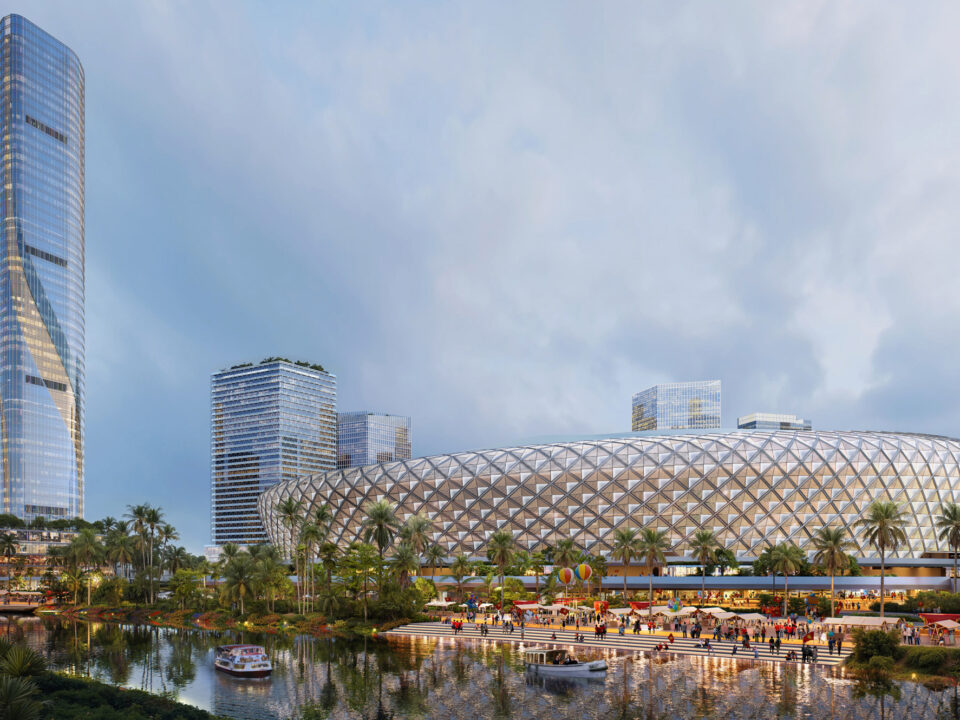
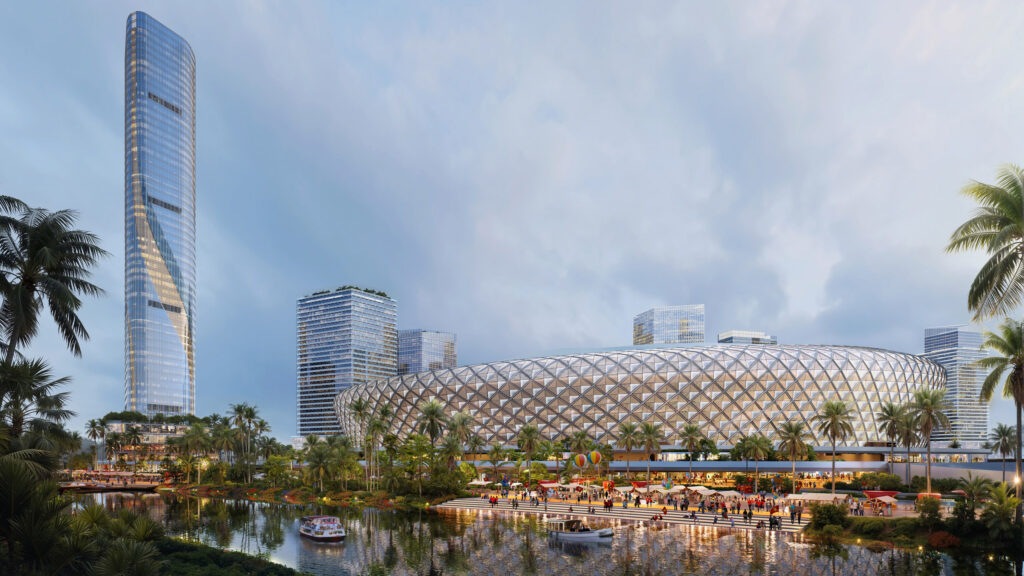
Behind the existing structure, the new tower will rise above the capital, housing offices and a hotel. The building has been designed as a sculptural landmark and is described by Herzog & de Meuron as being “shaped by vernacular logic”. It boasts an angular, faceted form with a mesh-like façade and truncated upper floors, contrasting with the horizontal lines of the old congress hall below.
The two structures will be connected through a new stylobate – the large, raised base at the foot of the tower built above the existing building – designed to link the historic palace with the new vertical extension while creating additional shared spaces.
The renovation will also include the Palace’s main wood-lined concert hall, which will accommodate around 2,100 people, alongside upgrades aimed at adapting the venue to contemporary cultural and public uses.
The project is the latest example of Albania’s rapidly evolving identity. Over the past decade, the Albanian capital has attracted international architects and experimented with bold urban projects, while also confronting the legacy of decades of isolation under Enver Hoxha’s dictatorship.
Rather than demolishing its difficult past, Albania has increasingly chosen to transform it. The former residence of dictator Enver Hoxha has become an art and cultural space, while the country’s infamous bunkers, once symbols of paranoia and isolation, have found new lives as museums, cafés and tourist attractions.
With the Palace of Congresses project, Tirana continues this balancing act between memory and reinvention, turning another relic of its past into part of its future.