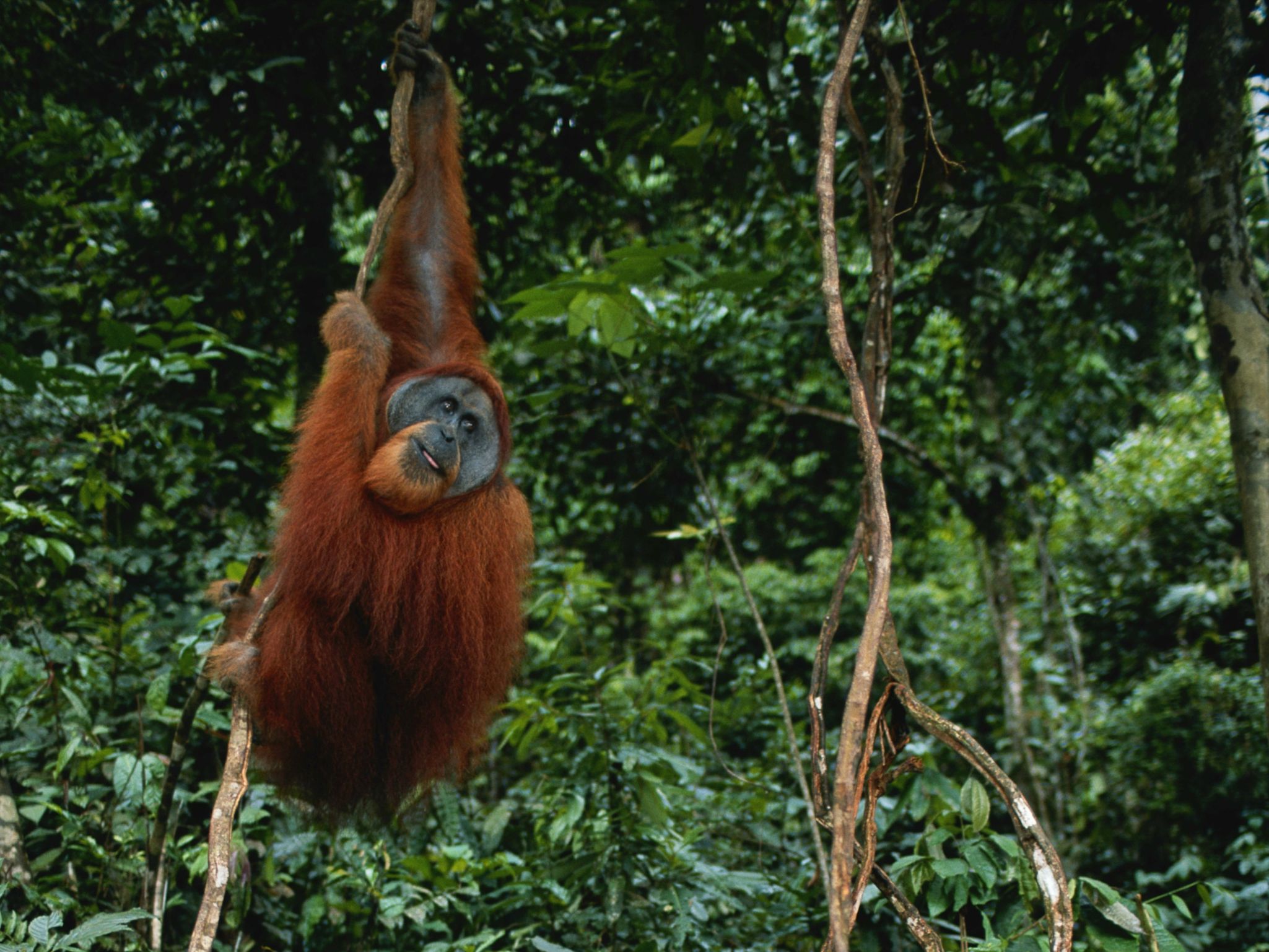



Deadly floods and landslides triggered by Cyclone Senyar last November have wiped out at least 7% of the total population of the Tapanuli orangutan, a critically endangered species found only in the forests of northern Sumatra, according to a new report published this month.
The joint study, produced by the Brunei-based organisation Borneo Futures, the initiative World Weather Attribution, and Liverpool John Moores University, found that at least 58 Tapanuli orangutans were killed during the disaster. The estimate was based on a survey of the western part of the Batang Toru forest, which is home to most of the species’ total population of around 800 individuals. The true death toll could, however, be significantly higher, as the study only covered part of the forest.
Flash floods mixed with heavy mudflow swept through Tapanuli, Sibolga, Aceh, and Padang in Sumatra, Indonesia on Thursday.
— Weather Monitor (@WeatherMonitors) November 28, 2025
LATEST UPDATE: The death toll from the floods and landslides in Sumatra has climbed to 174, up from 94, with many people still missing. pic.twitter.com/TgFPHtvZVp
The Tapanuli orangutan was only officially recognised as a distinct species in 2017, marking the first time in nearly a century that a new great ape species had been identified by scientists. These primates are renowned for their intelligence, complex social behaviours and tool-using abilities.
Cyclone Senyar triggered extreme rainfall across parts of Indonesia, Malaysia, and Thailand, causing devastating floods and landslides. In Indonesia alone, the disaster killed at least 1,200 people and damaged around 300,000 homes.
Environmental groups have said that rapid deforestation on the island of Sumatra worsened the impact of the catastrophe and could have long-term consequences for already vulnerable species. Researchers have found that human-induced climate change appears to have intensified both the rainfall and the frequency of extreme weather events around the Malacca Strait.
The findings regarding orangutans were inferred by analysing satellite images of the damage to the western block of Batang Toru and by consulting historical records of orangutan populations in the area. Erik Meijaard, lead author from Borneo Futures, explained that without sufficient forest cover to stabilise the soil, heavy rainfall causes the hillsides to become saturated and collapse in the form of fast-moving landslides, leaving the orangutans with little chance of survival.
“This level of loss is substantial for a species with such a small total population. When combined with ongoing pressures such as habitat degradation and human–wildlife conflict, it further increases the urgency of implementing and adequately funding a coordinated species action plan,” said Meijaard.
His concerns were echoed by Indonesian conservationist Panut Hadisiswoyo, and both researchers urged the authorities to work more closely with NGOs and scientists to prevent similar disasters and protect the remaining population.
While hunting and poaching have historically contributed to the decline of orangutans across Sumatra, conservationists say that the greatest threats today come from habitat destruction, forest fragmentation, infrastructure projects, and human-wildlife conflict, as orangutans are pushed into increasingly smaller areas.
Hadisiswoyo added that, although hunting can be reduced and controlled through conservation efforts, poor land management remains a major challenge that must be addressed if the species is to survive.