


International tourist arrivals rose by 2% in the first quarter of 2026 despite mounting geopolitical and economic uncertainty, demonstrating the resilience of the global travel sector.
According to the latest data from UN Tourism, a total of 307 million tourists travelled internationally between January and March, around six million more than during the same period in 2025. Travel demand remained strong at the start of the year, with cumulative growth of 2.5% in January and February, before slowing sharply in March as the Middle East conflict disrupted travel patterns and air connectivity.
UN Tourism warned that the conflict is likely to reduce growth in international tourist arrivals by 1 to 2 percentage points below its initial forecast of 3% to 4% for 2026. The organization said disruptions to flights, weaker traveller confidence, higher oil prices and shortages of jet fuel in some markets have pushed up airfares and reduced flight capacity beyond the region itself. More expensive travel and uncertainty over connectivity could encourage travellers to choose destinations closer to home while also dampening overall demand.
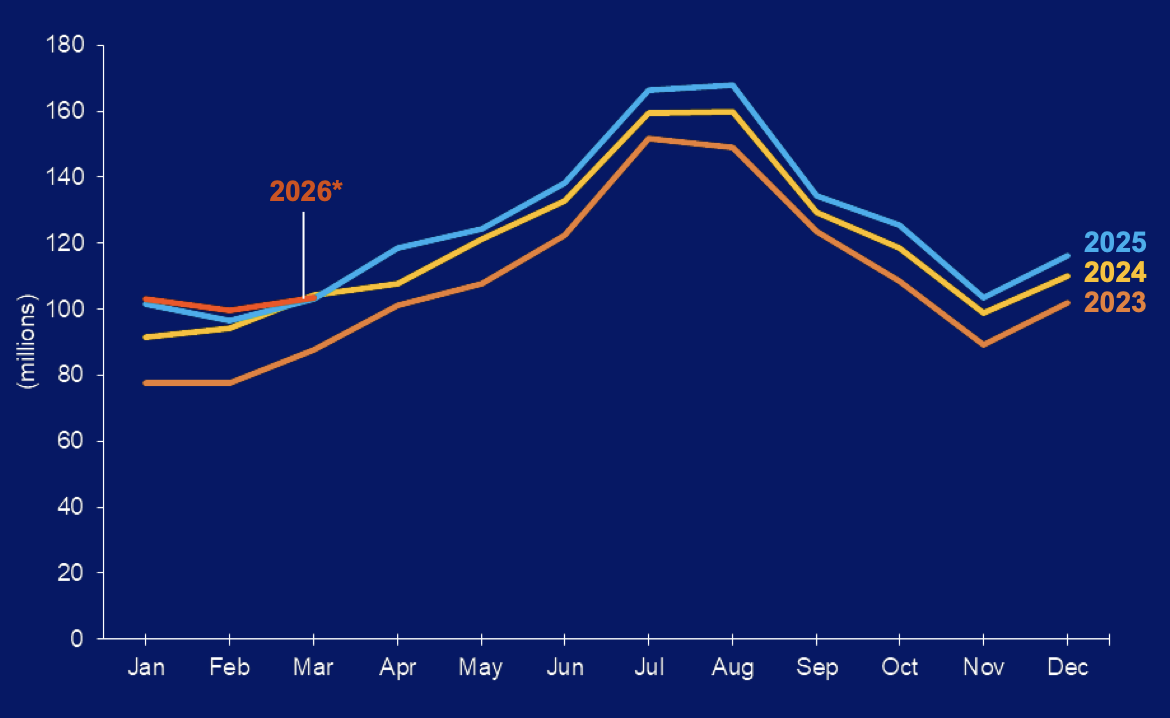
“The ongoing conflict in the Middle East is disrupting travel patterns well beyond the region itself, including rising inflation, particularly in transport and accommodation. This is placing pressure on travelers, businesses and destinations alike,” said UN Tourism Secretary-General Shaikha Al Nuwais.
“Even amid this uncertainty, international tourism continued to show resilience in the first quarter of 2026, with 307 million people travelling internationally, a 2% increase on last year. At a time of growing geopolitical and economic pressure, this reinforces tourism’s wider role in supporting economies, creating opportunity and sustaining communities far beyond the sector itself,” she added.
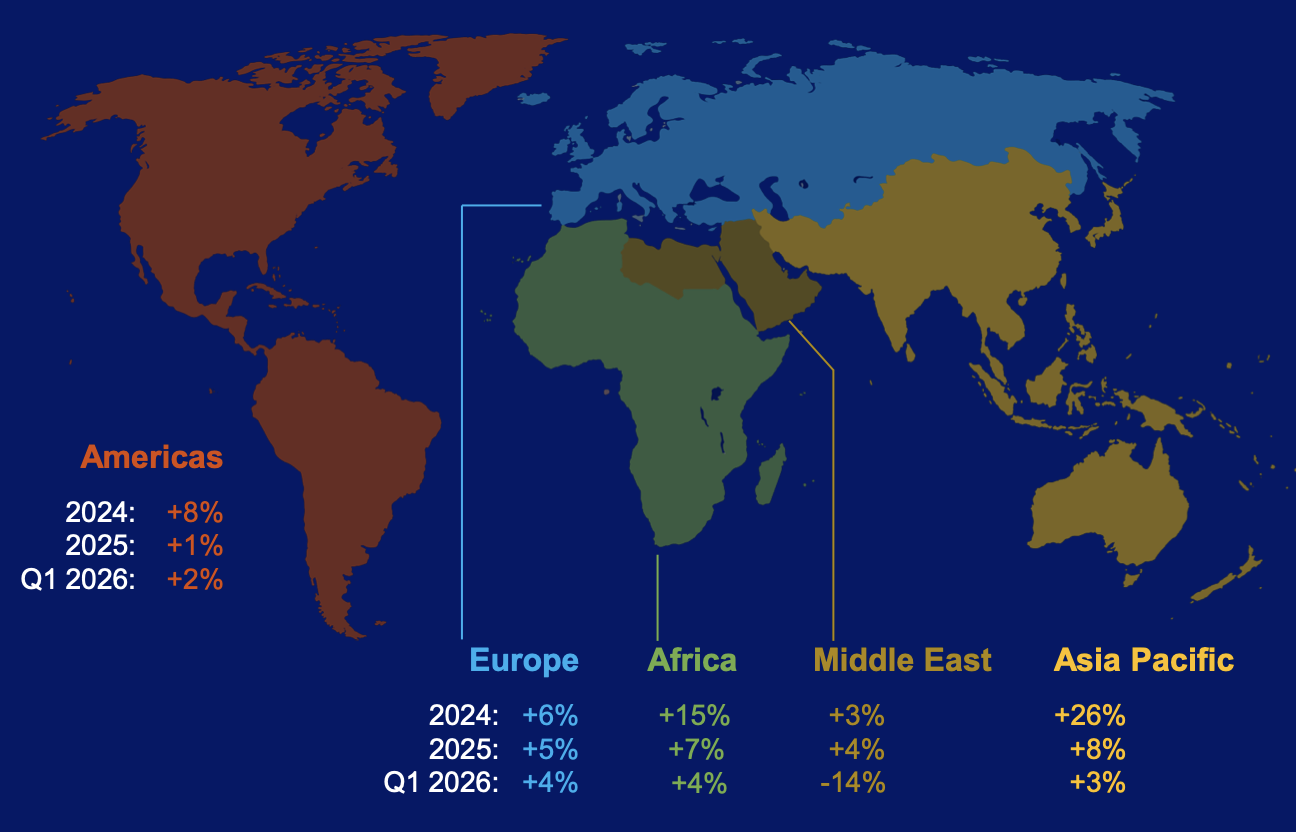
Europe and Africa recorded the strongest regional performances during the quarter, with both regions posting 4% growth in international arrivals. Europe welcomed more than 130 million international tourists, while some destinations benefited from shifts in travel flows. Africa’s growth was supported by strong results in North Africa and Sub-Saharan Africa.
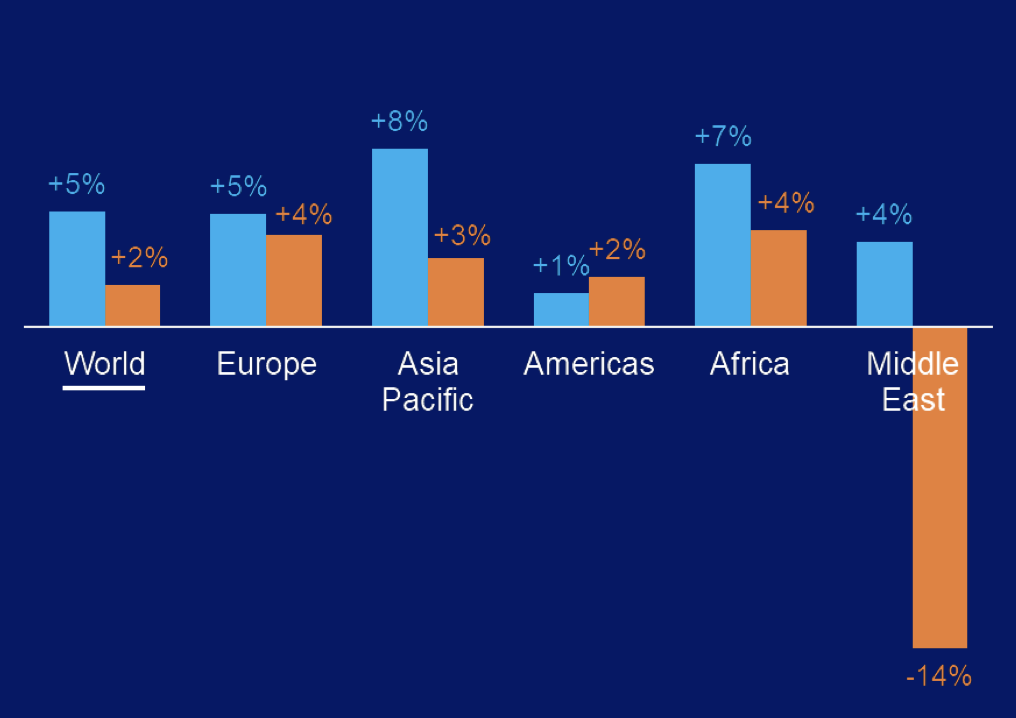
Asia and the Pacific registered a 3% increase in arrivals, although growth slowed in March as disruptions at Middle Eastern air hubs contributed to a sharp decline in South Asia. The Americas saw arrivals rise by 2%, led by strong growth in Central America, while the Middle East experienced a 14% decline as the conflict affected several Gulf destinations. Egypt was a notable exception, reporting a 16% increase in arrivals.
According to UN Tourism’s latest survey of tourism experts, the Middle East conflict, rising transport and accommodation costs, and broader economic pressures are the main challenges facing the industry in 2026. The organization’s Confidence Index nevertheless points to cautious optimism for the Northern Hemisphere summer season, although experts continue to highlight uncertainty surrounding the duration and scope of the conflict, as well as concerns over fuel prices, flight disruptions and consumer confidence.