


Nearly one in five nights spent in tourist accommodation across the European Union is concentrated in just seven regions, highlighting the uneven distribution of tourism as Europe welcomes record numbers of visitors.
According to the European Commission’s latest Transport and Tourism in the European Union: Current trends and issues report, Canarias, Jadranska Hrvatska, Île-de-France, Cataluña, Andalucía, Veneto and Illes Balears together account for almost 20% of all nights spent in EU tourist accommodation.
The concentration comes as EU tourism reaches unprecedented levels. More than 3 billion nights were recorded at tourist accommodation establishments in 2025 for the first time, with Spain, France, Germany and Italy together accounting for over 60% of the total.
Tourism pressure concentrated in popular destinations
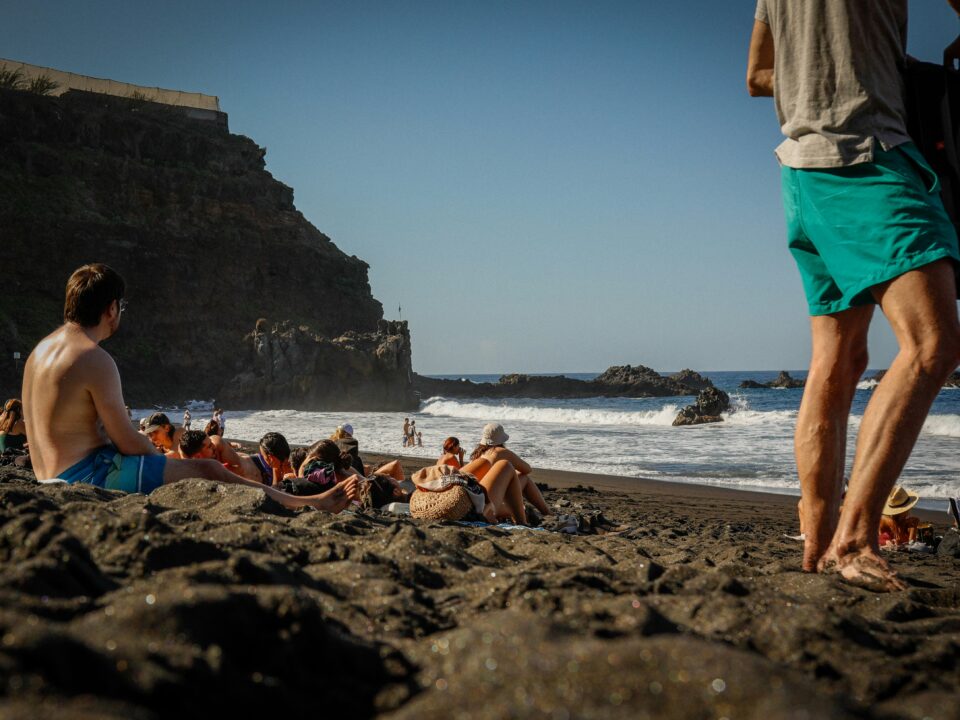
The seven regions include some of Europe’s best-known destinations, from the Canary and Balearic Islands to Paris, Barcelona, Andalusia, Venice and Croatia’s Adriatic coast.
Their dominance illustrates one of the challenges identified by the Commission: tourism is not only growing but remains highly concentrated geographically.
The report points to “uneven tourism dependency” across the EU, with overcrowding and overdependence affecting certain destinations while other regions have comparatively underdeveloped tourism sectors.
Tourism intensity, measured by the number of nights spent per inhabitant, varies considerably across Europe. The Commission’s data show particularly high levels in several Mediterranean and island destinations, reflecting the much greater pressure visitor numbers can place on areas with relatively small resident populations.
Such imbalances can have wider consequences for destinations, including pressure on housing and infrastructure, increased use of natural resources and impacts on local communities.
42% of tourism nights fall in July and August
Geographical concentration is compounded by seasonality. In 2024, 42% of nights spent in EU tourist accommodation occurred during July and August, meaning that a substantial share of annual tourism activity is compressed into just two months.
This concentration can intensify pressures during peak periods, particularly in destinations already receiving high numbers of visitors.
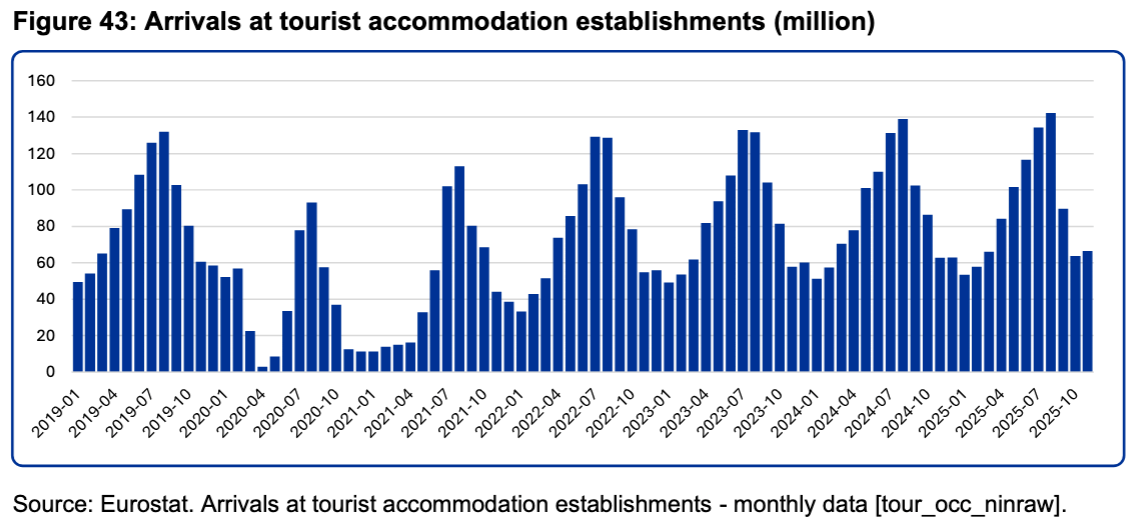
At the same time, Europe’s tourism industry continues to expand. The EU welcomed 582 million tourist arrivals in 2025, representing approximately 38% of worldwide arrivals. This was above the 540 million arrivals registered in 2019, although the EU’s share of global arrivals has declined from 47% in 2022.
Tourism’s economic weight also makes managing visitor flows a delicate balancing act. EU residents spent an estimated €618 billion on tourism trips in 2024, while the sector remains an important source of employment and economic activity across many European regions.
EU prepares Sustainable Tourism Strategy
Managing tourism growth is set to become an increasingly important part of European policy.
The Commission is preparing an EU Sustainable Tourism Strategy, expected in 2026, against a backdrop of challenges ranging from overcrowding and seasonality to climate change, digitalisation, skills shortages and the need to ensure that local communities benefit from tourism.
The Commission’s figures suggest that encouraging visitors to travel outside traditional hotspots and peak periods could become an important part of creating a more balanced European tourism model.
With EU tourism already exceeding 3 billion overnight stays annually, the question is increasingly not simply how Europe can attract more visitors, but how those visitors can be distributed more sustainably across destinations and throughout the year.