

When Sethrichem Sangtam was a child growing up in the northern province of Nagaland in India, he saw children drop out to join insurgents, elders paying “taxes” to gunmen, and families fleeing villages under threat.
Thousands of miles away, ten-year-old Palestinian Aziz Abu Sarah watched as his brother died following detention in police custody.
In the Philippines, Raizel Albano, the daughter of a rural health physician and military father, grew up seeing the struggles of communities away from city centres.
But the reaction of these three people to their experiences was not to take up arms or to shrug their shoulders and turn away, but to build bridges between communities.
Sethrichem said: “Eastern Nagaland’s biggest enemy was not only poverty but fear, both within communities and from the outside world. Despite our breathtaking landscapes and extraordinary culture, the region’s reputation as a warzone kept travellers and opportunities away.”
At the age of 18, Aziz decided he needed to commit his life to bringing down the walls of anger, hatred and ignorance that separate people. Meeting Jewish students as he studied Hebrew, sharing their food and stories, made him realise that connecting with people brought understanding.
In the Philippines, Raisel grew up and studied anthropology and decided to break social barriers and the cycle of privilege attached to travelling, education, and access to heritage commentaries. So, she researched and launched audio tours to places that have been victims of misrepresentation due to war, civil anarchy, and generational poverty.
And all faced scepticism. “No one is going to want to do a tour like that”, Aziz was told.
“Why have you left a good job in America to come back to this region?” people asked Sethrichem.
Raisel was told her ambition was impossible. Time and time again, people said she couldn’t access history journals unless she was affiliated with an academic institution or society.
But changemakers challenge and question and don’t give up.
Aziz just got on with it. “We didn’t know if anyone would buy it”, he said. But they did. He launched MEJDI Tours’ “dual narrative tours”, where people walked and listened to the perspective of both Palestinian and Israeli guides. His company now encourages people to “Travel like a diplomat” and listen to stories about a place from different perspectives in more than 40 destinations.

In 2009, Sethrichem had a promising career in America and had the option to stay abroad, but he chose to surrender his visa and return home. “My own identity was rooted in these hills”, he said, “and I felt it was my duty to demonstrate that change must come from within. Witnessing my people suffer for decades under violence and stigma compelled me to prove Nagaland was more than conflict; it was a place of resilient people, priceless heritage, and immense beauty that could inspire the world.”
So, he returned home and walked from village to village and listened. He asked his neighbours what future they wanted to see for their children. “By saying what they wanted, they owned it”, he smiles.
His organisation, Better Life Foundation, built trust by supporting new farming techniques and gradually introduced tourism into the region. As a result, more than 4,500 families have seen their household income lifted three to tenfold. Former insurgents have been trained as guides, and almost forgotten folk dances have been passed on to future generations.
In Indonesia, Raisel ignored the sceptics too and spent six years of research creating 61 audio tours that cover all seventeen regions of the Philippines. Every tour aims to offer an honest and community-guided representation of the place’s culture and history, including information that some audiences may not expect to hear, such as the encroachment of mining companies on ancestral lands, and the controversies surrounding relief distribution in a typhoon-stricken city, leaving the area in ruins more than a decade after the disaster.
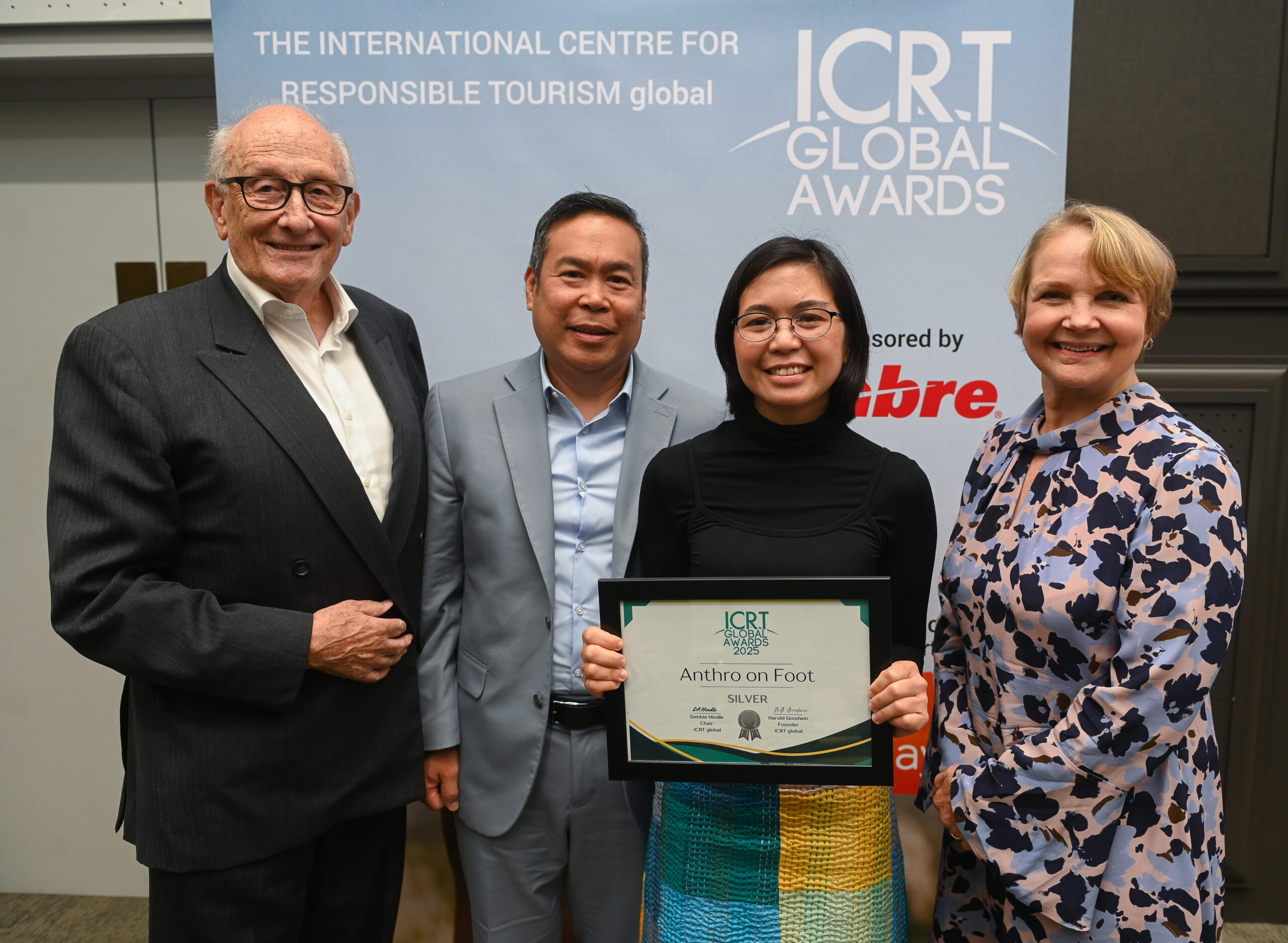
Raizel’s “Athro On Foot” tours have been downloaded 12,000 times, not just for popular tourist destinations, but also for destinations that have never been promoted for tourism, such as Calbayog and the Islamic City of Marawi.
As Aziz said, tourism has the opportunity to share the many narratives that are present everywhere we go. It doesn’t have to just be an area of conflict, but we can see the world in different ways from different perspectives if we listen.
At the Global Responsible Tourism Awards event in London last week, where Aziz, Sethrichem and Raisal all won an award for Peace, Understanding and Inclusion, Aziz waved his arm at the city outside. “Look”, he said, “even London doesn’t have one narrative. We need to listen to them all.”
So, the next time somebody tells you they’ve got what seems like a crazy idea to connect communities, don’t tell them it’s impossible, don’t tell them it’s a mad idea. Encourage them, support them, help them on their way so they can do more faster. Let’s look at the world as Sethrichem, Aziz, and Raisel have done and question and challenge, and build new bridges between people. Let’s applaud and learn from these peacemakers. The tourism industry needs more of them.