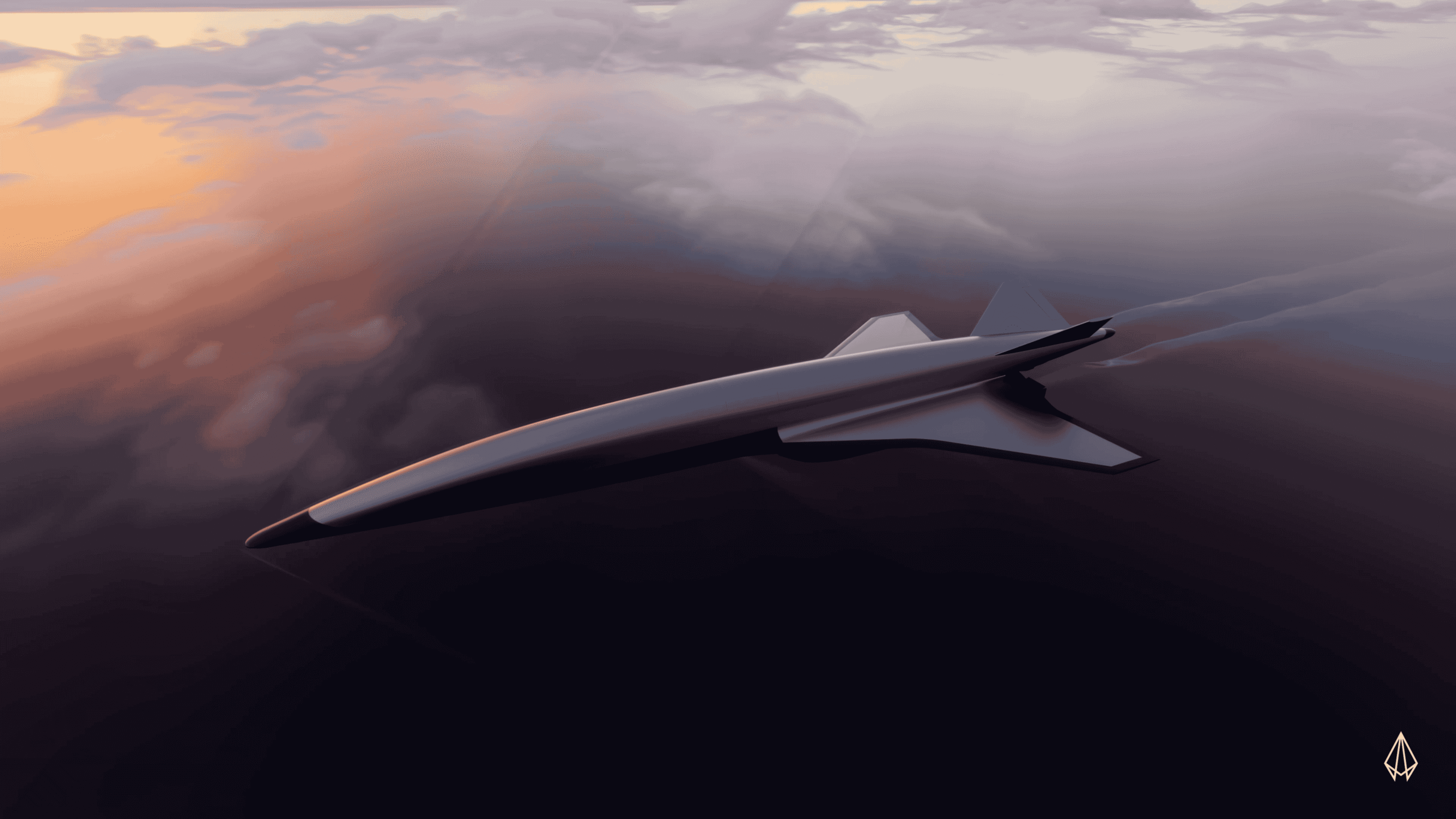



United Airlines Ventures (UAV) signalled that a new era of supersonic flight may be closer than ever with its August 20 announcement of an investment in San Francisco-based aerospace startup Astro Mechanica.
Founded in 2021, Astro Mechanica is developing an adaptive propulsion concept and advanced airframe designs that could pave the way for high-speed aircraft with near-term applications in national defence, orbital launches and long-range cargo delivery, and eventually commercial flights.
Mukul Hariharan, UAV’s managing partner, said the company was ‘excited’ to join forces with the start-up, noting that they are developing an “adaptive engine concept for strategic military and commercial applications, addressing the challenging yet worthwhile pursuit of supersonic flight”.
Astro Mechanica’s CEO and founder, Ian Brooke – a pilot and mechanical engineer – echoed this sentiment. He described UAV’s investment as a show of confidence in their new technology, praising the airline’s ‘deep technical grasp of our novel high-speed propulsion technologies’. Brooke added that his company was eager to have UAV as an ‘advisor and a collaborator’ as it moves to the next phase of ‘flight testing for the next era of passenger travel’.
Meet the Startup Reinventing Aircraft: @AstroMechanica 🛩️
— Alumni Ventures (@alumniventures) October 10, 2024
Tune in to the latest Tech Optimist Podcast as CEO Ian Brooke shares how their supersonic innovation could make on-demand, low-cost flights a reality. Discover how Astro Mechanica aims to be the “Tesla of aircraft… pic.twitter.com/TZWqWaxEx1
UAV has invested in over 30 companies in the aerospace and energy transition sectors since its founding four years ago. However, its collaboration with Astro Mechanica is its most significant commitment to the future of supersonic travel to date.
The Duality™ engine Explained
At the heart of Astro Mechanica’s vision is the Duality™ engine, its propulsion system designed to adapt to a wide range of speeds, effectively acting like three engines in one.
At take-off and at low speeds, it operates like a turbofan; it is efficient and relatively quiet. As it nears supersonic speeds, it functions as a turbojet, providing the thrust necessary to break the sound barrier. Lastly, at very high speeds (Mach 3 and beyond), it goes into full ramjet mode, using the aircraft’s own forward motion to compress air instead of using turbine blades.
This week's S³ features @AstroMechanica: a new startup ushering in the electric-adaptive age — where supersonic, electric jets cross the Atlantic.
— Jason Carman (@jasonjoyride) October 19, 2024
This is the first time their new engine has ever been shared publicly. pic.twitter.com/JQxtYVNifj
This is made possible by a hybrid electric architecture in which the electric motor separates the propulsion units from the turboshaft. This allows the engine to switch gears as smoothly as an automatic car, albeit one that can take you or your goods across the Atlantic in less than four hours.
Astro Mechanica’s goal is to make high-speed flights more accessible, and they claim that this design solves the long-standing challenge of fuel efficiency while generating electricity from the aircraft’s motion to power onboard systems. The company has revealed that it intends to build its own aircraft, as well as sell propulsion systems to other defence manufacturers.
what’s life without a little blisk? https://t.co/98xaCCahtC pic.twitter.com/Gmq5NLGc17
— Ian Brooke (@k2pilot) August 8, 2025
A wider supersonic revival
Astro Mechanica’s vision of rapid, on-demand global mobility reflects a renewed global interest in high-speed aviation.
In January 2024, Boom Supersonic’s XB-1 demonstrator broke the sound barrier, while NASA and Lockheed Martin tested their ‘quiet supersonic’ prototype. Boeing has also studied concepts capable of reaching Mach 5 speeds.
Over 20 years since the retirement of the Concorde, the prospect of a supersonic comeback is growing closer. France’s recent designation of its first Concorde jet as a historical monument serves as a reminder of the potential and challenges of the last supersonic era. If Astro Mechanica’s Duality engine is successful, supersonic passenger travel could leave the history books behind and return to the skies.