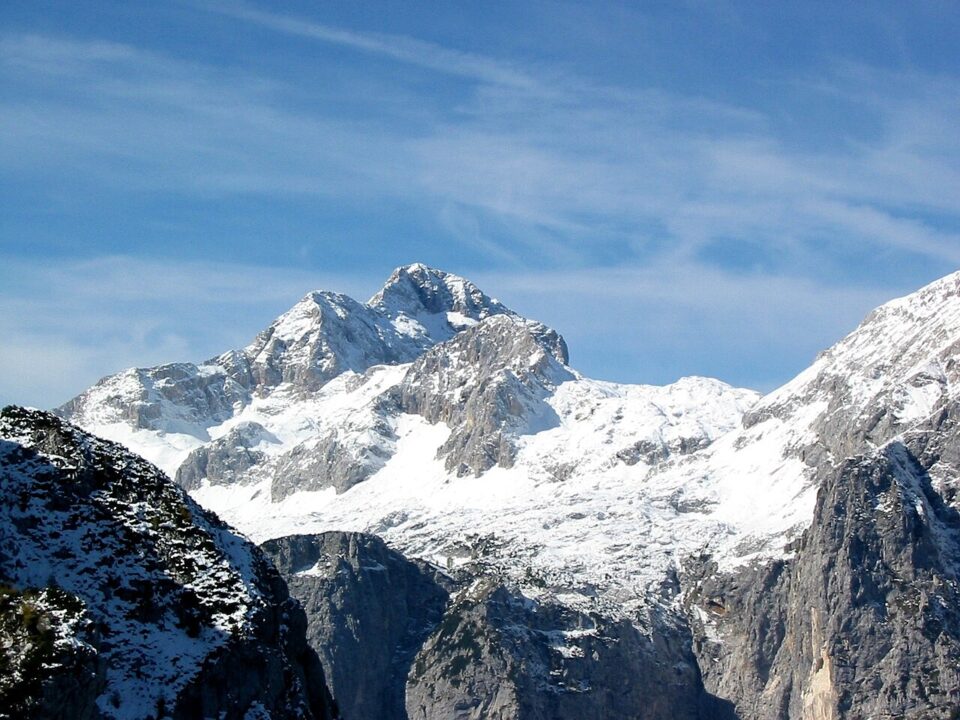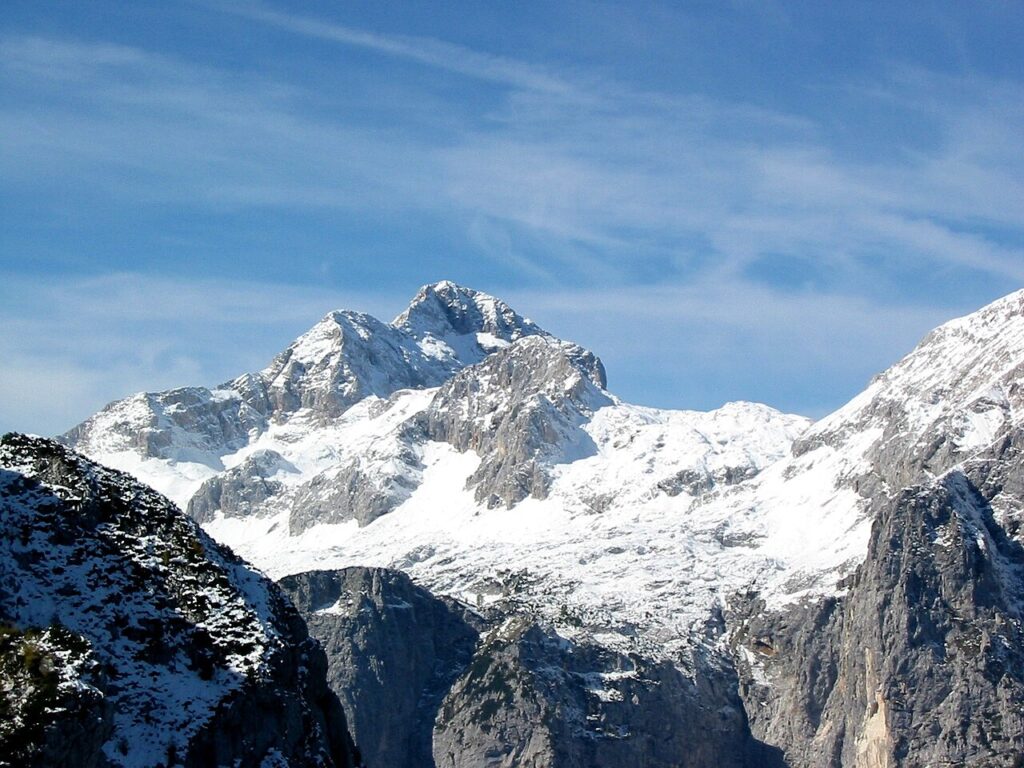



As Europe emerges from one of its strongest and longest heatwaves on record, its consequences are already being felt in Switzerland, where all the snow and ice accumulated over the past winter are expected to have melted away by early next week, a phenomenon that normally does not occur until mid-August.
According to the Glacier Monitoring in Switzerland network (GLAMOS), every additional day of melting between now and October, when the first new snowfalls normally return to the Alps, will directly reduce the size of Swiss glaciers.
Data collection on what is known as “glacier loss day” began more than twenty years ago. It is perhaps somewhat reassuring that this year’s date is not the earliest on record: that unfortunate distinction still belongs to 26 June 2022.
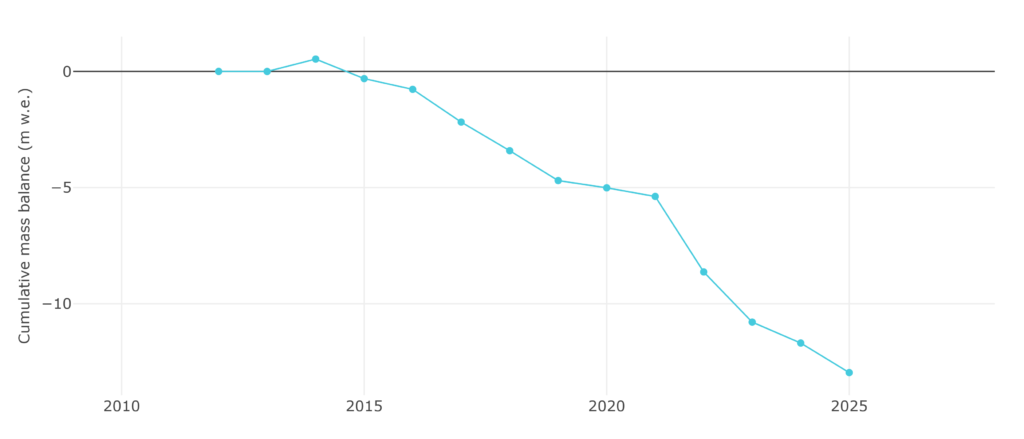
GLAMOS director Matthias Huss warned on Friday, however, that Swiss glaciers are currently in a very bad shape and are melting at an unprecedented rate.
“We are just seeing enormous ablation, ice melt rates and snow melt rates all over the Alps,” Huss said, adding that conditions were “three months too early compared to a healthy state.”
The Alps have been shrinking for the past 170 years, but the pace has accelerated sharply in recent decades as temperatures have risen across Europe while snowfall has declined.
This year, the average snowfall over the glaciers was about 25% below the average recorded between 2010 and 2020. It matters because once the snow cover is gone, the glacier itself, essentially the darker grey ice underneath, becomes exposed and dark ice absorbs solar radiation far more readily than reflective snow, accelerating the melt.
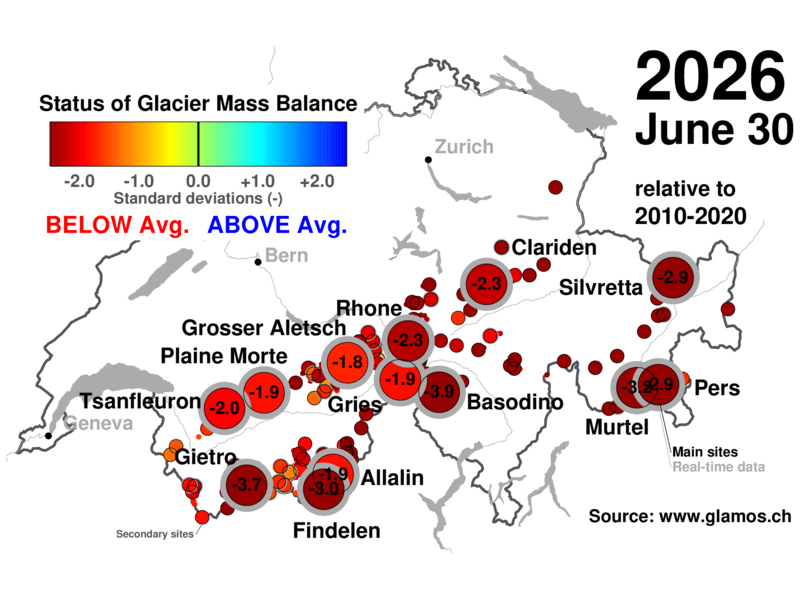
Huss explained that he had recently returned to the Rhône Glacier and was struck by the changes he had witnessed in only ten days.
“There was one metre of ice melted in the vertical direction – one metre of melting within just the last 10 days,” he said.
“It’s very impressive to see, and this is just the effect of the heatwave.”
“The more days that are added with very high temperatures, not even mattering whether it’s 35 °C or 40 °C, this is just very bad for the glaciers.”
According to Huss, the “very bad state of the glaciers at the moment” results from a “combination of bad circumstances”, including reduced snowfall and the arrival of Saharan dust in March, which darkened the snow surface and sped up melting even before summer began.
Europe experienced record-breaking temperatures across many countries over the past week, with temperatures rising above 40 °C in several regions. The heat tested energy grids, emergency services and hospital systems and proved fatal for about 1,300 people across the continent.
Europe remains particularly ill-prepared for such extreme heat events. And glaciers are not prepared at all.
Forecasts suggest another spell of unusually hot weather could return later in July, raising fears that the summer’s worst may not yet be over.
Switzerland has already lost around 1,200 glaciers over the past 50 years and now has only around 1,300 remaining.
Huss predicted that “if warming continues as it did over the last decades, by 2100 we will only be left with some little remnants of ice”.