A project that claims it will redefine ultra-luxury travel in Asia broke ground on 15 July 2025, at a ceremony revealing final plans for Las Vegas Sands in Singapore, a resort and entertainment complex set to cost $8 billion.
The development will add a controversial fourth tower to the Marina Bay district’s highly recognisable skyline – a series of three existing towers topped and joined up by a skybridge that resembles a huge surfboard. The whole looks like a giant cricket wicket. Locals have already complained that adding a fourth tower will ruin the vista.
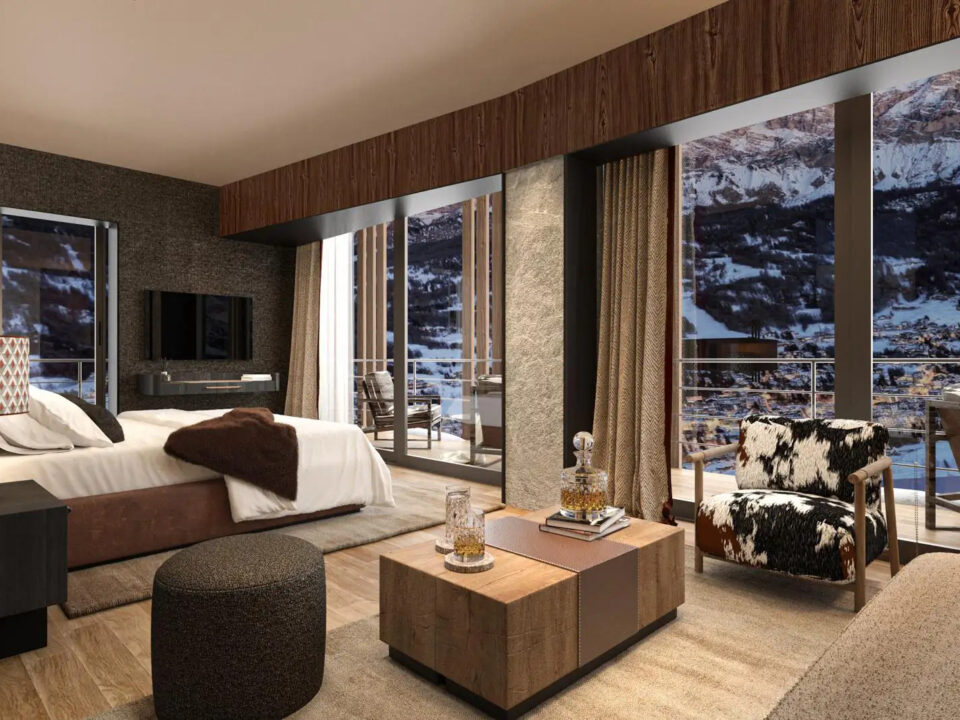
But the new block is supposed not to interfere with that set up, standing apart so as not to be “just more of the same,” the architect has said. Whether or not it is welcome or out-of-place, it will add a 55-storey hotel with 570 suites, offering views of the bay and the Singapore Strait. There will also be a 15,000-seat arena for performances and large-scale events, retail and dining spaces, and wellness and spa facilities – including a rooftop garden and infinity-edge pools.
The studio behind the design is Safdie Architects, which was responsible for the neighbouring Marina Bay Sands project. Plans include two curved wings rising to look out across Singapore’s skyline. The so-called “Skyloop” will possess overlapping elliptical volumes spiralling outward, providing 360-degree views and over 7,000m2 of public and private areas for guests. The boat-like structure is intended to look like part of the same family as its predecessor.
For a destination that markets itself as a “City in Nature”, sustainability is high on the agenda. Accordingly, the design is said to be inspired by the city-state’s greenery and will have biophilic elements incorporated.

Private terraces will host gardens, and native tree species will be planted throughout the resort. A self-shading façade and high-performance glazing promise to reduce solar heat transfer and improve energy efficiency, while construction materials such as recycled steel will help to keep the carbon footprint low. Waste management processes will divert three-quarters of the building waste from landfills.
Micro-mobility and connectivity is also a key part of the plan. A direct link to Bayfront MRT station and “seamless” pedestrian access will take guests to neighboring attractions, including the new arena and Gardens by the Bay – an urban park spanning 105 hectares.
As well as the cultural impact of the resort, press materials emphasise the economic and employment opportunities it will generate through direct and indirect job creation, as well as the business support for city enterprises, pointing out that 92% of the Marina Bay Sands procurement programme went to local firms.
Singapore hit record tourist numbers in 2019 prior to the COVID-19 pandemic but has not fully recovered from the effect of lockdown restrictions. Nonetheless, in 2024, it welcomed 16.5 million international tourists – around three times the city’s resident population.