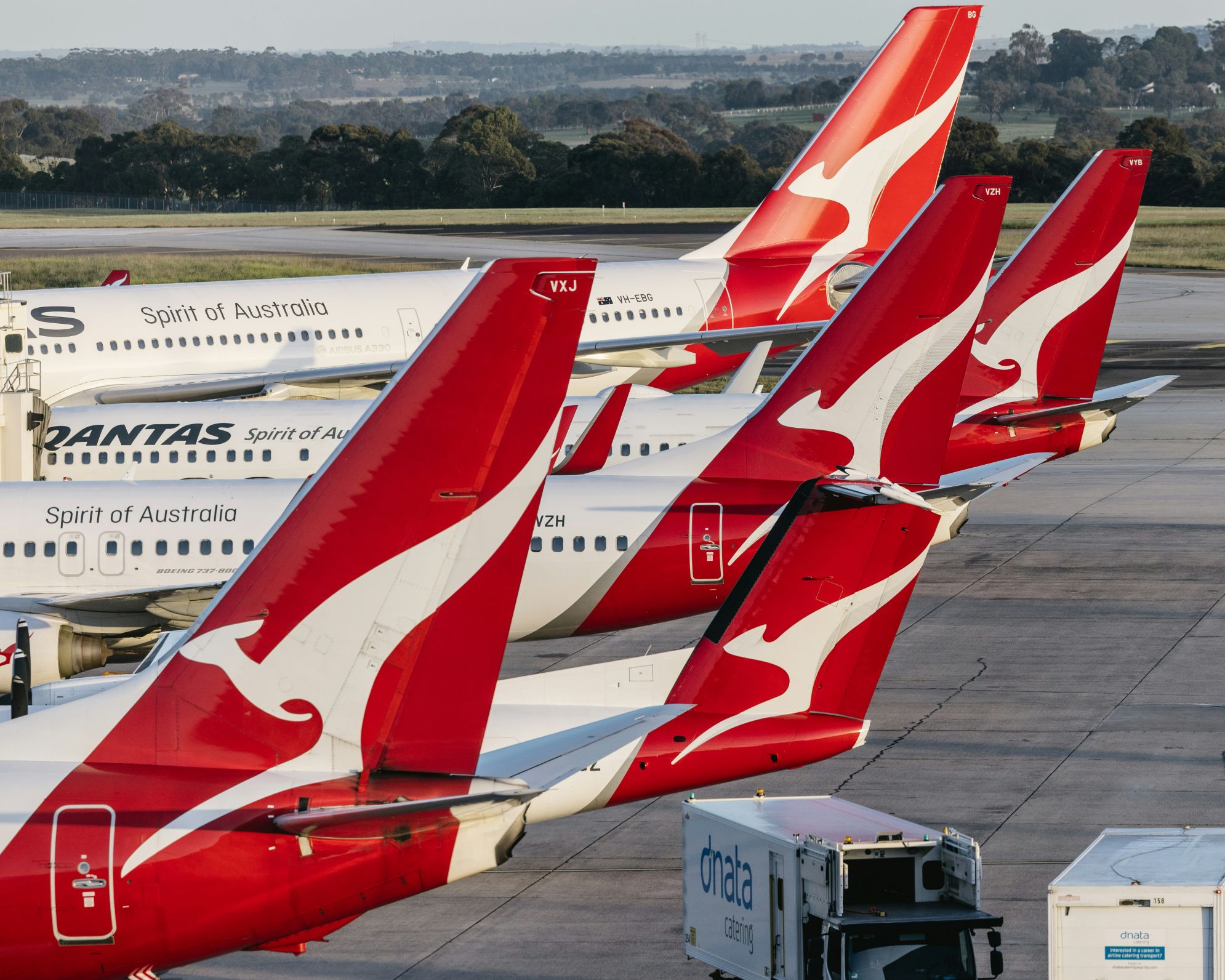



Qantas is turning Auckland into a Pacific springboard, using New Zealand’s largest airport to connect Australia, the Pacific Islands and North America. Its recent Auckland-linked services — Gold Coast-Auckland, Sydney-Auckland-Apia and the existing Sydney-Auckland-New York service — suggest a carefully considered strategy: improve route economics, respond to demand across several markets and give passengers more ways to travel while avoiding the higher risks associated with nonstop flights from Australia.
As a result, Auckland increasingly looks like Qantas’ eastern counterweight to Perth. Cam Wallace, CEO of Qantas International, told Executive Traveller he sees Auckland as “a growing eastern hub for us”, supported by Qantas services from Australian cities and partner flights, including those operated by American Airlines. The airline’s new Auckland lounge, part of a wider hospitality investment programme, reinforces that ambition. Wallace said partner connectivity gives Qantas “a strong kind of underlying network proposition”, while describing lounges as “a really core part” of the customer offer.
The Apia route shows why this matters for airline planning. Simple Flying notes that a Sydney-Apia nonstop service is technically possible with a Boeing 737-800, but by routing it via Auckland and selling Auckland-Apia as a fifth-freedom leg, Qantas can tap into stronger New Zealand-Samoa traffic while maintaining an Australia-origin option. For the industry, it is a pragmatic example of post-pandemic network design: shortening the more challenging sector, improving load potential and spreading revenue across more than one market.
The Gold Coast-Auckland service widens the competitive front. Qantas is linking two non-hub airports three times weekly with a 737-800, giving Gold Coast travellers an international option without first travelling through Brisbane, Sydney or Melbourne. It also puts fresh pressure on Air New Zealand and strengthens the wider Qantas Group position in New Zealand, where Jetstar is also expanding.
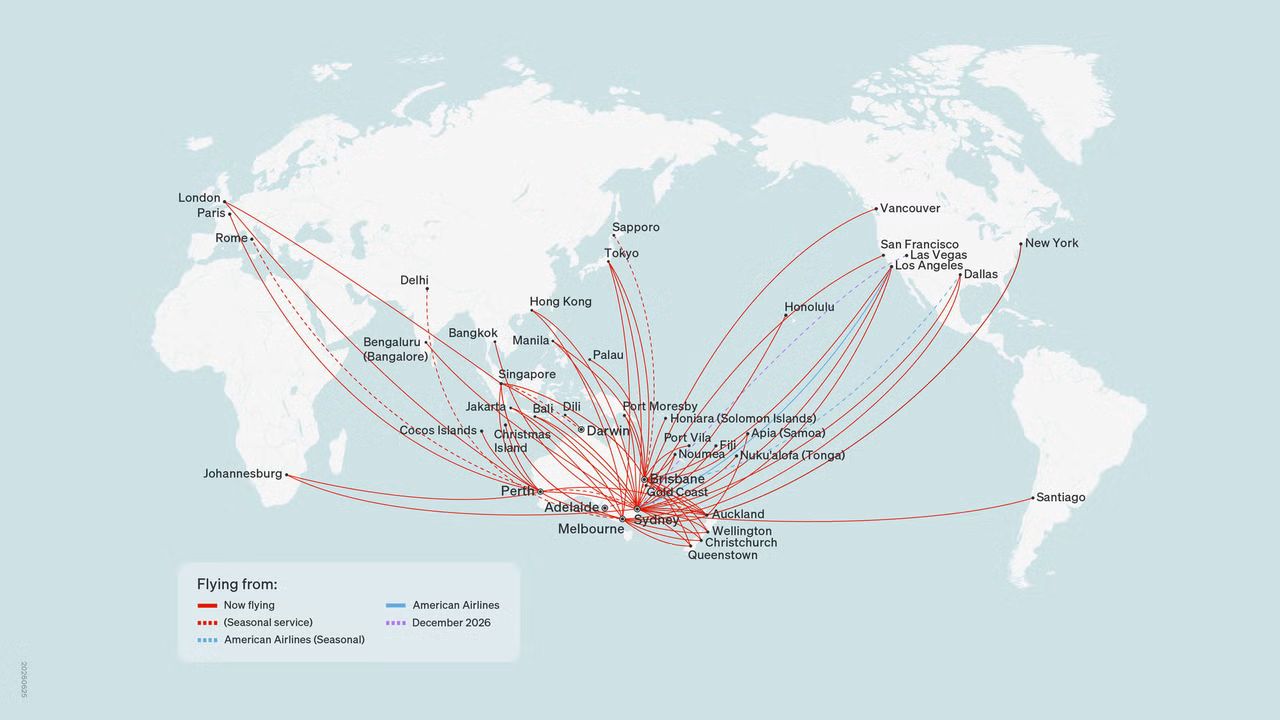
The New York service remains central to the Auckland story. It began partly because current Boeing 787 operations could not support the same Sydney-New York nonstop mission, but now the stop is becoming a network asset, rather than just an operational fix. Wallace said Sydney-Auckland-New York would be “complementary to the direct services” once nonstop Sydney-New York and Melbourne-New York flights launch, giving travellers from Auckland and several Australian cities more than one way to reach the US East Coast.
For travellers, the benefits include more choice, stronger competition and potentially lower fares, particularly on Gold Coast-Auckland and New Zealand-Samoa routes. A stronger lounge and alliance proposition could also improve the premium experience. The trade-off is complexity: some Australia-origin passengers bound for Apia may face longer journeys via Auckland, making schedules and connection reliability increasingly important.
For competitors, the strategy raises the stakes beyond fares. Air New Zealand is preparing refreshed Boeing 787 cabins, including enhanced premium seating and economy rest options, while Qantas is emphasising lounges, partnership feed and greater trans-Tasman connectivity. The rivalry is therefore likely to play out across schedules, cabin products, loyalty benefits and the airport experience.
Qantas’ Auckland build-up is not a wholesale shift away from Sydney for the Australian flag carrier, but it shows how airlines can use nearby international markets, fifth-freedom rights and partner networks to make thinner routes more viable. If the model succeeds, Auckland could become an increasingly important Pacific connection point for premium and leisure traffic, with consequences for airports, competitors and passengers on both sides of the Tasman.