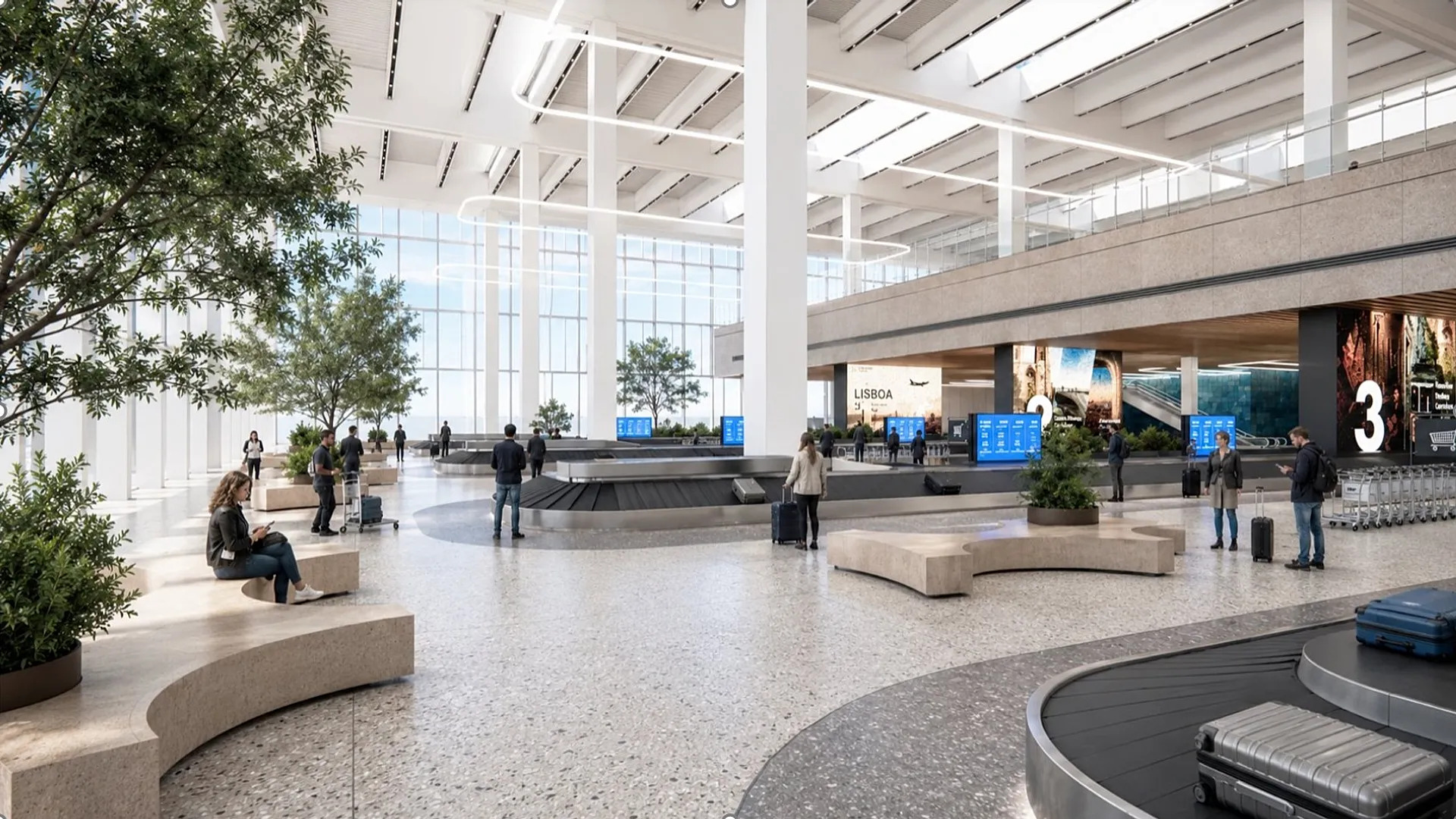



Portugal’s long-awaited new Lisbon airport could cost up to €8.9 billion and may not open until 2037, as the country invests more than €400 million in its existing airport network to cope with continued growth in tourism and air travel.
The latest technical report from ANA – Aeroportos de Portugal estimates that the Luís de Camões Airport will require investment of between €7.9 billion and €8.9 billion, at 2024 prices. The range updates an earlier preliminary estimate of around €8.5 billion presented in 2025.
Under ANA’s baseline timetable, agreements for the new airport are expected to be signed in April 2029, with construction beginning around mid-2030 and concluding towards the end of 2036. Operations would then start in 2037, meaning travellers could still be waiting another 11 years before using the new gateway.
The Portuguese government, however, wants to accelerate the project. Infrastructure and Housing Minister Miguel Pinto Luz has indicated an ambition to bring the opening forward to 2035, with an accelerated construction schedule potentially running from 2029 to 2034.
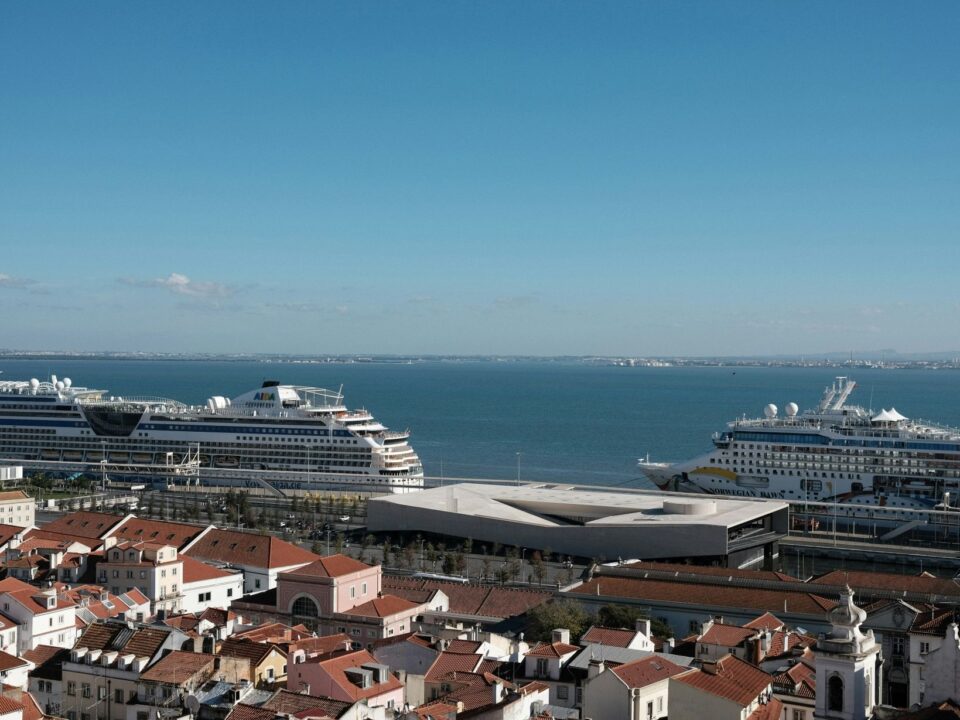
The project will be built at Campo de Tiro de Alcochete, on the south bank of the Tagus, more than 50 kilometres from central Lisbon, and is intended eventually to replace the existing Humberto Delgado Airport.
Costs could rise further
ANA, which is owned by French infrastructure group Vinci, has warned that the final bill could rise beyond the current estimates as geopolitical uncertainty, pressure on global supply chains and market volatility push construction costs higher.
At its initial stage, Luís de Camões Airport is expected to handle around 56 million passengers annually, with capacity eventually increasing to 85 million. Plans include two runways, 120 aircraft parking positions, 64 boarding gates and 76 passenger boarding bridges.
Ground transport will be a crucial part of the project due to the airport’s distance from Lisbon.
Plans include a high-speed rail connection with a journey time of approximately 26 minutes and services every two hours. A conventional rail connection from Entrecampos is expected to run every 15 minutes, with a journey time of around 45 minutes.
Infraestruturas de Portugal has also proposed a direct shuttle between Lisbon’s Oriente station and the airport, with an estimated journey time of 20 minutes and departures every 30 minutes. ANA has called for a higher frequency and stressed the importance of ensuring high-quality and affordable public transport to the new airport.
Road access is also planned, including a new 17-kilometre connection to the A33 motorway and links to several national and municipal roads.
Existing airports face growing demand
The long wait for Luís de Camões Airport means Portugal is simultaneously investing in its existing aviation infrastructure.
More than €400 million is already being invested across the national airport network, according to the government’s recently presented airport strategy. The programme is intended to increase capacity, improve passenger experience and prepare the country’s infrastructure for further growth in tourism, the economy and mobility.
The pressure comes as Portugal continues to attract growing numbers of visitors. In 2025, tourist accommodation establishments recorded 32.5 million guests and 82.1 million overnight stays, increases of 3% and 2.2% respectively. International visitors accounted for 57 million overnight stays.
Enquanto o Novo Aeroporto Luís de Camões é preparado, o Masterplan está já a transformar os aeroportos portugueses.
— Infraestruturas e Habitação PT (@iestruturas_pt) July 23, 2026
Nos próximos dias vamos mostrar, aeroporto a aeroporto, o que está a mudar e porque estes investimentos são importantes para o futuro do país. #MIH pic.twitter.com/6XmTQXg9zo
Growth has continued into 2026. Between January and May, Portugal welcomed around 12 million guests, generating 28.7 million overnight stays. In May alone, the country recorded 3.3 million guests, up 3.9% year-on-year, and eight million overnight stays, up 2.8%.
The government’s immediate response is therefore to expand and modernise airports serving the country’s main tourism destinations while the new Lisbon hub is developed.
Porto’s Francisco Sá Carneiro Airport, which currently handles around 17 million passengers per year, is undergoing runway renovation, terminal modernisation and expansion, as well as the construction of a new Airport Operations Control Centre. The longer-term ambition is to prepare Porto to accommodate as many as 30 million passengers annually.
Enquanto o Novo Aeroporto Luís de Camões é preparado, o Masterplan está já a transformar os aeroportos portugueses.
— Infraestruturas e Habitação PT (@iestruturas_pt) July 24, 2026
Nos próximos dias vamos mostrar, o que está a mudar e porque estes investimentos são importantes para o futuro do país. Hoje, o aeroporto do Porto.#MIH pic.twitter.com/Y2pMO8qpCn
Faro Airport, the principal gateway to the Algarve, handled around 10 million passengers in 2025. Work includes modernisation and expansion of airport infrastructure, operational areas and the terminal, with the aim of providing additional capacity as tourism demand grows.
Enquanto o Novo Aeroporto Luís de Camões é preparado, o Masterplan está já a transformar os aeroportos portugueses. Nos próximos dias vamos mostrar, o que está a mudar e porque estes investimentos são importantes para o futuro do país. Hoje, o aeroporto de Faro #MIH pic.twitter.com/Q3GQyt7o0v
— Infraestruturas e Habitação PT (@iestruturas_pt) July 25, 2026
The same approach is being taken on Portugal’s islands. Madeira Airport handled more than five million passengers in 2025, almost double the approximately 2.6 million recorded a decade earlier. Its terminal and passenger facilities are now being renovated and modernised.
Enquanto o Novo Aeroporto Luís de Camões é preparado, o Masterplan está já a transformar os aeroportos portugueses.
— Infraestruturas e Habitação PT (@iestruturas_pt) July 26, 2026
Nos próximos dias vamos mostrar, o que está a mudar e porque estes investimentos são importantes para o futuro do país. Hoje, o aeroporto do Funchal. #MIH pic.twitter.com/41Zw1UOQ8E
In the Azores, João Paulo II Airport in Ponta Delgada handled close to three million passengers in 2025, compared with around one million in 2015. Its terminal is being renovated and modernised as part of efforts to improve capacity and connectivity for the archipelago.
Pinto Luz has presented the investments as part of a wider airport masterplan designed to bridge the period before Luís de Camões Airport becomes operational and ensure that infrastructure keeps pace with Portugal’s tourism and economic growth. The government says more than €400 million is already being deployed across airports including Porto, Faro, Lisbon and the Azores.
With the new Lisbon airport still potentially more than a decade away, those upgrades will play an increasingly important role in accommodating passenger growth and maintaining Portugal’s connectivity in the years leading up to the opening of Luís de Camões Airport.