


Middle East aviation is no longer in a blanket shutdown, but the region’s recovery remains uneven. Airports across the Gulf may be accepting arrivals and departures again, yet many international airlines are still holding back from routes to Dubai, Doha, Riyadh, Tel Aviv, Beirut, and other key destinations as security assessments continue to shift.
As Business Traveller warns, several foreign carriers have pushed planned returns into late October, while some suspensions now extend into 2027. The result is a two-speed recovery: Gulf-based airlines are rebuilding schedules through their home hubs, while many Asian, European, and North American operators remain more cautious about reopening exposed routes.
The Middle East is once again at the top of Flightradar24's most-tracked list as aviation activity draws attention following new attacks in and around Iran. pic.twitter.com/pITzxaisif
— Flightradar24 (@flightradar24) September 1, 2026
The operational picture is still changing. OPSGROUP’s 2 September briefing said most Gulf flight information regions were open with tactical routings, but warned that Kuwait’s continued closure to overflights leaves no simple central corridor through the region. Europe-Asia traffic is therefore still being channelled mainly along southern routes via Egypt, Saudi Arabia, Oman and the UAE, or northern routings through the Caucasus and Afghanistan.
Airspace open does not mean flights are back
EASA’s latest guidance has, however, eased some restrictions for Bahrain, Kuwait, Qatar, and the United Arab Emirates, particularly for flights operating to and from airports in those countries, but that still does not amount to an all-clear. OPSGROUP notes that risk remains elevated over Gulf waters, with operators expected to limit exposure where possible and continue route-by-route assessments.
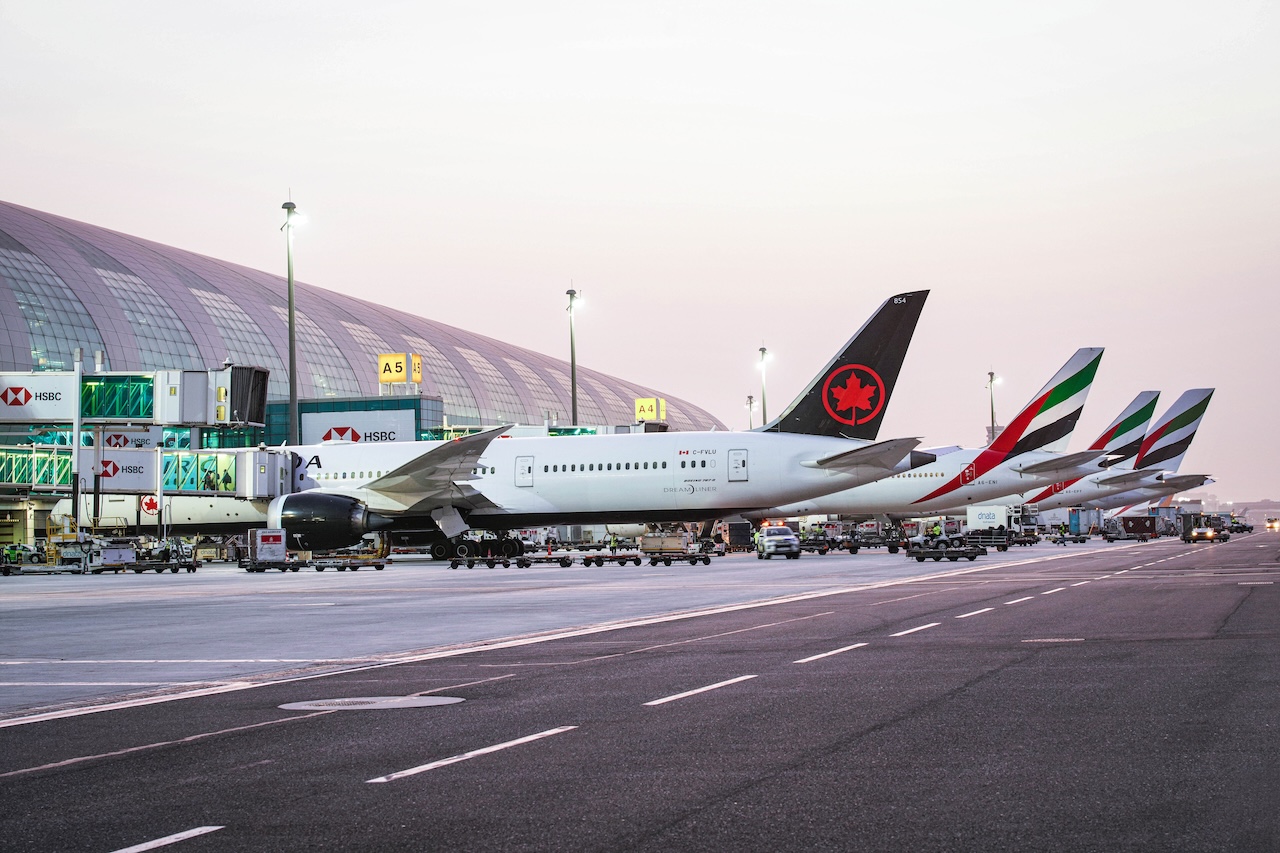
That distinction matters for travellers. A destination airport may be open, but the airline operating a passenger’s ticket may still decide that the route fails its internal safety, insurance, crew-planning, or diversion criteria. Business Traveller reports that carriers including Lufthansa Group, British Airways, Singapore Airlines, Cathay Pacific, Finnair, and Air Canada have each set different suspension windows, leaving passengers to check the exact operating carrier rather than relying on airport status alone.
Passengers face a fragmented timetable
Several restart dates are slated for the final weekend of October, but they should be treated as planning markers rather than guarantees. Cathay Pacific has kept Dubai and Riyadh off its passenger schedule through the end of November, while Air Canada’s suspension for Dubai and Tel Aviv stretches into mid-January 2027. Finnair has gone further for Helsinki-Dubai, removing the route altogether for the winter season.
Qatar Airways will expand its global network to more than 170 destinations during the 2026-2027 winter season, reflecting the airline’s network growth and reinforcing its position as a leader in global connectivity.
— Qatar Airways (@qatarairways) September 10, 2026
The winter schedule will see Qatar Airways operate more than… pic.twitter.com/sPmXN80FEZ
For tourists and business travellers, the practical risk is not only cancellation. Reroutings can add flying time, reduce connection options, and place extra pressure on hubs handling diverted traffic. OPSGROUP also highlights widespread GPS jamming and spoofing in the region, alongside congestion on some southern bypass sectors, factors that can affect operations even when airspace remains technically open.
Aviation security context as 9/11 reaches 25-year anniversary
The Middle East disruption is unfolding as the aviation industry marks 25 years since the September 11, 2001 attacks on New York and Washington, a moment that fundamentally changed how governments, airports and airlines think about risk. The post-9/11 era brought reinforced cockpit doors, tighter screening, federalised security in the United States, and a much more cautious approach to threats involving aircraft. That legacy helps explain why carriers may delay a route restart even after regulators permit limited operations: modern aviation security is built around layered risk management, not simply whether a runway is open.
This September 11 marks 25 years since our nation was forever changed.
— 9/11 Memorial & Museum (@Sept11Memorial) September 9, 2026
For a quarter century, Tribute in Light has served as a powerful symbol of remembrance, illuminating the New York City skyline in honor of the nearly 3,000 people whose lives were lost.
This year, for the… pic.twitter.com/5eGpxO8LI8
What travellers should do now
Passengers should confirm the operating airline, not just the booking airline, and review the latest travel notices before departure. Refund, rerouting, and rebooking rules vary by carrier and by travel date, so a policy that covers one itinerary may not apply to another. Until airlines can maintain Middle East schedules without repeated extensions, sudden detours or emergency cancellations, experts note the region’s recovery should be viewed as partial and fragile.
The airspace remains high risk. Israeli airstrikes in Syria continue periodically; several countries still prohibit or strongly discourage their operators from entering the region’s skies, and air traffic control capability remains limited. Prospective flyers can check safeairspace.net for more info.