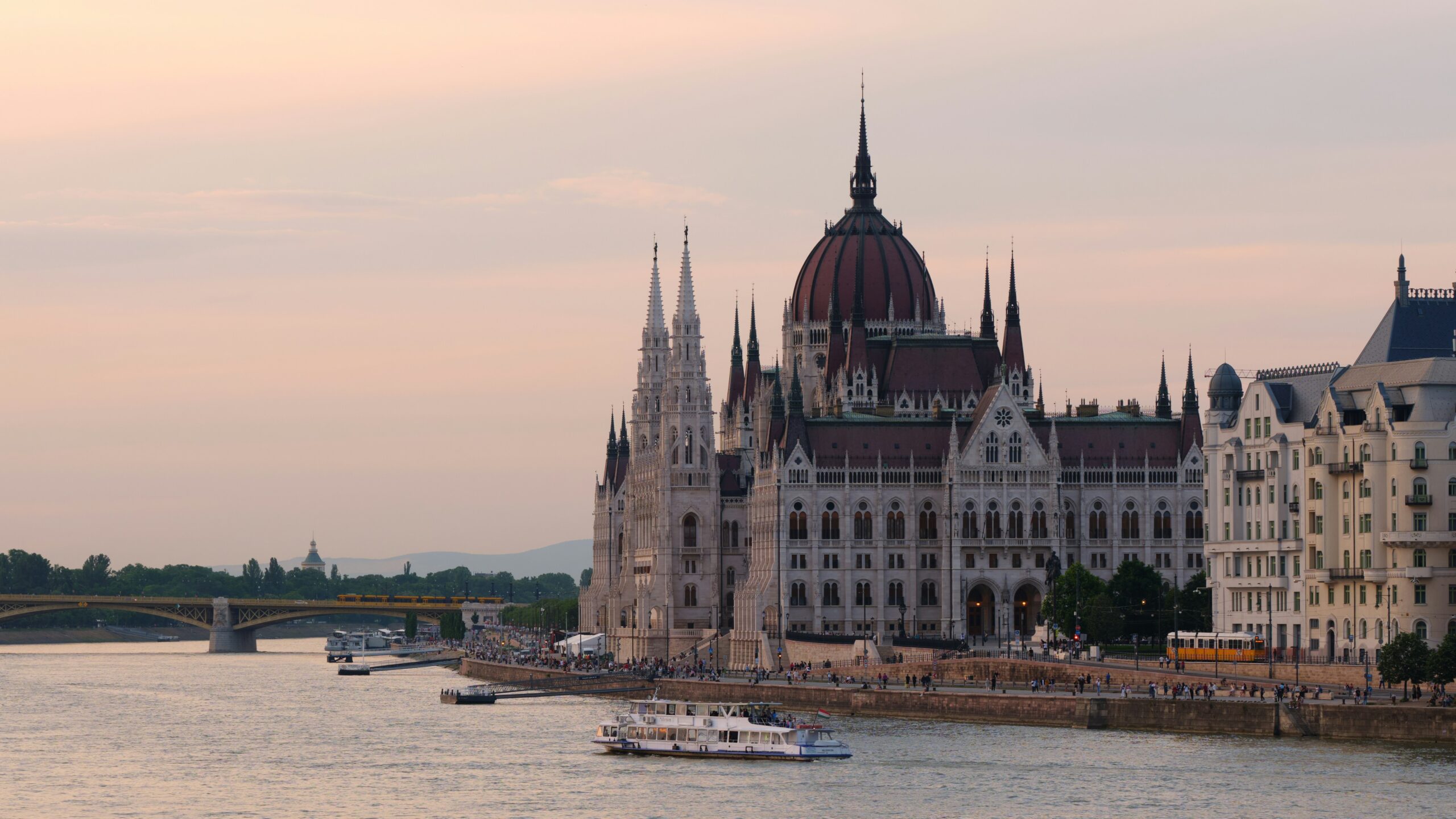



The Danube River is running so low on water that stranded cruise ships have been forced to abandon tours in what is being described as a major setback for the Hungarian travel and tourism sector.
Amid record temperatures across Europe that have closed tourist attractions, buckled roads, and disrupted trains, ongoing droughts and water shortages across much of the bloc mean the Danube has shrunk to just eight centimetres above its all-time low of 38 cm, recorded in 2018.
The Danube is Europe’s second-longest river, after the Volga. It flows through Central and Southeastern Europe, from Germany’s Black Forest, south through the Danube Delta in Romania, and into the Black Sea. Historically important, the river was once a frontier of the Roman Empire.
Previous severe droughts, such as one in 2022, also brought shipping to a halt and even exposed sunken World War II warships. Going back as far as the unusually dry summers during the 4th and 5th centuries AD, Attila the Hun is believed to have demanded a wide strip of land along the Danube, in what historians believe might have been an attempt to secure better grazing territory for their herds amidst another drought.
While rainfall in the coming days is expected to ease the current situation, it will only be a temporary reprieve, since the Danube’s water levels have been volatile but trending downwards for some time.
#Danube #Budapest #Record #Low #Water Level The water level was just 8 cm above the all-time low recorded eight years ago. ⛴Due to the low water levels, several cruise ships are stranded in Budapest pic.twitter.com/0HQg18lMIq
— Us Un (@UsUn583176) July 19, 2026
Laszlo Somodi, Chief Executive of MAHART-PassNave, the country’s largest passenger cruising company, said: “River cruise vessels are currently still able to enter Hungary, but several ships are stranded or waiting in ports because of the low water levels.” This has led to an 18% fall in reservations for July alone, with passengers cancelling because sightseeing north of Budapest is off the cards.
Similarly, Avalon Waterways said a small number of its river cruise departures had been cancelled due to the low water situation, not only on the Danube, but also on the Rhine.
The cruise sector is the most economically important of Hungary’s shipping industry, bringing in about 600,000 typically high-spending visitors every year, which is around 40% of the total river cruise passengers in Europe in 2025. Those visitors are vital not only to the capital Budapest but also spread footfall and revenue regionally to northern ports like Gönyű and Komárom that handle high volumes of transit traffic.
Total tourism, in which river cruising plays an important role, contributes about 13% to Hungary’s national GDP. Based on Hungary’s projected 2026 nominal GDP of approximately 85.9 trillion Hungarian Forint (€236.9 billion), 13% of the GDP is roughly €30.8 billion. If the 18% cancellation rate in the river cruise sector were to continue, losses could be significant.
The low water situation also casts a shadow over the launch of AmaWaterways’ new ship, the AmaRudi—set to make her debut on the Danube from April 2027. Billed as Europe’s largest-ever river cruise ship, with 98 rooms and featuring highlights such as a variety of restaurants, a wine bar, a pool, a spa and even a pickleball court, the AmaRudi and her sister ship, the AmaMagna, require a minimum depth of 1.5 metres to navigate successfully.